Join us on a literary world trip!
Add this book to bookshelf
Grey
Write a new comment Default profile 50px
Grey
Subscribe to read the full book or read the first pages for free!
All characters reduced
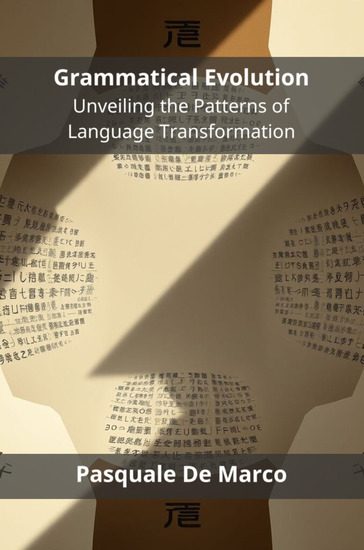
Grammatical Evolution - Unveiling the Patterns of Language Transformation - cover

Grammatical Evolution - Unveiling the Patterns of Language Transformation

Pasquale De Marco

Publisher: Publishdrive

  • 0
  • 0
  • 0

Summary

In the ever-evolving tapestry of human language, grammaticalization stands as a captivating phenomenon, shaping the very fabric of our communication. Grammaticalization: Unveiling the Patterns of Language Transformation invites readers on an enlightening journey to explore the mechanisms, manifestations, and implications of grammatical change.

This comprehensive volume delves into the intricate world of grammaticalization, revealing the systematic processes by which words, phrases, and constructions undergo a remarkable transformation, shedding their original meanings and morphing into grammatical elements. It unveils the underlying patterns that govern this linguistic evolution, showcasing the universality and regularity with which grammatical change unfolds across languages.

Grammaticalization: Unveiling the Patterns of Language Transformation transcends theoretical boundaries, demonstrating the profound implications of grammaticalization for diverse fields of study. It offers invaluable insights into language acquisition, historical linguistics, sociolinguistics, and artificial intelligence, providing a deeper understanding of how we learn language, how languages evolve over time, and how social factors influence our linguistic choices.

Moreover, this book underscores the dynamic nature of language, showcasing its remarkable ability to adapt and reshape itself to meet the ever-changing communicative needs of its speakers. Grammaticalization serves as a testament to the inherent creativity and adaptability of human language, highlighting its capacity to mold itself to new contexts and communicative demands.

Through a comprehensive exploration of grammaticalization, this book not only enriches our theoretical understanding of language but also offers practical applications. It informs language teaching methodologies, aiding educators in developing effective strategies for teaching grammar and fostering language proficiency. Additionally, it contributes to the development of natural language processing systems, enabling machines to better comprehend and generate human language.

Grammaticalization: Unveiling the Patterns of Language Transformation is an essential resource for linguists, language teachers, students, and anyone fascinated by the intricate workings of human language. It offers a comprehensive and accessible exploration of this captivating phenomenon, providing a deeper appreciation for the complexity, beauty, and adaptability of language.


If you like this book, write a review!
Available since: 06/02/2025.
Print length: 168 pages.

Other books that might interest you

  • Langenscheidt Business English Small Talk - Kommunikationstraining - cover

    Langenscheidt Business English...

    Langenscheidt...

    • 0
    • 0
    • 0
    Business English – schnell fit für den Job
    
    - Rund 60 Minuten Hör- und Sprechtraining, damit Small Talk gelingt
    - Zehn Small-Talk-Dialoge
    - Abwechslungsreiche Übungen zum Vertiefen der gebräuchlichen Wendungen und Ausdrücke
    - Alle Hörtexte mit deutscher Übersetzung und Business-Wortschatz im Begleitheft (PDF)
    - Britisches und amerikanisches Englisch
    - Für Lerner:innen mit Vorkenntnissen (Niveau B1)
    Show book
  • Beat the Bots - A Writer's Guide to Surviving and Thriving in the Age of AI - cover

    Beat the Bots - A Writer's Guide...

    Jane K. Cleland

    • 0
    • 0
    • 0
    Beat the Bots offers science-based creativity techniques that guide you through the writing process to unlock your imagination and create compelling stories that resonate with emotional truth in ways AI can’t match. 
      
    Even though artificial intelligence is based on a technology called “machine learning,” computers can’t learn to be creative—but you can. This book will show you the way. AI is, by definition, derivative, not creative. It can’t bring rational judgment to determine the quality or value of its work. When you bring those capabilities to your writing, your stories will touch readers’ hearts and minds. 
      
    Just as real food is better for us than processed food, and actual social interactions are more meaningful than social media, when it comes to writing your story, artificial intelligence can’t replicate your individual human intelligence, imagination, and sensibility. Technical wizardry can’t tell your story. Only you can do that. Your uniqueness is what separates you from a chatbot, and explains why you can’t be replaced by an algorithm. You’ll succeed because you’re human, not in spite of it. 
      
    Through engaging FAQs, invaluable “Pro Tips,” and “AI Weighs In” revelations, you’ll be able to apply the writing lessons and creativity tactics to all aspects of storytelling, bringing your distinctive vision and voice to your projects in ways AI simply can’t. Thought-provoking, science-based guided exercises challenge you to apply each chapter’s lessons to your own writing. Whether you’re writing a novel, literary nonfiction, or a memoir, you’ll be able to write stories that are fresh and compelling—your stories—and those are the books that publishers want and readers crave. That’s how you’ll beat the bots.
    Show book
  • Philosophy of Knowledge and Human Understanding - Reinterpreting the Relationship Between Knowledge Reality and Thought (2 in 1) - cover

    Philosophy of Knowledge and...

    Hector Davidson

    • 0
    • 0
    • 0
    This book contains these two titles: 
    - Philosophy of Language: Language plays a fundamental role in human life, functioning not only as a means of communication but as a structure that shapes the way we think, perceive, and understand the world. The philosophy of language seeks to unravel the complex relationships between words, meanings, and reality, exploring how language functions, how it conveys meaning, and how it relates to the world and our experiences. This chapter serves as an introduction to these foundational issues and provides an overview of the central questions and debates within the philosophy of language. 
    - Pragmatism:  Pragmatism is a philosophy that emphasizes the practical application of ideas by focusing on their consequences and real-world outcomes. Rooted in the belief that thought should be guided by experience, pragmatism challenges the notion of abstract, detached theorizing. Rather than searching for eternal truths or fixed principles, pragmatists argue that the value of ideas is measured by their usefulness in addressing human needs and solving practical problems. This approach seeks to bridge the gap between philosophy and everyday life, transforming ideas into action.
    Show book
  • 69 Short Thai Stories for Beginners - Dive Into Thai Culture Expand Your Vocabulary and Master Basics the Fun Way! - cover

    69 Short Thai Stories for...

    Adrian Gee

    • 0
    • 0
    • 0
    Dive into the World of Thai with 69 Short Thai Stories for Beginners! 
    Begin or continue your journey to mastering Thai with this engaging collection, designed specifically for A1/A2 learners. This audiobook offers a unique way to deepen your understanding of the language and rich Thai culture.
    Show book
  • Monoglot Guru - Your Passport to the World - cover

    Monoglot Guru - Your Passport to...

    Adrienne Harris

    • 0
    • 0
    • 0
    Heads-up for travelers, would-be travelers, and long-term planners. 
    Avoid expensive language courses and scams. 
    Arm yourself with realistic expectations and tested real-world tactics. 
    DON'T PANIC...You'll be fine.
    Show book
  • The Reader Over Your Shoulder - A Handbook for Writers of English Prose - cover

    The Reader Over Your Shoulder -...

    Robert Graves, Alan Hodge

    • 0
    • 1
    • 0
    “The best book on writing ever published” (Patricia T. O’Conner, author of Woe Is I).   When Robert Graves and Alan Hodge decided to collaborate on this manual for writers, the world was in total upheaval. Graves had fled Majorca three years earlier at the start of the Spanish Civil War, and as they labored over their new project, they witnessed the fall of France and the evacuation of Allied forces at Dunkirk. Soon the horror of World War II would reach British soil as well, as the Luftwaffe began bombing London in an effort to destroy the resolve of the English people.   Graves and Hodge believed that at a time when their whole world was falling apart, the survival of English prose sentences—of writing that was clear, concise, and intelligible—had become paramount if hope were going to outlive the onslaught. They came up with forty-one principles for writing, the majority devoted to clarity, the remainder to grace of expression. They studied the prose of a wide range of noted authors and leaders, finding much room for improvement. Successful communication could mean the difference between war and peace, life and death, and they were determined to contribute to its survival. The importance of good writing continues today, as obfuscation, propaganda, manipulative language, and sloppy standards are all too common—and this classic guide is just as useful and important as ever.  Note: This edition restores the full, original 1943 text.   “To see what really expert mavens can do in applying their rule-based expertise to clearing up bad prose, get hold of a copy of The Reader Over Your Shoulder.” —The Atlantic
    Show book