¡Acompáñanos a viajar por el mundo de los libros!
Añadir este libro a la estantería
Grey
Escribe un nuevo comentario Default profile 50px
Grey
Suscríbete para leer el libro completo o lee las primeras páginas gratis.
All characters reduced
Earth's Next Chapter - cover

Earth's Next Chapter

Pasquale De Marco

Editorial: Publishdrive

  • 0
  • 0
  • 0

Sinopsis

"Earth's Next Chapter" is a clarion call for change, a profound exploration of the challenges and opportunities that define our era. This comprehensive volume delves into the intricate tapestry of global issues, weaving together expert insights and innovative solutions to inspire a sustainable and harmonious future for our planet.

Within these pages, readers will embark on an intellectual odyssey, traversing the shifting tides of climate change, the complexities of food systems, the evolution of urban landscapes, and the ever-widening digital divide. The authors navigate these interconnected challenges with clarity and compassion, providing a roadmap for a just transition towards a greener, more equitable society.

From the urgency of climate action to the transformative power of renewable energy, "Earth's Next Chapter" unravels the intricate dance of our interconnected world. It delves into the depths of food security, exploring sustainable agriculture, plant-based innovations, and the importance of local and seasonal produce. The book sheds light on the vital role of biodiversity, highlighting the delicate balance between human activities and the health of our ecosystems.

The authors examine the profound transformation of urban landscapes, advocating for sustainable planning, green infrastructure, and policies that promote livable and connected communities. They explore the challenges and opportunities of the digital divide, delving into the ethics of technology and proposing innovative approaches to bridge the gap.

"Earth's Next Chapter" is not merely a chronicle of global challenges; it is a beacon of hope, illuminating the path towards a brighter future. It empowers readers with knowledge, ignites their passion for change, and provides a framework for collective action. This book is an essential guide for anyone seeking to understand and navigate the complexities of our rapidly changing world.


If you like this book, write a review!
Disponible desde: 02/06/2025.
Longitud de impresión: 154 páginas.

Otros libros que te pueden interesar

  • Borderline Personality Disorder: Improve Your Relationships With the Master Bpd Workbook Learn How to Control Your Emotions and Discipline Your Mind - cover

    Borderline Personality Disorder:...

    ROWENA LARSON

    • 0
    • 0
    • 0
    Don’t Start Dating Again Until You Hear This Surprising Truth About Borderline Personality Disorder 
    If you have trouble controlling your emotions, impulsively buy things, turn to alcohol and drugs to make yourself feel better, or constantly bombard yourself with thoughts of hurting yourself, know that you’re not alone. According to the National Alliance on Mental Illness, close to 2.58 million adults suffer from Borderline Personality Disorder (BPD), and many more cases often go undiagnosed. 
    You might think there’s nothing you can do about BPD, that you’re stuck riding this emotional roller coaster for the rest of your life. But it doesn’t have to be this way. Once you understand the truth about BPD and why you feel the way you do, you can start to completely change the way you think about yourself and others, so you never have to hit rock bottom again. 
    In ‘Borderline Personality Disorder,’ you’ll discover:Why you don’t need medication to treat BPD — use this type of treatment instead.9 effective tactics for coping with silent BPD.8 simple techniques for improving the way you communicate with loved ones when your emotions are running high.4 major mistakes to avoid when interacting with a friend or relative who has BPD — and what actions you should take instead to ease the situation.The 4 types of borderline personality disorders and how they differ from one another.9 common criteria for diagnosing BPD — Do any of these signs describe you? 
    With ‘Borderline Personality Disorder,’ you’ll gain a fuller understanding of your identity and what you can do to overcome your inner conflicts. 
    Leave behind your insecurities and take back control of your life: scroll up and click “Add to Cart” now.
    Ver libro
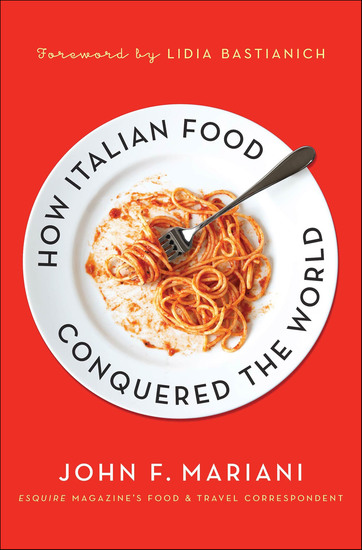
  • How Italian Food Conquered the World - cover

    How Italian Food Conquered the...

    John F. Mariani

    • 0
    • 0
    • 0
    “[An] entertaining and savory gastronomical history of the cuisine of Italy and how it won over appetites worldwide.” —USA TodayNot so long ago, Italian food was regarded as a poor man's gruel—little more than pizza, macaroni with sauce, and red wines in a box. Here, John Mariani shows how the Italian immigrants to America created, through perseverance and sheer necessity, an Italian-American food culture, and how it became a global obsession. The book begins with the Greek, Roman, and Middle Eastern culinary traditions before the boot-shaped peninsula was even called “Italy,” then takes readers on a journey through Europe and across the ocean to America alongside the poor but hopeful Italian immigrants who slowly but surely won over the hearts and minds of Americans by way of their stomachs.Featuring evil villains such as the Atkins diet and French chefs, this is a rollicking tale of how Italian cuisine rose to its place as the most beloved fare in the world, through the lives of the people who led the charge.With savory anecdotes from these top chefs and restaurateurs:Danny MeyerTony MantuanoMichael ChiarelloGiada de LaurentiisGiuseppe CiprianiNigella LawsonAnd the trials and triumphs of these restaurants:Da SilvanoSpiaggiaBottegaUnion Square CaféMaialinoRao'sBabboIl Cantinori“Mariani captures the history and elemental beauty of a cuisine that really does seem to appeal to more palates than any other . . . you owe it to yourself to read this book.” —Las Vegas Weekly
    Ver libro
  • Articles of Confederation and the Constitution The: The History of Early America’s Struggle to Establish a Functional Federal Government - cover

    Articles of Confederation and...

    Charles River Editors

    • 0
    • 0
    • 0
    Of all the celebrated documents in American history, one of the relics of history is the Articles of Confederation, which have been reduced to a footnote. In fact, Americans often overlook the years between the negotiation of peace in 1783 and the drafting of the Constitution in 1787, but to understand the Constitution, it’s necessary to understand why it was drafted in the first place.  
    	After the Revolution, the new United States attempted to operate under the Articles of Confederation, which had been drafted in a time of war by men who were wary of Parliamentary abuses of power. Given that context, it should not be surprising that the national government the Continental Congress crafted during the Revolutionary War was particularly weak. During the war itself, the reason Congress could not pay the soldiers in the Continental Army was because it did not have the power to tax. General George Washington pestered the Continental Congress for provisions constantly, but they could only ask for money from the states. 
    	By 1787, it became evident that the Articles of Confederation were inadequate for the new nation. With these problems hampering the national government under the Articles of Confederation and the threat of default on the nation's massive war debt looming, plans began being made to fix the problems of the Articles of Confederation. Thus, that summer a Constitutional convention was called, and each state sent delegates to Philadelphia. Among the delegates were prominent patriots and former members of the Continental Congress, including George Washington and Benjamin Franklin.  
    	The Constitution was a decisive move away from the Articles of Confederation, which the proponents of the Constitution claimed promoted dissonance by giving states too much autonomy. They argued that a strong federal government ought to be empowered to maintain standing armies, provide for a national militia, and be able to levy direct taxes to support defense and provide prosperity.
    Ver libro
  • Kant Today - A Survey - cover

    Kant Today - A Survey

    Erich Przywara

    • 0
    • 0
    • 0
    In Kant Today: A Survey, Erich Przywara explores the enduring impact of the tensions inherent in Immanuel Kant’s thought on continental philosophy over nearly a century and a half. Drawing parallels to the efforts at synthesis of Thomas Aquinas, Przywara presents Kant as a thinker striving to reconcile disparate currents of contemporary thought. While Aquinas fused neo-Platonic Augustinian philosophy with the neo-Aristotelianism of the Parisian Arts Faculty, Kant sought to harmonize continental idealism with the skepticism and empiricism exemplified by a British thinker like David Hume.   Aquinas’s synthesis maintained coherence due to his reliance on the analogia entis. In contrast, Kant’s synthesis lacked such a unifying principle, leading to the proliferation of philosophical antitheses reverberating throughout nineteenth- and early-twentieth-century Europe. Kant Today chronicles the aftermath of Kant’s tumultuous synthesis and suggests that the resolution may lie in a thinker capable of uniting Augustine’s fervent pursuit of God with Aquinas’s distinctive epistemological equilibrium—namely, John Henry Newman.  
    Ver libro
  • Radiolab: Mixtape - How The Cassette Changed The World - cover

    Radiolab: Mixtape - How The...

    Radiolab

    • 0
    • 0
    • 0
    Before the podcast and the smartphone, there was the cassette tape and the Walkman — two devices that, although not considered much today, were revolutionary. They were recordable, rewritable, spliceable, compact, and mobile. For the first time, they allowed you to move through the world and listen to a voice speaking only to you. These cassette tapes brought us together, pulled us apart, and forever changed how we say those three simple words, ‘I love you.’ In five episodes from around the world, Mixtape explores the impact the cassette had and continues to have today.
    Ver libro
  • Pragmatism - cover

    Pragmatism

    William James

    • 0
    • 0
    • 0
    'Pragmatism' contains a series of public lectures held by William James in Boston 1906–7. James provides a popularizing outline of his view of philosophical pragmatism while making highly rhetorical and entertaining lashes towards rationalism and other competing schools of thought. James is especially concerned with the pragmatic view of truth. True beliefs should be defined as, according to James, beliefs that can successfully assist people in their everday life. This is claimed to not be relativism. That reality exists is argued to be a fact true beyond the human subject. James argues, nevertheless, that people select which parts of reality are made relevant and how they are understood to relate to each other. Charles Sanders Peirce, widely considered to be the founder of pragmatism, eventually chose to separate himself intellectually from James, renaming his own theory to ‘pragmaticism’.
    Ver libro