Junte-se a nós em uma viagem ao mundo dos livros!
Adicionar este livro à prateleira
Grey
Deixe um novo comentário Default profile 50px
Grey
Assine para ler o livro completo ou leia as primeiras páginas de graça!
All characters reduced
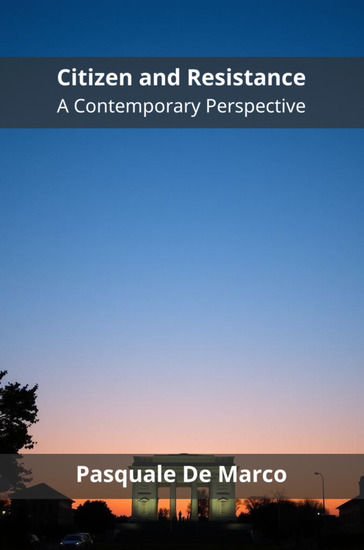
Citizen and Resistance - A Contemporary Perspective - cover
LER

Citizen and Resistance - A Contemporary Perspective

Pasquale De Marco

Editora: Publishdrive

  • 0
  • 0
  • 0

Sinopse

In an era of rapid societal and technological change, the concepts of citizenship and resistance have taken on new dimensions. This book delves into these fundamental aspects of human existence, exploring their evolving meanings and significance in the 21st century.

Citizenship is not merely a legal status but a dynamic relationship between individuals and the communities they belong to. It encompasses a multitude of rights, responsibilities, and expectations that shape our identities and interactions. From ancient civilizations to today's globalized societies, the concept of citizenship has undergone profound transformations. This book examines these historical shifts, analyzing how citizenship has been defined, contested, and redefined over time.

Resistance, on the other hand, is an inherent human response to oppression, injustice, and the limitations imposed by societal norms. It can manifest in various forms, from peaceful protests to acts of civil disobedience. Throughout history, resistance movements have played a pivotal role in shaping societies, challenging unjust laws, and bringing about positive change. This book explores the nature of resistance, its moral and ethical dimensions, and the strategies and tactics employed by those who dare to resist.

The relationship between citizenship and resistance is complex and multifaceted. Citizens have a responsibility to engage with their communities, hold their governments accountable, and work towards creating a just and equitable society. Resistance, when exercised responsibly and ethically, can be a powerful tool for citizens to assert their rights, demand change, and protect their communities.

This book explores the interplay between citizenship and resistance, highlighting their historical significance and contemporary relevance. Through a series of thought-provoking essays, we examine the challenges and opportunities that lie ahead as we strive to build inclusive and just societies. From the digital age of citizenship to the global refugee crisis, we delve into the pressing issues that demand our attention and action.

With its interdisciplinary approach and engaging writing style, this book is an essential read for anyone interested in politics, sociology, history, or the human condition. It is a call to action, a reminder that we all have a stake in the future of our communities and a responsibility to shape it for the better.


If you like this book, write a review!
Disponível desde: 02/06/2025.
Comprimento de impressão: 162 páginas.

Outros livros que poderiam interessá-lo

  • The Great UN-Reset - Humanity's Battle Against a Dystopian New World Order - cover

    The Great UN-Reset - Humanity's...

    Constantine du Bruyn

    • 0
    • 0
    • 0
    Why is it that our highly-interconnected and globalized world seems more chaotic and dangerous than ever? Have you ever wondered why the world seems to lurch from seemingly unconnected crisis to crisis? From the pandemic to climate change and net-zero policies? From food shortages to high inflation and collapsing markets? But are they really unconnected? This book explores the reality suggesting that, in fact, none of what is happening across the globe is happening by chance. 
    Right under humanity’s nose, supranational organizations such as the United Nations, the Club of Rome and Klaus Schwab’s World Economic Forum strive to usurp national sovereignties in the quest for a dystopian future, with the threat of transhumanism, the Fourth Industrial Revolution, central bank digital currencies, universal basic income and digital IDs looming ever closer. 
    This book compiles hundreds of pieces of evidence to expose the dystopian goals of a global control matrix lying in the shadows. By reading this book, you become part of humanity’s fight back against the new world order being forced on the globe. We must fight for our freedoms and for those of generations to come. 
    Humanity can, and will, win.
    Ver livro
  • History of Florence and of the affairs of Italy - cover

    History of Florence and of the...

    Niccolò Machiavelli

    • 0
    • 0
    • 0
    "History of Florence and of the Affairs of Italy" by Niccolò Machiavelli is a seminal work in the realm of historical writing and political theory. It was written by Machiavelli during the early 16th century and offers a detailed account of the history of Florence and Italy during his lifetime. Machiavelli's work delves into the intricate political dynamics of Florence and Italy, chronicling the rise and fall of various rulers, factions, and states. It provides valuable insights into the political strategies, power struggles, and machinations that characterized Renaissance Italy. Machiavelli's analysis is marked by his pragmatism and keen understanding of human nature, making this book a cornerstone of political philosophy and historical scholarship.
    Ver livro
  • The Intimacy of Power: An insight into private office Whitehall's most sensitive network - Why Private Office Matters - cover

    The Intimacy of Power: An...

    Alun Evans

    • 0
    • 0
    • 0
    Have you ever wondered what happens behind the scenes in the corridors of power during a major crisis or after a ministerial reshuffle? How do new government ministers get to grips with their portfolios and priorities? Who guides and supports them? And why, sometimes – during events such as 'Partygate' – do things go wrong?
    In this meticulously researched book, former senior civil servant Alun Evans lifts the lid on a vital but little-known cog in the machinery of government: private office and the private secretaries who work within it.
    Private secretaries exercise huge influence, and yet most of us have never heard of them. They are the ones who manage the flow of work, who whisper quietly in ministers' ears and who have been Prime Ministers' closest, most trusted and most discreet confidants. At critical moments in our national history – from the Falklands War to the Westland affair, from Black Wednesday to the 2008 financial crash, from New Labour to the coalition government – they have been central but hidden players.
    With exceptional access to former Prime Ministers and decision-makers, Evans explores what private office is and why it matters to British democracy. He argues that following the egregious constitutional breaches of Boris Johnson's premiership, private office must once again be taken seriously so it can return to being the independent junction box of government and a vital part of the British constitution.
    Ver livro
  • Leadership from Bad to Worse - What Happens When Bad Festers - cover

    Leadership from Bad to Worse -...

    Barbara Kellerman

    • 0
    • 0
    • 0
    Leadership from Bad to Worse is about how leadership that is bad, invariably, inexorably, gets worse—unless it is somehow, by someone or something, stopped or slowed. 


    This work draws on four cases of bad leadership—two in political leadership, two in business leadership—to show how it goes from bad to worse. Kellerman finds that bad leadership and bad followership go through four phases of development: 1) Onward and Upward; 2) Followers Join In; 3) Leaders Start In; and 4) Bad to Worse. These findings correctly suggest that the book, in addition to being of theoretical interest, is of practical import. It is intended, deliberately, to serve as an early warning system. By breaking bad leadership and followership into phases—each more ominous and ultimately dangerous than the one preceding—their progression will be easier to predict and detect. And easier, therefore, to slow or, preferably, to stop before they turn toxic. 


    Bad leadership is a social disease. But unlike diseases that are physical or psychological, it remains at the margins of our collective concerns. Leadership from Bad to Worse is, then, a corrective. Knowing that bad leadership can be checked before it corrupts is knowing that bad and then worse can be, if not completely precluded, then sometimes short-circuited.
    Ver livro
  • Corporations Are Not People - Reclaiming Democracy from Big Money and Global Corporations (2nd Edition) - cover

    Corporations Are Not People -...

    Jeffrey D. Clements, Bill Myers

    • 0
    • 0
    • 0
    A revised and updated edition of the definitive guide to overturning Citizens United. 


    Since the Supreme Court's Citizens United ruling that the rights of things—money and corporations—matter more than the rights of people, America has faced a crisis of democracy. In this timely and thoroughly updated second edition, Jeff Clements describes the strange history of this bizarre ruling, its ongoing destructive effects, and the growing movement to reverse it. 


    He includes a new chapter, "Do Something!," showing how—state by state and community by community—Americans are using creative strategies and tools to renew democracy and curb unbalanced corporate power. Since the first edition, sixteen states, one-hundred-sixty members of Congress, and five hundred cities and towns have called for a constitutional amendment to overturn Citizens United, and the list is growing. This is a fight we can win! 


    "More relevant than ever, this updated edition of Corporations Are Not People chronicles the remarkably vibrant, nationwide grassroots movement to 'get money out and voters in.' " —Katrina vanden Heuvel, Editor and Publisher, The Nation
    Ver livro
  • The Outline Of Sanity - cover

    The Outline Of Sanity

    G.K. Chesterton

    • 0
    • 0
    • 0
    The experiments of both Capitalism and Communism are almost complete, and they both lead to one big organization controlling everything you do. In 1925, when this book was first published, it was true, and it is even truer today.If you desire an alternative, consider this book, which considers Distributism, a philosophy whereby the actual people own the actual means of production, and produce and sustain themselves with it. A philosophy summed up in Chesterton's famous proposal of "Three acres and a cow" as being catalyst to an ideal peasant state.For such a simple idea, it has proven very contrary to the ideas of those in power, which is to say, to those who want power.  But for the rest of us, for the sane humans who desire peace and liberty, this book is a call to action against monopoly and the inevitability of global standardization, which the magazines call the Supply Chain and the Bible might call Babel and Babylon. Narrated in an accent based upon Chesterton's own, this performance expresses Chesterton's words as he himself might have, delivering them to an audience of his time.
    Ver livro