¡Acompáñanos a viajar por el mundo de los libros!
Añadir este libro a la estantería
Grey
Escribe un nuevo comentario Default profile 50px
Grey
Suscríbete para leer el libro completo o lee las primeras páginas gratis.
All characters reduced
An Introduction to Jane Austen - A Journey Through Her Literary World - cover

An Introduction to Jane Austen - A Journey Through Her Literary World

Pasquale De Marco

Editorial: Publishdrive

  • 0
  • 0
  • 0

Sinopsis

Step into the literary world of Jane Austen, one of the most celebrated authors in English literature, and embark on a journey through her timeless novels in this comprehensive introduction. Discover the themes, characters, and writing techniques that have made Austen's works enduring classics, captivating readers for generations.

Austen's novels offer a keen observation of human nature, delving into the complexities of love, marriage, and social class in Regency England. Her characters are vividly drawn and relatable, their struggles and triumphs mirroring the universal experiences of life. Austen's writing style is characterized by its wit, irony, and elegant prose, which have earned her a reputation as a master of the English language.

This introduction provides a comprehensive overview of Austen's life and times, exploring the social and cultural context that shaped her writing. It examines the influences that inspired her, including her family, friends, and the literary works she read. By understanding the world in which Austen lived, we can gain a deeper appreciation for the themes and characters she brought to life on the page.

Austen's major novels, including Pride and Prejudice, Sense and Sensibility, and Emma, are analyzed in detail, revealing the intricate plots, memorable characters, and enduring themes that have made them beloved by readers worldwide. Each novel is a microcosm of Austen's literary world, offering a unique perspective on the complexities of human relationships and the challenges of navigating societal expectations.

Austen's legacy and impact on literature and popular culture are also explored, tracing her influence on subsequent generations of writers and the enduring appeal of her works. Adaptations of her novels for film, television, and stage have introduced her stories to new audiences, while her characters and themes continue to resonate with readers of all ages.

Whether you are a longtime Austen enthusiast or a newcomer to her work, this introduction provides a comprehensive guide to her literary world. Delve into the pages of Austen's novels and discover the timeless insights and enduring charm that have made her one of the most beloved authors in English literature.


If you like this book, write a review!
Disponible desde: 02/06/2025.
Longitud de impresión: 161 páginas.

Otros libros que te pueden interesar

  • Why Do We Stay? - How My Toxic Relationship Can Help You Find Freedom - cover

    Why Do We Stay? - How My Toxic...

    Stephanie Quayle, W. Keith Campbell

    • 0
    • 0
    • 0
    Read by the authors. 
    Change your life when you learn how to spot a toxic relationship, how to get out, and how to heal. 
    You or someone you love may be in a toxic relationship, but it doesn't have to stay that way. In this compassionate and practical resource, Stephanie Quayle shares her powerful story alongside psychologist Dr. W. Keith Campbell's professional insights to give you the help and hope you need—and remind you that you are not alone. 
    When Stephanie lost her boyfriend in a plane crash, she faced intense grief and pain. Nothing compared, though, to the shock of discovering she had not been the only woman in his life. As her world unraveled around her, Stephanie realized that it had actually been unraveling from the start of their relationship—back when he promised her everything. 
    In Why Do We Stay? Stephanie draws on her story to explain how to spot a toxic relationship, how to get out, and how to heal. Mental health expert Dr. W. Keith Campbell joins her in helping you see that:You can make a change in your lifeThere are warning signs to look for and ways to spot an unhealthy relationshipYou don’t have to be a victim to narcissism or gaslighting or lose years of your lifeWhether you stay in or leave your relationship, healing and freedom are possible 
      
    Why Do We Stay? is ideal for:Those who feel trapped in an unhealthy relationshipThose who are recovering from a toxic relationshipListeners searching for a resource—for themselves or for a friend—on narcissism, gaslighting, compulsive lying, and other destructive behaviors 
      
    With a powerful blend of clinical research, gripping storytelling, and unvarnished hope, Why Do We Stay? empowers you to make changes in your life. You are not alone. 
    Discover a way forward. 
    The glossary can be found in the audiobook companion PDF download.
    Ver libro
  • Dark Psychology and Gaslighting Manipulation - Utilizing Natural Language Processing to Decode Human Behavior Enhance Emotional Acuity and Refine Persuasive Communication Strategies - cover

    Dark Psychology and Gaslighting...

    Dominique Blake

    • 0
    • 0
    • 0
    Unveiling the Secrets of Influence: A Guide to Healthy Persuasion and Personal Strength 
    This audiobook empowers you to navigate the world of influence with confidence. Learn to discern genuine communication from manipulative tactics, fostering healthier interactions in all areas of life. 
    You'll discover:The Art of Influence: Explore the psychology behind persuasion and how to build strong, authentic connections.Building Resilience: Develop emotional intelligence and tools to recognize and counter manipulation in relationships and the workplace.Empowerment Through Insight: Gain practical strategies to protect yourself from negative influences and foster personal growth.The Power of Self-Defense: Learn powerful mental tools to navigate challenging situations with confidence.Ethical Influence: Understand how to use influence ethically and create positive change in your surroundings. 
    This journey equips you to build a life of resilience and empowers you to contribute to a more positive and ethical environment.  
    Embark on a path of personal growth and transformation – your journey to healthy influence starts now!
    Ver libro
  • Persia and Islam: The History of the Islamic Empires that have Ruled Persia Since the Middle Ages - cover

    Persia and Islam: The History of...

    Editors Charles River

    • 0
    • 0
    • 0
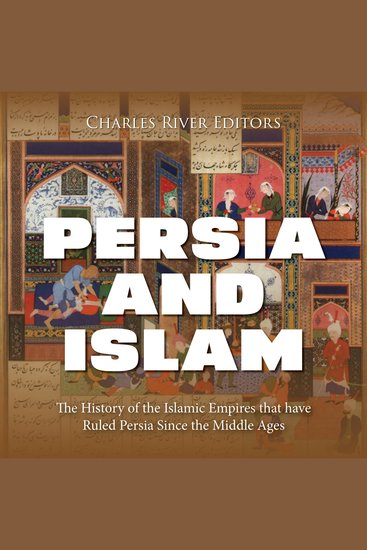
    As the Persian Empire’s power makes clear, Persia has been a crucial area throughout history, and thus it has been fought over incessantly, watching empires rise and fall. For most of the past 1,400 years, Islamic powers have struggled for supremacy in the region.  
    The split between the two forms of Islam was already in the process of forming upon the death of the Prophet Muhammad. Muhammad had constructed around himself not only a potent new religious movement but also a powerful young state called the Ummah (the "Community" for lack of a better translation). Belonging to the Islamic faith also meant belonging to the Ummah, which was governed by its own laws and had many of its own institutions. 	Amid the upheaval in the Islamic world following Muhammad’s death, the Umayyad Caliphate lasted for less than a century, but in that time it managed to become one of the most influential of the major caliphates established following him. Its official existence was from 661-750, and the rulers were the male members of the Umayyad dynasty, roughly translated from Arabic as the “Sons of Umayyah.” Its primary base of power was in Syria following the creation of a dynastic, hereditary rule headed by one of Syria’s long-lasting governors, Muawiya ibn Abi Sufyan. 
    	The Ottoman Empire and Safavids would also vie for power in Persia after the caliphates, and the Ottomans in particular spent several centuries expanding their empire’s size, power, and influence, bumping up against Eastern Europe and becoming one of the world’s most important geopolitical players. It was a rise that would not truly start to wane until the 19th century.  Preserving its mixed heritage, coming from both its geographic position rising above the ashes of the Byzantine Empire and the tradition inherited from the Muslim Conquests, the Ottoman Empire lasted more than six centuries.
    Ver libro
  • Pompey the Great: The Life and Legacy of the Legendary Roman General Who Lost the Civil War to Julius Caesar - cover

    Pompey the Great: The Life and...

    Editors Charles River

    • 0
    • 0
    • 0
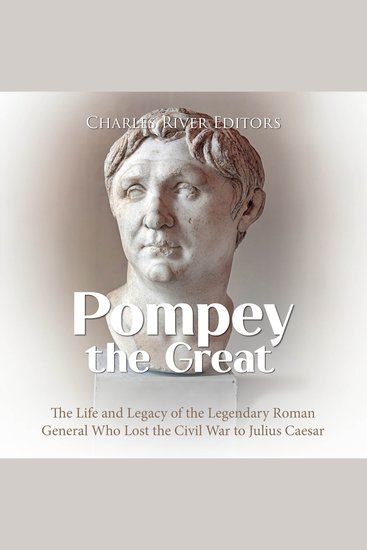
    Thanks to Caesar’s victory in the civil war, Pompey is mostly remembered not for being one of Rome’s greatest generals, but for being defeated by Caesar and then ignominiously murdered after he fled to Egypt, where the boy pharaoh Ptolemy XIII decapitated Pompey and offered his head to Caesar as a gift. Although Caesar was there chasing Pompey’s men, he quickly became involved in Egypt’s own civil war. As a consequence of Ptolemy’s barbarity, Caesar impulsively decided to side with his sister Cleopatra in her bid for the throne of Egypt, escalating what was rapidly becoming an all-out civil war.  
    	Of course, before the civil war, Pompey was one of the most powerful men in Rome. Gnaeus Pompeius was born on September 29, 106 BCE and went on to become regarded as one of the greatest statesmen and generals of the late Roman Republic. He was given the title “the Great” by his troops in Africa in 82 BCE and assumed the cognomen Magnus after 81 BCE. Pompey belonged to the senatorial nobility, the Pompeii, and the family had its first consul in 141 BCE. He loved all things Greek and spoke the language fluently. He gained much of his early military experience working on the staff of his father Pompeius Strabo, and the family base was in Picenum in eastern Italy. Strabo had significantly increased the family’s clients when he was consul in 88 BCE.  
    	In time, Pompey played a role in defeating many of Rome’s enemies across the world, from Africa to Spain, and he even helped put down Spartacus’ uprising. He had built his military power and acumen by participating in Rome’s previous civil war between Gaius Marius and Sulla, sharpening both his political and military skills, and he used them to great effect for decades during one of ancient Rome’s most chaotic – and important – periods. Perhaps just as importantly, following his successes in Africa, he demanded a triumph and refused to disband his army.
    Ver libro
  • The Coaching Shift - How A Coaching Mindset and Skills Can Change You Your Interactions and the World Around You - cover

    The Coaching Shift - How A...

    Brodie Gregory Riordan, Shonna...

    • 0
    • 0
    • 0
    The Coaching Shift offers practical guidance on how to adopt a coaching mindset and how to build a coaching skill set to unlock better communication, stronger relationships, and high performance in others. 


    Accessible and practical, the book draws on research from coaching, neuroscience, cognitive psychology, social psychology, and industrial-organizational psychology to provide the best science-based practices that can be applied in work and life. It presents core coaching skills that anyone can develop and use to improve their own emotions, thoughts, behaviors, and interactions with others. It uses levels of analysis to help listeners think about key concepts first in relation to themselves, and then in 1:1 interactions, group and team dynamics, organizational-level impact, and beyond. The book offers specific and tangible advice for listeners to develop their coaching and communication skills, while also developing a deeper understanding of themselves. 


    The Coaching Shift, with its clear tone, anecdotal references, and practical application, will be essential for coaches in practice and in training, and for academics and students of coaching and coaching psychology. These concepts and practices are also relevant for anyone who wants to have more effective interactions with others.
    Ver libro
  • Creativity - Innovation and Problem-Solving Skills of the Creative Brain - cover

    Creativity - Innovation and...

    Coral Nunez

    • 0
    • 0
    • 0
    Creativity is often seen as the driving force behind progress and innovation, but it can be difficult to define due to its fluid and multifaceted nature. At its core, creativity is the ability to generate novel ideas, solutions, or artistic expressions that are both original and valuable. It is not confined to any one discipline and can manifest in countless forms, whether in art, science, business, or everyday life. While many people may perceive creativity as an inherent trait, research suggests that it can also be nurtured and developed through practice and the right environment. This chapter explores the definition of creativity and the reasons why it is so crucial in both personal and professional realms. 
      
    The importance of creativity extends far beyond individual expression. It plays a central role in solving complex problems, adapting to new challenges, and envisioning future possibilities. In the workplace, creativity fuels innovation, allowing businesses to stay competitive and responsive to the rapidly changing demands of global markets. In education, creative thinking is essential for fostering critical thinking and lifelong learning. Creativity can also promote emotional well-being, offering a means of self-expression and problem-solving when faced with personal challenges.
    Ver libro