¡Acompáñanos a viajar por el mundo de los libros!
Añadir este libro a la estantería
Grey
Escribe un nuevo comentario Default profile 50px
Grey
Suscríbete para leer el libro completo o lee las primeras páginas gratis.
All characters reduced
A New Age of Democracy - The Story of the Elections That Changed a Nation - cover

A New Age of Democracy - The Story of the Elections That Changed a Nation

Pasquale De Marco

Editorial: Publishdrive

  • 0
  • 0
  • 0

Sinopsis

In the annals of history, the year 1994 stands as a testament to the resilience and determination of the human spirit. It was a year that witnessed the culmination of decades of struggle and sacrifice in South Africa, as the nation embarked on a transformative journey towards democracy. "A New Age of Democracy: The Story of the Elections That Changed a Nation" chronicles this pivotal moment, capturing the essence of a nation's rebirth and the dawn of a new era.

This book delves into the profound significance of the 1994 elections, which were not merely an electoral exercise but a symbol of hope and reconciliation. Against the backdrop of the oppressive apartheid regime, the release of Nelson Mandela from prison in 1990 ignited a flame of change, setting the stage for negotiations between the African National Congress (ANC) and the apartheid government. The signing of the National Peace Accord in 1991 paved the way for the first multiracial elections in South Africa, marking a watershed moment in the nation's history.

The run-up to the elections was a period of immense anticipation and trepidation. The Independent Electoral Commission (IEC) worked tirelessly to ensure a free and fair process, while voter education campaigns swept across the nation, encouraging citizens to register and exercise their democratic right. Political parties embarked on vigorous campaigns, conveying their visions for a post-apartheid South Africa.

Election Day, April 26, 1994, was a day of both hope and trepidation. South Africans from all walks of life flocked to the polling stations, their hearts filled with anticipation. The scenes of long queues, the indelible ink staining fingers, and the palpable sense of unity were etched into the annals of history. The elections were a resounding success, with an overwhelming voter turnout and an orderly process that defied the odds.

The victory of the ANC, led by Nelson Mandela, marked a watershed moment. Mandela, a symbol of resistance and reconciliation, became the first democratically elected president of South Africa. His inauguration on May 10, 1994, was a spectacle of jubilation and a poignant reminder of the extraordinary transformation that had taken place. The new government embarked on an ambitious program of reconstruction and reconciliation, aimed at healing the wounds of the past and building a united, democratic nation.

The 1994 elections were not just a local affair; they reverberated across the globe, inspiring hope and serving as a beacon of change for nations grappling with oppression and injustice. South Africa's transition to democracy became a model for peaceful conflict resolution and post-conflict reconstruction. The international community, recognizing the significance of this historic event, provided invaluable support and assistance to the fledgling democracy.

"A New Age of Democracy" is a compelling narrative that captures the essence of a nation's rebirth. Through vivid storytelling and meticulous research, this book offers a profound insight into the events leading up to the 1994 elections, the challenges faced, and the enduring legacy of this historic moment. It is a testament to the power of unity, resilience, and the unwavering human spirit.


If you like this book, write a review!
Disponible desde: 02/06/2025.
Longitud de impresión: 159 páginas.

Otros libros que te pueden interesar

  • How To Stop Being Toxic - A 5-Step Guide to Emotional Healing Quitting Manipulative and Narcissistic Behaviors and Avoiding Hurting the People You Love for Lasting Personal Empowerment and Healthy Relationships - cover

    How To Stop Being Toxic - A...

    Alban Cole

    • 0
    • 0
    • 0
    Heal and Transform Your Life With This 5-Step Guide – Even if You've Struggled with Toxicity for Years 
    Do guilt and regret weigh you down after interactions with loved ones? Have you tried to change, only to fall back into old patterns? 
    You’re not alone. Many struggle with toxic behaviors rooted in past trauma or learned as coping mechanisms. These patterns can harm relationships, self-esteem, and overall well-being. 
    But transformation is possible. 
    How to Stop Being Toxic: A 5-Step Guide to Emotional Healing offers a compassionate roadmap to break free from harmful cycles and create a life filled with empathy, trust, and healthy relationships. 
    Inside, you’ll discover:A proven 5-step process to identify and eliminate toxic behaviors.10 self-awareness exercises to uncover the roots of toxicity.Practical communication strategies to reduce conflict.Techniques to regulate emotions and set healthy boundaries.Mindfulness practices to calm your mind and center your emotions.Real-life success stories to inspire your journey. 
    This guide is practical, clear, and free of psychological jargon. Whether you’re healing from past trauma or working on current toxic tendencies, this book meets you where you are and helps you grow step by step. 
    Ready to transform your relationships and your life? Scroll up and click Add to Cart now!
    Ver libro
  • Changing Perceptions - Deciphering the language of behaviour - cover

    Changing Perceptions -...

    Graham Chatterley

    • 2
    • 0
    • 0
    This timely book moves the dial on the perception of challenging behaviour in schools. De-escalation is important but it is only part of the process: if we really want to change behaviour, we have to understand it.
    The causes of poor behaviour are many and varied: fear, stress, anxiety and the feeling of being overwhelmed can all take their toll.Changing Perceptionsexamines the motives behind challenging behaviour and the consequences that come with it, detailing ways in which these situations can be managed calmly and consistently. Better understanding and empathy can make children feel safer, build their trust, develop belonging and consequently create more effective learners in the classroom.
    Empathy is the master key to unlocking the most challenging pupils. When we consistently respond to children with empathy and compassion, we don't just put a sticking plaster over a problem, we change their experiences: how they feel and how they behave long term. Importantly, this approach also greatly improves staff wellbeing by increasing understanding of challenging behaviour and how it is perceived.
    In this book, Graham sets out why it is so important to teach behaviour and provides practical ways to deal with the most challenging situations in the classroom and stop the conflict spiral. He also covers the importance of validating feelings, building self-esteem, improving emotional resilience, raising expectations, fostering positive values and much more.
    Essential reading for teachers, school leaders and everyone working with challenging behaviour.
    Ver libro
  • Sikh Tawareekh - Part I - cover

    Sikh Tawareekh - Part I

    Dr Harjinder Singh Dilgir

    • 0
    • 0
    • 0
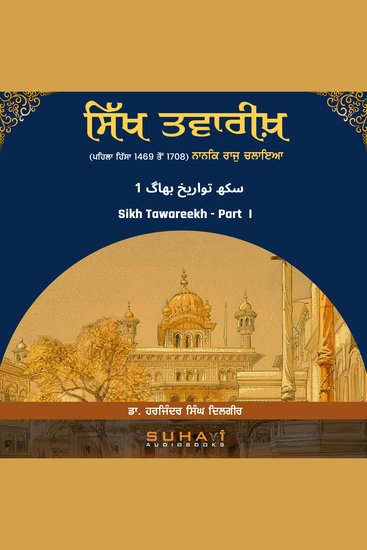
    Sikh Tawareekh Part 1 by Dr. Harjinder Singh Dilgir offers a deep insight into the lives and teachings of the ten Sikh Gurus. The book not only presents historical facts but also highlights the timeless wisdom, guidance, and life lessons given by the Gurus. By reading or listening to this book, readers can discover meaningful solutions to many of their everyday life challenges through the spiritual and practical path shown by the Gurus.
    Ver libro
  • Warrior Empires of India - Conquerors and Defenders (3 in 1) - cover

    Warrior Empires of India -...

    Rolf Hedger

    • 0
    • 0
    • 0
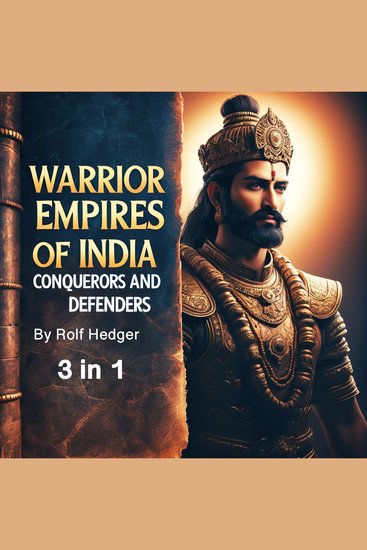
    The history of India is filled with tales of powerful warrior empires that shaped the destiny of the subcontinent. Among them, the Hoysala Empire, the Rashtrakuta Empire, and the Kakatiya Dynasty stood as formidable forces in the Deccan region, each leaving behind a unique legacy of conquest, governance, and cultural patronage.  
    The Rashtrakutas, known for their military might, expanded their rule across vast territories, engaging in wars with the Pratiharas and Palas while fostering art and architecture, as seen in the magnificent Kailasanatha temple at Ellora.  
    The Hoysalas, emerging later, were fierce warriors and master builders, commissioning iconic temples such as those at Belur and Halebidu while defending their kingdom against rival invasions.  
    The Kakatiya Dynasty, renowned for its defensive strategies, constructed impressive fortifications like the Warangal Fort and resisted repeated invasions, including those from the Delhi Sultanate.  
    These warrior empires not only fought to expand and defend their territories but also enriched Indian culture, trade, and architecture, leaving an enduring impact on the history of the Deccan.
    Ver libro
  • Complete Freedom From Thought - Brockwood Park 1972 Public Talk 1 - cover

    Complete Freedom From Thought -...

    Jiddu Krishnamurti

    • 0
    • 0
    • 0
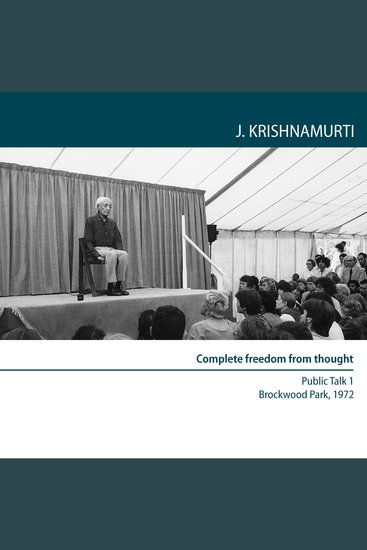
    Complete freedom from thought - 9 September 1972 
    • Learning is instant perception and action. What place has thought in learning? 
    • To learn about freedom must thought be completely silent? Does insight into 
    freedom take time? 
    • Can thinking, however rational, bring about a psychological revolution in us? 
    • Is thought always conditioned? Is freedom the non-existence of thought? 
    • My very being is related to thought. If you want to see something new, what do 
    you do? 
    • To have insight, let go of the old and listen. 
    • Learning is not memorizing. 
    • Q: Is feeling another way of thinking? 
    • Q: Isn’t the need to love and be loved essential? 
    • Needing love is love of self.
    Ver libro
  • Afternoons with Harper Lee - cover

    Afternoons with Harper Lee

    Wayne Flynt

    • 0
    • 0
    • 0
    Imagine sitting with an esteemed writer on his or her front porch somewhere in the world and swapping life stories. Dr. Wayne Flynt got the opportunity to do just this with Nelle Harper Lee. In a friendship that blossomed over a dozen years starting when Lee relocated back to Alabama after having had a stroke, Flynt and his wife Dartie became regular visitors at the assisted living facility that was Lee's new home. And there the conversation began, with an invitation to "Come in, sit down, and stay a while." 


    The stories exchanged ranged widely over the topics of Alabama history, Alabama folklore, family genealogy, and American literature, of course. Wayne and his wife were often joined by Alice Lee, the oldest Lee sister, a living encyclopedia on the subject of family genealogy, and middle sister Louise Lee Conner. 


    The hours spent visiting, in intimate closeness, are still cherished by Wayne Flynt. They yielded revelations large and small, which have been shaped into Afternoons with Harper Lee. Part memoir, part biography, this book offers a unique window into the life and mind and preoccupations of one of America's best-loved writers. Flynt and Harper Lee and her sisters learned a great deal from each other, and though this is not a history book, their shared interest in Alabama and its history made this extraordinary work possible.
    Ver libro