¡Acompáñanos a viajar por el mundo de los libros!
Añadir este libro a la estantería
Grey
Escribe un nuevo comentario Default profile 50px
Grey
Suscríbete para leer el libro completo o lee las primeras páginas gratis.
All characters reduced
Introduction to Scientific Programming with Python - cover

Introduction to Scientific Programming with Python

Pankaj Jayaraman

Editorial: Educohack Press

  • 0
  • 0
  • 0

Sinopsis

"Introduction to Scientific Programming with Python" offers an immersive exploration into the dynamic field of scientific programming using Python. We cater to a diverse audience, serving as an entry point for novices and a valuable resource for seasoned practitioners in scientific computing.
Python's popularity in scientific circles stems from its readability, versatility, and extensive libraries for numerical computing, data analysis, and visualization. We cover fundamental programming concepts and gradually introduce advanced techniques specific to scientific applications.
From mastering Python basics to exploring advanced topics like machine learning and symbolic mathematics, each chapter provides a structured and hands-on learning experience. Real-world case studies, practical examples, and exercises ensure readers grasp theoretical concepts and gain practical skills.
Throughout the book, Python becomes a tool of empowerment, enabling readers to unravel complex scientific data, model intricate phenomena, and contribute meaningfully to their fields. "Introduction to Scientific Programming with Python" is an invaluable companion for harnessing Python's potential in scientific inquiry and discovery.
By the end, readers will have a robust foundation in Python and the confidence to apply scientific programming methodologies to real-world problems. This book unlocks the door to a world where Python drives exploration, discovery, and innovation in science.
Disponible desde: 20/02/2025.
Longitud de impresión: 294 páginas.


Otros libros que te pueden interesar

  • Controlled Explosions in Mental Health - A Compassionate Guide to Understanding Why Our Brains Self-Sabotage Self-Criticise and Self-Harm - cover

    Controlled Explosions in Mental...

    Charlie Heriot-Maitland

    • 0
    • 0
    • 0
    Have you ever wondered why your brain self-sabotages? Or why your actions seem self-defeating or destructive? This book explores how our brains have evolved to favor survival over mental well-being—creating "controlled explosions"—and provides practical ways to understand, acknowledge, and defuse them. 
     
    Controlled Explosions in Mental Health identifies everyday scenarios in which one may experience self-destructive behavior such as procrastination or self-criticism. Each chapter guides the listener through key examples of controlled explosions, identifying and exploring their possible functions. Listeners will learn how to identify when one or more of these "explosions" are operating in their lives, recognize the potential harm or difficulties this may cause, and learn practical ways to navigate and overcome. The friendly, accessible narrative, teamed with guided examples to aid self-practice, makes this book the ultimate companion for navigating your mental health. 
     
    This book supports the path to self-awareness, helping the listener take control of their own struggles with insight, care, and compassion. It's a must-have for any listener looking to better understand their mental health and wellbeing.
    Ver libro
  • The Bitcoin Standard - The Decentralized Alternative to Central Banking - cover

    The Bitcoin Standard - The...

    Saifedean Ammous

    • 0
    • 0
    • 0
    When a pseudonymous programmer introduced "a new electronic cash system that's fully peer-to-peer, with no trusted third party" to a small online mailing list in 2008, very few people paid attention. Ten years later, and against all odds, this upstart autonomous decentralized software offers an unstoppable and globally accessible hard money alternative to modern central banks. The Bitcoin Standard analyzes the historical context to the rise of Bitcoin, the economic properties that have allowed it to grow quickly, and its likely economic, political, and social implications. 
    While Bitcoin is an invention of the digital age, the problem it purports to solve is as old as human society itself: transferring value across time and space. Author Saifedean Ammous takes the listener on an engaging journey through the history of technologies performing the functions of money, from primitive systems of trading limestones and seashells, to metals, coins, the gold standard, and modern government debt. Exploring what gave these technologies their monetary role, and how most lost it, provides the listener with a good idea of what makes for sound money, and sets the stage for an economic discussion of its consequences for individual and societal future-orientation, capital accumulation, trade, peace, culture, and art.
    Ver libro
  • Website Development Bundle 2 in 1 Bundle - Website Planning Guide and Building Websites Handbook - cover

    Website Development Bundle 2 in...

    Jeffrey Wiggins, Will Castle

    • 0
    • 0
    • 0
    Website Development Bundle, 2 in 1 Bundle: Website Planning Guide and Building Websites Handbook 
    Unlock the secrets to creating a professional, effective, and powerful online presence with the Website Development Bundle. This comprehensive 2-in-1 audiobook bundle is your ultimate guide to mastering the art of website creation and optimization, whether you're building your first site or refining an existing one. 
    This bundle includes two expertly crafted audiobooks: 
    Website Planning Guide: Your Roadmap to a Powerful Online Presence 
    Learn the essential strategies for designing a website that stands out and engages visitors. This guide walks you through the planning stages, including setting clear objectives, identifying your target audience, crafting a user-friendly design, and optimizing content for maximum impact. With this roadmap, you’ll be equipped to create a website that achieves your goals and enhances your brand. 
    Building Websites Handbook: Your Step-by-Step Blueprint for Web Mastery 
    Dive into the technical and creative aspects of website development. From choosing the right platform and tools to understanding coding basics and implementing design best practices, this handbook provides detailed, step-by-step instructions to help you create professional, functional, and visually appealing websites. 
    Together, these audiobooks cover every aspect of website creation, from initial planning to final execution, giving you the knowledge and tools to succeed in the competitive online world. Whether you're an entrepreneur, small business owner, or aspiring web developer, this bundle is your key to building a strong digital foundation. 
    Take the first step toward web mastery and create a website that drives results with the Website Development Bundle!
    Ver libro
  • The Neanderthals - A History from Beginning to End - cover

    The Neanderthals - A History...

    Hourly History

    • 0
    • 0
    • 0
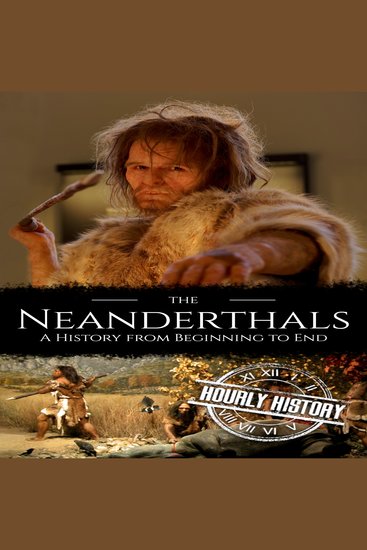
    In August 1856, mine workers were excavating the Feldhofer Grotto in the western part of Germany. The cave was one of many in a narrow gorge cut by the Düssel River through limestone outcrops. Here, workers discovered what they believed were human bones. An amateur naturalist from the nearby town of Elberfeld, Johann Carl Fuhlrott, heard about the find and decided to take a look at the remains, which were said to be very old. This discovery would ultimately reshape our understanding of human evolution, though that realization would take many decades to unfold. 
    Fuhlrott examined the bones, which were many thousands of years old. They were similar to human bones, but also notably different. Fuhlrott took the bones to a professor of anatomy at the University of Bonn, Hermann Schaaffhausen, who agreed that these appeared to be the remains of a primitive human. In 1857, the two men announced their find and identified the remains as Homo neanderthalensis (after the Neander Valley in which they had been found). Their discovery was initially greeted with indifference and even hostility. The scientific community's resistance reflected the prevailing worldview of the era, where the biblical account of human creation still held considerable sway. However, as more similar remains were found in the decades that followed, it became accepted that the Neanderthal was a hominid that predated modern humans, Homo sapiens. 
    At first, it was generally accepted that the Neanderthals were primitive, brutish beings who were superseded by more advanced humans. It is only relatively recently that we have discovered that Neanderthal people had an advanced culture, and that most people today carry traces of Neanderthal DNA! This is the fascinating and surprising story of the Neanderthals.
    Ver libro
  • The Telephone Radio & Television – Changing the Way We Communicate - The Innovations That Connected the World and Shaped Modern Media - cover

    The Telephone Radio & Television...

    Donovan Hill

    • 0
    • 0
    • 0
    Before the internet, there were three inventions that shaped the way humans connected: the telephone, radio, and television. These groundbreaking technologies revolutionized communication, bringing people closer and transforming how we share information. 
    This audiobook takes you deep into the history of communication, uncovering the inventors, challenges, and technological breakthroughs that made modern media possible. Discover: 
    ✅ How Alexander Graham Bell’s telephone connected the world 
    ✅ The radio’s role in entertainment, war, and mass media 
    ✅ How television became a global phenomenon 
    ✅ The evolution of these inventions into the digital age 
    The Telephone, Radio & Television – Changing the Way We Communicate is a must-listen for *history lovers, technology enthusiasts, and anyone fascinated by how communication has shaped our world.
    Ver libro
  • Strata - Stories from Deep Time - cover

    Strata - Stories from Deep Time

    Laura Poppick

    • 0
    • 0
    • 0
    The epic stories of our planet's 4.54-billion-year history are written in strata―ages-old remnants of ancient seafloors, desert dunes, and riverbeds striping landscapes around the world. In this brilliantly original debut work, science writer Laura Poppick decodes strata to lead us on a journey through four global transformations that made our lives on Earth possible: the first accumulations of oxygen in the atmosphere; the deep freezes of "Snowball Earth"; the rise of mud on land and accompanying proliferation of plants; and the dinosaurs' reign on a hothouse planet 
    Poppick introduces us to the researchers who have devoted their careers to understanding the events of deep time. She travels to sites as various as a Minnesotan iron mine that runs half a mile deep and a corner of the Australian Outback where glacial deposits date from the coldest times on Earth. Ultimately, she demonstrates that the planet's oceans, continents, atmosphere, life, and ice have always conspired to bring stability to Earth, even if we are only just beginning to understand how these different facets interact. 
    A work in the tradition of John McPhee, Strata allows us to observe how the planet has responded to past periods of environmental upheaval, and shows how Earth's ancient narratives could hold lessons for our present and future.
    Ver libro