Junte-se a nós em uma viagem ao mundo dos livros!
Adicionar este livro à prateleira
Grey
Deixe um novo comentário Default profile 50px
Grey
Assine para ler o livro completo ou leia as primeiras páginas de graça!
All characters reduced
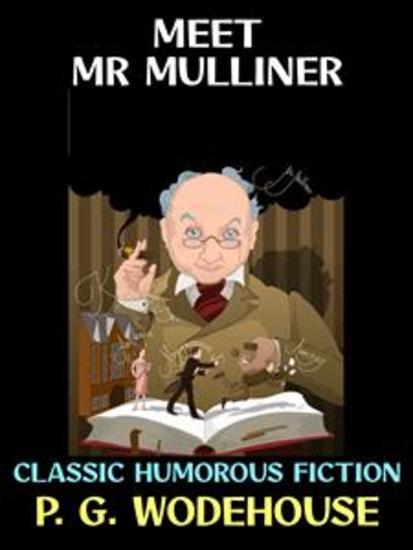
Meet Mr Mulliner - Classic Humorous Fiction - cover
LER

Meet Mr Mulliner - Classic Humorous Fiction

P. G. Wodehouse

Editora: Diamond Book Publishing

  • 0
  • 0
  • 0

Sinopse

In the Angler's Rest, drinking hot scotch and lemon, sits one of Wodehouse's greatest raconteurs. Mr Mulliner, his vivid imagination lubricated by Miss Postlethwaite the barmaid, has fabulous stories to tell of the extraordinary behaviour of his far-flung family: in particular there's Wilfred, inventor of Raven Gypsy face-cream and Snow of the Mountain Lotion, who lights on the formula for Buck-U-Uppo, a tonic given to elephants to enable them to face tigers with the necessary nonchalance. Its explosive effects on a shy young curate and then the higher clergy is gravely revealed. Then there's his cousin James, the detective-story writer, who has inherited a cottage more haunted than anything in his own imagination. And Isadore Zinzinheimer, head of the Bigger, Better & Brighter Motion Picture Company. Tall tales all - but among Wodehouse's best.
Disponível desde: 16/03/2023.

Outros livros que poderiam interessá-lo

  • Blue & Green - From their pens to your ears genius in every story - cover

    Blue & Green - From their pens...

    Virginia Woolf

    • 0
    • 0
    • 0
    Adeline Virginia Woolf was born on the 25th January 1882 in South Kensington in London. 
    Although lauded as a founder of modernist writing with such classics as ‘Orlando’, ‘Mrs Dalloway’ and ‘To the Lighthouse’ and, of course, many classic short stories, her background is filled with elements of tragedy that she somehow overcame to become such a revered writer.   Her mother died when she was 13, her half-sister Stella two years later and with it her first of several nervous breakdowns.  Appallingly it was later found that three of her half-brothers had sexually abused her so darkness must have seemed ever present.   
    She began writing professionally at age 20 but her father’s death two years later brought a complete mental collapse and she was briefly institutionalised.  Somehow she found within herself a literary career and with it great innovations in writing; she was a pioneer of “stream of consciousness”.    
    Her tight circle of friends were the founders of the Bloomsbury Group, a movement whose legacy still influences across the arts and society in many way to this day.   
    Whilst the dark periods continued to interrupt her emotional state her rate of work never ceased.  Until, on 28th March 1941, Woolf put on her overcoat, filled up its pockets with stones, and walked into the River Ouse, in Lewes, East Sussex and drowned herself.  Her body was not recovered until the 18th April.  She was 59. 
    She left behind a note which read in part “Dearest, I feel certain that I am going mad again.  I feel we can't go through another of those terrible times.  And I shan't recover this time.  I begin to hear voices, and I can't concentrate.  So I am doing what seems the best thing to do”.
    Ver livro
  • The Ghost in the Cupboard Room - From their pens to your ears genius in every story - cover

    The Ghost in the Cupboard Room -...

    Wilkie Collins

    • 0
    • 0
    • 0
    Wilkie Collins was born on 8th January 1824 in Marylebone, London.  
    The family moved several times in his early years before, at 12, they travelled to France and Italy for 2 years where the sights and atmosphere made a deep and lasting impression on him. 
    He resumed his education at Mr Cole’s private boarding school in Highbury, Islington.  Here, he began his literary career under unusual circumstances: the school bully would give him no peace until he had been told a bedtime story.  This ‘little brute’ helped create one of England’s greatest writers.  
    On leaving school, in 1841, he became a clerk at a tea merchant before, 2 years later, publishing his first short story.  However, his first novel was rejected and remained so during his lifetime.  
    A brief stint at Lincoln’s Inn to please his father and to acquire a steady income was halted by his father’s death.  Collins then wrote and published his fathers’ memoirs.  He then completed his legal education though he would never practice.  
    In March 1851, he was introduced to Charles Dickens and there now started a period of sustained literary output and a remarkable lifelong friendship.  His stories were published in Dicken’s magazines, and he toured with Dicken’s theatrical before the two of them travelled to the Continent. 
    By the early 1860’s worrying signs of ill-health appeared with rheumatic gout.  As it worsened, he sought respite and cures in German spa towns and gave up writing to help his recuperation. 
    His personal life had become very complicated.  He was living with the widowed Caroline Graves and conducting an affair with a much younger Martha Rudd.  With the serialised release of ‘The Moonstone’ and vicious attacks of gout Caroline left him and married another.  Collins was now prescribed opium and was soon its lifelong dependent.  Martha bore him two children and with the return of a now divorced Caroline Graves he now divided his time between the two women. 
    In 1874 he set aside writing to tour North America on a reading tour. 
    Throughout his later years he continued to write and publish.  In all 30 novels, 14 plays, 60 short stories and over a 100 non-fiction essays as well as many more collaborations with Dickens. 
    In 1884 the Society of Authors elected him as it’s Vice-President. 
    Wilkie Collins died from a paralytic stroke on September 23rd, 1889, in London. He was 65.
    Ver livro
  • The Blind Accordionist - cover

    The Blind Accordionist

    C.D. Rose

    • 0
    • 0
    • 0
    In the novel Who's Who When Everyone Is Someone Else, the character "C. D. Rose" (not to be confused with the author C. D. Rose) searches an unnamed middle-European city for the long-lost manuscript of a little-known writer named Maxim Guyavitch. That search was fruitless, but in The Blind Accordionist, "C. D. Rose" has found the manuscript—nine sparkling, fable-like short stories—and he presents them here with an (hilarious) introduction explaining the discovery, and an afterword providing (hilarious) critical commentary on the stories, and what they might reveal about the mysterious Guyavitch. 


    The Blind Accordionist is another masterful book of world-making by the real C. D. Rose, absorbing in its mix of intelligence and light-heartedness, and its ultimate celebration of literature itself. It is the third novel in the series about "C. D. Rose," although the reader does not need to have read the previous two books. (The first in the series was The Biographical Dictionary of Literary Failure; the second was Who's Who When Everyone Is Someone Else.) 


    Like those books, The Blind Accordionist can be read both as a simple but wonderful collection of quirky stories, and as comedy—or as a beautiful and moving elegy on the nobility of writers wanting to be read.
    Ver livro
  • Black Voices on Britain - cover

    Black Voices on Britain

    Hakim Adi

    • 0
    • 0
    • 0
    A compelling anthology of Black voices from England, America, Africa and the Caribbean, from people who lived, worked, campaigned and travelled in Britain from the eighteenth to the early twentieth century. Part of the Macmillan Collector’s Library.Professor Hakim Adi, shortlisted for the Wolfson history prize, draws on a variety of published works in Black Voices on Britain, all of which describe powerful experiences: James Gronniosaw and his family endure poverty, illness and unemployment; Mary Prince is driven out by her cruel owners and turns to London charities for help; Frederick Douglass, on a lecture tour around Britain, reveals how the Christian clergy built churches with slave-owners’ money; and William Wells Brown gives his impressions of England as he travels around a country which welcomes him more readily than America. These and other voices offer a fascinating and thought-provoking portrayal of Black experiences in Britain.
    Ver livro
  • Evil Flowers - cover

    Evil Flowers

    Gunnhild Øyehaug, Kari Dickson -...

    • 0
    • 0
    • 0
    From the acclaimed, award-winning author of Present Tense Machine and Knots, a collection of playfully surreal stories about love, death, and metamorphosis. 
     
    In Evil Flowers, a precise but madcap collection of short stories, Gunnhild Øyehaug extracts the bizarre from the mundane and reveals the strange, startling brilliance of everyday life. 
     
    Across twenty-five stories, Øyehaug renovates the form again and again, confirming Lydia Davis’s observation that her every story is “a formal surprise, smart and droll.” The stories converse with, contradict, and expand on one another; birds, hagfish, and wild beasts reappear, gnawing at the fringes. A section of a woman’s brain slips into the toilet bowl, removing her ability to remember or recognize types of birds (particularly problematic because she is an ornithologist). Medicinal leeches ingest information from fiberoptic cables, and a new museum sinks into the ground. 
     
    Inspired by Charles Baudelaire, a dreamer and romantic in the era of realism, Øyehaug revolts against the ordinary, reaching instead for the wonder to be found in fantasy and absurdity. Brimming with wit, ingenuity, and irrepressible joy, these stories mark another triumph from a dazzling international writer.
    Ver livro
  • Diary Of A Dead Man - cover

    Diary Of A Dead Man

    Bernard Gregor-Smith

    • 0
    • 0
    • 0
    A distinguished Russian concert pianist vanishes while on tour in New Zealand. His estranged daughter seeks to unravel this mysterious disappearance. She will need help. And help is available. But is it human, angelic or something else?
    Ver livro