¡Acompáñanos a viajar por el mundo de los libros!
Añadir este libro a la estantería
Grey
Escribe un nuevo comentario Default profile 50px
Grey
Suscríbete para leer el libro completo o lee las primeras páginas gratis.
All characters reduced
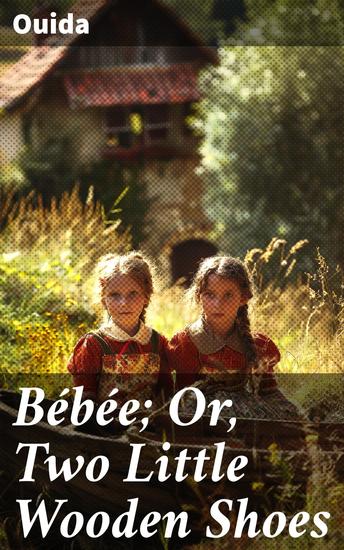
Bébée; Or Two Little Wooden Shoes - A Tale of Love Poverty and Resilience in 19th-century France - cover

Bébée; Or Two Little Wooden Shoes - A Tale of Love Poverty and Resilience in 19th-century France

Ouida

Editorial: Good Press

  • 0
  • 0
  • 0

Sinopsis

In "B√©b√©e; Or, Two Little Wooden Shoes," Ouida crafts a poignant narrative that explores the complexities of childhood and social class through the eyes of its young protagonist, B√©b√©e. The novel is marked by Ouida's lush, descriptive prose and an emotional depth that resonates with readers. Set against the backdrop of 19th-century France, the story intricately weaves themes of innocence, poverty, and societal expectations, showcasing the stark contrast between the carefree lives of the affluent and the struggles of the impoverished. Through B√©b√©e's experiences, Ouida addresses broader sociocultural issues, while employing elements of realism and romanticism that were characteristic of her literary milieu. Ouida, born Maria Louise Ram√©, was a significant figure in Victorian literature, known for her impassioned depictions of love, nature, and class struggles. Her own experiences in society fueled her empathy for the downtrodden, often reflected in her literary works. A keen observer of human nature, Ouida's narratives often embody a deep social commentary, encouraging readers to grapple with the moral implications of their own realities. Her understanding of children'Äôs pure yet harsh world serves as a profound backdrop in this novel. "B√©b√©e; Or, Two Little Wooden Shoes" is a must-read for anyone interested in the interplay of class, childhood, and morality in literature. Ouida'Äôs ability to blend rich storytelling with keen social insight makes this work not only an engaging tale but also an essential exploration of human resilience amidst adversity. Readers will find themselves captivated by B√©b√©e'Äôs journey, inviting reflection on their own values and societal roles.
Disponible desde: 12/08/2023.
Longitud de impresión: 128 páginas.

Otros libros que te pueden interesar

  • New Machiavelli The - Book the Second: Margaret (Unabridged) - cover

    New Machiavelli The - Book the...

    H. G. Wells

    • 0
    • 0
    • 0
    Herbert George "H. G." Wells (1866 - 1946) was an English writer.
    He was prolific in many genres, including the novel, history, politics, social commentary, and textbooks and rules for war games. Wells is now best remembered for his science fiction novels and is called a "father of science fiction"
    BOOK THE SECOND: MARGARET: I must go back a little way with my story. In the previous book I have described the kind of education that happens to a man of my class nowadays, and it has been convenient to leap a phase in my experience that I must now set out at length.
    Ver libro
  • History of Herodotus The - Book 9: Calliope (Unabridged) - cover

    History of Herodotus The - Book...

    Herodotus, George Rawlinson

    • 0
    • 0
    • 0
    One of the masterpieces of classical literature, the "Histories" describes how a small and quarrelsome band of Greek city states united to repel the might of the Persian empire. But while this epic struggle forms the core of his work, Herodotus' natural curiosity frequently gives rise to colorful digressions - a description of the natural wonders of Egypt; an account of European lake-dwellers; and far-fetched accounts of dog-headed men and gold-digging ants. With its kaleidoscopic blend of fact and legend, the "Histories" offers a compelling Greek view of the world of the fifth century BC.
    BOOK 9: CALLIOPE: Mardonius, when Alexander upon his return made known to him the answer of the Athenians, forthwith broke up from Thessaly, and led his army with all speed against Athens; forcing the several nations through whose land he passed to furnish him with additional troops.
    Ver libro
  • Young Goodman Brown - cover

    Young Goodman Brown

    Nathaniel Hawthorne

    • 0
    • 0
    • 0
    Nathaniel Hawthorne’s classic tale of faith, temptation, and moral conflict comes to life in this haunting new narration by Christopher Mireider. 
    On a mysterious night in 17th-century Salem, young Goodman Brown ventures into the dark forest, leaving behind his wife Faith and his seemingly pious life. What he encounters on his journey challenges everything he believes about his neighbors, his faith, and even his own soul. Is it a dream, a vision, or a glimpse into the hidden sin of humanity? 
    A masterpiece of American Gothic literature, Young Goodman Brown explores the shadowy line between innocence and corruption, belief and despair. Perfect for fans of classic literature, allegorical fiction, and dark moral tales.
    Ver libro
  • A Sick Collier - cover

    A Sick Collier

    D H Lawrence

    • 0
    • 0
    • 0
    'A Sick Collier'. Lawrence returns in this story to the scenes of his childhood and the colliers he was brought up with. The wife in the story is probably based on his mother although the husband is unlike the drinking, brutal father portrayed in 'Sons and Lovers', Lawrence's autobiographical novel. The story is a vivid portrayal of the life of a young couple when an accident strikes the husband down but  does not succeed as a short story, lacking any clear focus or message.
    Ver libro
  • The Happy Prince and other Tales - cover

    The Happy Prince and other Tales

    Oscar Wilde

    • 0
    • 0
    • 0
    A collection of short stories by Oscar Wilde first published in May 1888. It contains the five stories: "The Happy Prince," "The Nightingale and the Rose," "The Selfish Giant," "The Devoted Friend," and "The Remarkable Rocket."  
    Narrated by Michael Ward
    Ver libro
  • A Legend - From their pens to your ears genius in every story - cover

    A Legend - From their pens to...

    Alexander Kuprin

    • 0
    • 0
    • 0
    Alexander Kuprin was born in Narovchat, Penza in Russia on 7th September 1870. 
    At 3 his Father died and he and mother moved to Moscow. By 10 he was enrolled at the Second Moscow Military High School and there his interest in literature began. The Alexander Military Academy followed and two years later he was a sub-lieutenant and posted to an Infantry Regiment for a further four years. 
    Despite his duties he was a now a keen writer and published his first short story at this time. His military duties also garnered him experiences for his breakthrough work ‘The Duel’.  Leaving the military he left for Kiev to work for local newspapers.  He continued to publish both stories and novels and by 1901 he was in St Petersburg becoming part of a group that included Chekhov, Ivan Bunin, Maxim Gorky and Leonid Andreyev.  
    In the years that followed further controversial works and acclaim followed.  His comments on the regime meant he was also put under secret police surveillance.   
    As World War I erupted, Kuprin opened a military hospital but was then given command of an infantry company in Finland. He was soon discharged on grounds of ill health.  
    The October Revolution saw him praise Lenin, but he warned that the Bolsheviks threatened Russian culture and might cause further widespread suffering to the peasants.  As Civil War raged he took his family to Helsinki and then on to Paris. 
    Exile saw his talents decline further and his succumbing to alcoholism. He became lonely and withdrawn. The family's poverty increased his malaise.   
    In May 1937, the Kuprin’s returned to Moscow.  He now saw his work published but wrote almost nothing new.  In 1938 his health rapidly deteriorated.  Already suffering from a kidney problems and sclerosis, he had now developed cancer of the oesophagus.  
    Alexander Kuprin died on 25th August 1938.
    Ver libro