Junte-se a nós em uma viagem ao mundo dos livros!
Adicionar este livro à prateleira
Grey
Deixe um novo comentário Default profile 50px
Grey
Assine para ler o livro completo ou leia as primeiras páginas de graça!
All characters reduced
Right Above Race - cover
LER

Right Above Race

Otto H. Kahn

Editora: DigiCat

  • 0
  • 0
  • 0

Sinopse

In "Right Above Race," Otto H. Kahn navigates the complex waters of racial identity, privilege, and systemic injustice with a thought-provoking blend of personal narrative and sociopolitical analysis. Kahn employs a nuanced literary style, weaving together autobiographical elements with detailed socio-historical context, prompting readers to interrogate their own positions within contemporary societal hierarchies. His exploration of race transcends mere academic discourse, delving deeply into the emotional and psychological ramifications of systemic racism, thereby inviting a broader reflection on the intersections of race, class, and power. Otto H. Kahn, a prominent sociologist and cultural critic, brings to this work a wealth of personal experience and scholarly expertise. With a background that includes extensive research on race relations and social equity, Kahn is uniquely positioned to shed light on the burdens and privileges associated with racial identities. His insights stem not only from rigorous academic investigation but also from a genuine commitment to fostering dialogue around issues of race in America, making his voice both authoritative and accessible. "Right Above Race" is an essential read for anyone seeking to understand the intricacies of race and privilege in today's society. Kahn's engaging prose challenges readers to confront uncomfortable truths and encourages an honest examination of their own beliefs and biases. This book is a vital addition to the libraries of scholars, activists, and anyone who believes in the necessity of social justice.
Disponível desde: 15/09/2022.
Comprimento de impressão: 68 páginas.
Outros livros que poderiam interessá-lo

  • Seeing 'What Is' is Action - Brockwood Park and Gstaad 1975 - Dialogue 2 - cover

    Seeing 'What Is' is Action -...

    Jiddu Krishnamurti

    • 0
    • 0
    • 0
    Seeing ‘what is’ is action - 24 May 1975  
    • If truth is something totally different from reality then what place has action in 
    daily life, in relation to truth and reality? 
    • Seeing ‘what is’ is action. 
    • What place has love in truth? 
    • When I separate you, in that separation love cannot exist. 
    • How are you to convey the sense of truth to a student? 
    • As long as I live in the field of reality, which has its own energy, that energy will 
    not free me. 
    • When the mind is empty, when the mind is nothing, not a thing, in that there is 
    perception.
    Ver livro
  • Everything Is Radha - cover

    Everything Is Radha

    Prana Govinda Das

    • 0
    • 0
    • 0
    Noted internationally known self-help advocate and teacher of devotional yoga Prana Govinda Das was born in Liverpool, England in 1968 admittedly a pretty good year for all things bright and beautiful. He says, "From as early as I can remember I had an unquenchable thirst for knowledge, and a desire to understand the true nature of man and this world we live in. I was also always seeking out people who could answer all the questions I had about life, the universe, and everything." After studying film production in the early nineties Prana was able to fulfill his lifelong desire to travel to India. admittedly his first trip changed his life completely and forever. "At that point," He recalls, "my thirst for material knowledge turned to a desire to understand the spiritual side of life. For the next six years I returned frequently to, where I studied many different paths of Hinduism, Buddhism and other forms of yoga and meditation. However, even after learning and experiencing so much I was still left incomplete." in 2001 during the young man's sixth trip to India, he traveled to Vrindavan, a holy town associated with Lord Krishna south of Delhi. It was there he met his spiritual guide, and mentor Srila Bhaktivedanta Naryana Goswami. Some twenty years on, Prana has been resident in his teacher's temples all over the world, particularly in India, Australia, America, and Europe. Welcome then to the inspirational, engrossing, all-inclusive teachings of Prana Govinda Das.
    Ver livro
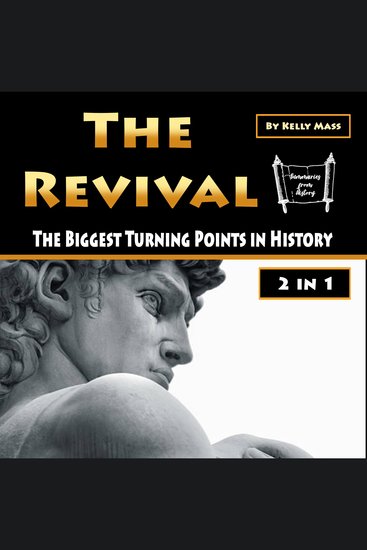
  • The Revival - The Biggest Turning Points in History - cover

    The Revival - The Biggest...

    Kelly Mass

    • 0
    • 0
    • 0
    This 2 in 1 combo contains the following titles: 
    1 - Age of Enlightenment: Finally…finally, humanity began to wake up. Finally, they decided to take science, knowledge, politics, development, multiple angles and perspectives, and the details of our everyday lives a bit more seriously. For centuries, raw and primal urges and principles had taken hold of conquerors, officials, and governments. But there was a light at the end of the tunnel. Humanity just needed to acknowledge knowledge. It needed to value the art of studying phenomena and learning, not just spiritual notions and religion. Welcome to the book about how this happened. Welcome to a glimmer of hope in humanity’s realization of what this world is and what lies in the elements yet to be discovered. 
    2 - Renaissance: When we think of the Renaissance, we often think of paintings. And indeed, many painters and sculptors were part of the artistic transformation the Renaissance caused. But there was more. The Renaissance basically formed a period of collective enlightenment and freedoms that put an end to certain tyrannies and false notions from the Middle Ages. 
    The Renaissance is a time in European history marking the shift from the Middle Ages to modernity and covering the 15th and 16th centuries, identified by an effort to restore and exceed ideas and accomplishments of classical antiquity. It happened after the crisis of the late Middle Ages and was related to great social change. Aside from the basic periodization, advocates of a "long Renaissance" might put its start in the 14th century and its end in the 17th century.
    Ver livro
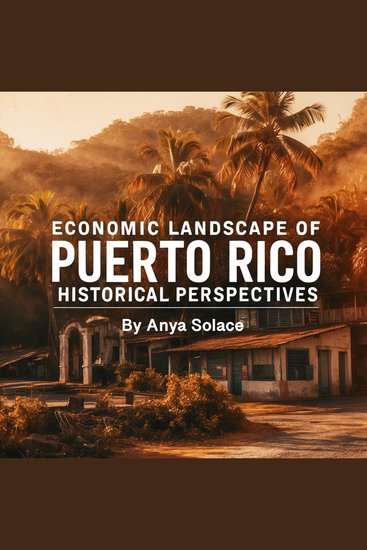
  • Economic Landscape of Puerto Rico - Historical Perspectives - cover

    Economic Landscape of Puerto...

    Anya Solace

    • 0
    • 0
    • 0
    Puerto Rico’s economic landscape has been shaped by centuries of historical, political, and social transformations. From the indigenous societies that first inhabited the island to its complex relationship with Spain and the United States, the economy has evolved in response to shifting global and regional forces. Understanding Puerto Rico’s economic foundations requires an examination of its early economic structures, the colonial period’s trade policies, and the profound effects of U.S. annexation. These key moments set the stage for the challenges and opportunities that have defined the island’s development.  
    Before European colonization, the indigenous Taíno people sustained themselves through subsistence agriculture, fishing, and trade with neighboring Caribbean islands. Their economy, though not based on large-scale commerce, was well-adapted to the island’s resources. With the arrival of the Spanish in 1493, Puerto Rico was integrated into Spain’s mercantilist system, marking the beginning of an economic transformation that would prioritize colonial extraction over local prosperity. The Spanish introduced new crops such as sugarcane and coffee, which would later become vital to the island’s economy. However, strict trade regulations limited Puerto Rico’s ability to develop independently, as it was required to conduct commerce exclusively with Spain.  
    During the 18th and 19th centuries, Puerto Rico transitioned into a plantation-based economy, with sugar and coffee emerging as dominant industries. Enslaved Africans and later immigrant laborers contributed to the agricultural boom, making the island a key supplier to European and American markets. Despite periods of growth, the economy remained vulnerable to global price fluctuations, natural disasters, and restrictive colonial policies. By the time of the Spanish-American War in 1898, Puerto Rico’s economy was still largely agrarian, with limited industrial development.
    Ver livro
  • Paddy Mayne - Lt Col Blair 'Paddy' Mayne 1 SAS Regiment - cover

    Paddy Mayne - Lt Col Blair...

    Hamish Ross

    • 0
    • 0
    • 0
    ‘Paddy’ Mayne was one of the most outstanding special forces leaders of the Second World War. Hamish Ross’s authoritative study follows Mayne from solicitor and a rugby international to troop commander in the Commandos and then the SAS, whose leader he later became and whose annals he graced, winning the DSO and three bars, the Croix de Guerre and the Légion d’Honneur. 
     
    Mayne’s achievements attracted attention, and after his early death legends emerged, based largely on anecdote and assertion. Hamish Ross’s closely researched biography challenges much of the received version, using contemporary sources, the official war diaries, the chronicle of 1 SAS, Mayne’s papers and diaries, and a number of extended interviews with key contemporaries. It has the support of the Mayne family and the SAS Regimental Association. 
     
    In Ross’s analysis Mayne is a dynamic, yet principled and thoughtful man, committed to the unit’s original concepts; not flawless, but whose leadership qualities and tactical brilliance in the field secured the reputation of the SAS.
    Ver livro
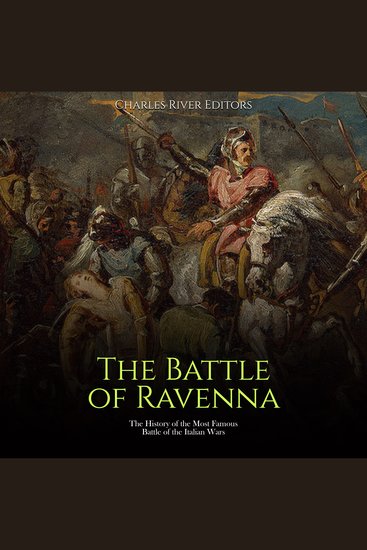
  • Battle of Ravenna The: The History of the Most Famous Battle of the Italian Wars - cover

    Battle of Ravenna The: The...

    Editors Charles River

    • 0
    • 0
    • 0
    In 1494, there were five sovereign regional powers in Italy: Milan, Venice, Florence, the Papal States and Naples. In 1536, only one remained: Venice. These decades of conflict precipitated great anxiety among Western thinkers, and Italians responded to the fragmentation of Latin Christendom, the end of self-governance for Italians, and the beginning of the early modern era in various ways. They were always heavily influenced by the lived experience of warfare between large Christian armies on the peninsula. The diplomatic and military history of this 30-year period is a complex one that one eminent Renaissance historian, Lauro Martines, has described as "best told by a computer, so many and tangled are the treatises, negotiations and battles." At the same time, the fighting went in tandem with the Renaissance and was influenced by it.  
    	Before 1494, death tolls were counted in hundreds rather than thousands, but that would change over the next generation, and among the many battles fought, few stood out like the Battle of Ravenna in 1512. Ravenna is an ancient city in northern Italy on the Adriatic Coast that replaced Rome as capital of the Western Roman Empire for much of the 5th century and continued to serve as a regional center for its successor states, including the Ostrogoths, Byzantines, and Papal States. On April 11 of that year, two great armies met near Ravenna, which had been the site of conflict at least six times before on account of its strategic importance. It was a well-protected city with connections to rich Mediterranean ports, and it guarded the routes to central and southern Italy. Over 44,000 troops gathered, a vast number for the time, to fight over Italy’s destiny, which had become important to France, Austria, and Spain, the great powers of the time.
    Ver livro