¡Acompáñanos a viajar por el mundo de los libros!
Añadir este libro a la estantería
Grey
Escribe un nuevo comentario Default profile 50px
Grey
Suscríbete para leer el libro completo o lee las primeras páginas gratis.
All characters reduced
Mastering ArcGIS 36 - Step-by-Step Strategies for Efficient Mapping Data Visualization and Spatial Intelligence - cover

Mastering ArcGIS 36 - Step-by-Step Strategies for Efficient Mapping Data Visualization and Spatial Intelligence

Otto Friedrich

Editorial: BookRix

  • 0
  • 0
  • 0

Sinopsis

Unlock the full power of Geographic Information Systems with Mastering ArcGIS 3.6, a comprehensive and practical guide designed to take you from foundational concepts to advanced spatial intelligence workflows.Whether you are a student, researcher, urban planner, environmental analyst, business professional, or GIS enthusiast, this step-by-step manual provides clear explanations and hands-on strategies to help you confidently navigate ArcGIS Pro 3.6 and transform raw geographic data into meaningful insights.ArcGIS is more than a mapping tool—it is a complete spatial intelligence platform. In this book, you will learn how to build efficient projects, manage and structure spatial data, perform advanced geoprocessing tasks, and create professional-quality maps and layouts. From understanding coordinate systems and projections to mastering 3D visualization, raster analysis, and automation with ModelBuilder and Python, this guide covers the full spectrum of modern GIS workflows.Inside this book, you will discover how to:Navigate and customize the ArcGIS Pro 3.6 interface for maximum productivityCreate and manage structured GIS projects with confidenceWork effectively with vector and raster data formatsEdit attribute tables and perform advanced field calculationsApply professional symbology and thematic mapping techniquesConduct spatial analysis using geoprocessing toolsBuild 3D scenes and visualize terrain dataAutomate repetitive workflows using ModelBuilder and Python scriptingPublish web maps and share spatial insights onlineProduce publication-ready layouts and cartographic outputsMaintain data quality, optimize performance, and apply best practicesThis book goes beyond software instructions. It explains the logic behind spatial analysis and demonstrates how GIS supports real-world decision-making in urban planning, environmental management, public health, transportation, agriculture, business intelligence, and emergency response.Designed with clarity and structure, each chapter builds progressively—from core concepts to advanced techniques—ensuring that beginners develop a strong foundation while experienced users refine and expand their expertise.If you are ready to harness the full analytical and visualization capabilities of ArcGIS Pro 3.6 and turn geographic data into actionable intelligence, Mastering ArcGIS 3.6 is your complete roadmap.Transform your maps. Elevate your analysis. Master spatial intelligence.
Disponible desde: 23/02/2026.

Otros libros que te pueden interesar

  • Seven Brief Lessons on Computing - cover

    Seven Brief Lessons on Computing

    III Mapp

    • 0
    • 0
    • 0
    Have you ever looked down at your phone and wondered, "What's going on in there?" If you've ever wondered how modern computers and digital devices work, Seven Brief Lessons on Computing takes you through an entertaining and educational journey of mankind's desire to count, compare, and compute our world.
    Ver libro
  • Belonging in Healthcare - The Better Allies® Approach to Creating More Inclusive Workplaces - cover

    Belonging in Healthcare - The...

    Karen Catlin

    • 0
    • 0
    • 0
    It’s become increasingly clear that healthcare workplaces are filled with non-inclusive behavior. People who are underrepresented because of their gender, race, ethnicity, sexual orientation and identity, disabilities, and other factors regularly face biases and challenges that hold them back from success. These include everything from harassment, dismissive behavior, and lack of credit for their contributions, to pay inequity, extra hurdles to advancement, and more. And while many organizations are looking to address these issues with top-down initiatives, there's also an important role for individuals to play in creating a more inclusive culture via everyday acts of allyship. 
    In this new book, inclusive workplace expert Karen Catlin brings her popular Better Allies® approach to healthcare workplaces. 
    Belonging in Healthcare provides a practical, research-based guide for how to be a better ally for coworkers who are from underrepresented groups. Filled with firsthand accounts from nurses, physicians, staff, administrators, and professors, combined with published studies, the book will help you spot situations where you can create a more inclusive workplace and everyday actions to reshape culture so everyone can thrive. 
    This is the book that allies in healthcare have been searching for: an industry-specific guide to the mindsets, strategies, and changes needed to make their workplaces more equitable from the inside out.
    Ver libro
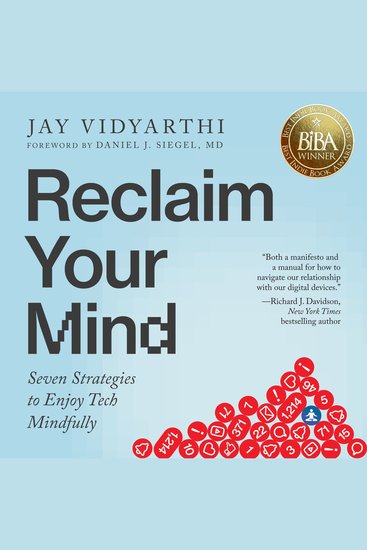
  • Reclaim Your Mind - Seven Strategies to Enjoy Tech Mindfully - cover

    Reclaim Your Mind - Seven...

    Jay Vidyarthi

    • 0
    • 0
    • 0
    ★ 2025 Best Indie Book Award® winner • IAN Book of the Year finalist • CBCA finalist ★ 
     
    You know the feeling. You put your phone down after who-knows-how-long and you feel worse than when you picked it up. You need boundaries, but that doesn't mean you should feel guilty every time you scroll. 
     
    Reclaim Your Mind offers a middle way to "anyone who's feeling guilty and helpless about their screen time" (Catherine Price, author of How to Break Up with Your Phone). It isn't just another book telling you that your phone is ruining your brain. It's a mindful, balanced approach that helps you enjoy tech on your terms. 
     
    Most people who write a book like this want you to use less of it. Jay Vidyarthi is one of the world's leading designers of mindful technology. A lifelong meditator and tech lover, he weaves together "a tapestry of wisdom" (Richard J. Davidson, NYT bestselling author of The Emotional Life of Your Brain) based not only on mindfulness, but also a deep understanding of how tech is designed. You shouldn't have to choose between inner peace and screen time, and neither should those you care about. 
     
    With relatable stories, short exercises in every chapter, and strategies backed by scientific research, Reclaim Your Mind is "a playful, wise, and practical guide" (Dr. Daniel J. Siegel, MD, NYT bestselling author of The Whole-Brain Child) to rekindling a positive relationship with TV, social media, games, news, email, and AI. You'll learn to stand up for your freedom of attention and actually enjoy the convenience, connection, and joy that technology can offer - all without getting stuck on apps designed to exploit you. 
     
    ★ Narrated by the author, including exclusive guided meditations available only in this audiobook edition. ★
    Ver libro
  • 100 Facts About The Science and Applications of Nanotechnology - English to Spanish - cover

    100 Facts About The Science and...

    Science-Based Language Learning Lab

    • 0
    • 0
    • 0
    Introduction to the 100 Somethings Language Learning Series 
     
    Welcome to a revolutionary approach to language learning! This series helps you master Spanish by intertwining it with compelling topics like The Science and Applications of Nanotechnology. Each book centers on a theme (art, science, history) and presents 100 carefully chosen facts in both English and Spanish. 
     
    How It Works: 
     
    - Each fact is first introduced in Spanish, encouraging you to interpret it. 
     
    - The following page provides the fact in English and then repeats it in Spanish, aiding comprehension and memorization. 
     
    - The second half flips this order—English first, then Spanish, and English again—helping you practice translation in both directions for better mastery. 
     
    Benefits: 
     
    - Concise Learning: Focuses on one-sentence facts to ensure every word learned is impactful and directly related to your interests, making them easier to remember. 
     
    - Reinforcement: Alternating languages for each fact naturally strengthens vocabulary and grammar. 
     
    - Engagement: Learning vocabulary through topics you're passionate about keeps the process dynamic and relevant. 
     
    - Dual Knowledge: You enrich your understanding of a specific subject while learning a new language. 
     
    This series is tailored for learners who thrive on clear, targeted information, making it both educational and enjoyable. Whether you’re a beginner or expanding your linguistic skills, this series promises an effective and engaging educational journey. Embrace these 100 facts and let your passions drive your progress in mastering a new language!
    Ver libro
  • Data Structures and Algorithms for Beginners - A Beginner's Guide to Essential Concepts and Techniques - cover

    Data Structures and Algorithms...

    Vincent Berry

    • 0
    • 0
    • 0
    "Data Structures and Algorithms for Beginners" demystifies complex topics with clear explanations, real-world examples, and practical exercises. Starting from the basics, you'll learn about different types of data structures, from simple arrays and linked lists to more intricate structures like trees and graphs. As you progress, you'll explore the mechanics and strategies of efficient algorithms, understanding how they manipulate and process data to solve problems. 
    This guide also dives into the critical aspect of algorithm analysis, teaching you how to evaluate the performance of an algorithm through concepts like time and space complexity. You'll gain hands-on experience with sorting and searching algorithms, discovering how they are applied in various applications and how they can be optimized for speed and efficiency. 
    Each chapter includes practical code examples in a beginner-friendly programming language, step-by-step walkthroughs, and illustrative diagrams to help solidify your understanding. By the end of this book, you will have a solid grasp of key concepts and be well-prepared to apply these techniques in practical scenarios, from software development to preparing for technical interviews. 
    Step into the world of computer science with confidence and curiosity! "Data Structures and Algorithms for Beginners" is your comprehensive guide to mastering these critical concepts, opening doors to a multitude of possibilities in technology and beyond.
    Ver libro
  • The Fox Shrew and You - How Brains Evolved - cover

    The Fox Shrew and You - How...

    Rogier B. Mars

    • 0
    • 0
    • 0
    A leading neuroscientist describes the long evolutionary process that led to the human brain. 
    Our human brain is both unique and similar to that of other species. The only way we can trace its evolution is by comparing it to the brains of animals alive today. In this book, leading neuroscientist Rogier Mars offers an engaging account of the evolution of the brain by exploring the brains and cognitive capacities of animals from the humble sea squirt to the socially minded fox and the tiny shrew. 
    By examining the challenges that different animals and their ancestors faced, Mars shows that we can understand what drove the evolution of their brains. Early vertebrates became predators of the sea; mammals evolved a complex neocortex to deal with foraging for high-energy food; and social primates adapted to contend with a fast-changing environment in which groups of individuals team up to get food. Over the course of a long evolutionary road, the ancestors of present-day animals and their descendants continually adapted to challenges, modifying their brains again and again. For us humans, this process gradually led to a brain that is capable of so much, from inventing language to traveling into space. 
    Mars leads listeners across eras and species, showing us how we resemble our animal cousins, how we differ from them, and how animals in one branch of the evolutionary tree did the hard evolutionary work of becoming human.
    Ver libro