¡Acompáñanos a viajar por el mundo de los libros!
Añadir este libro a la estantería
Grey
Escribe un nuevo comentario Default profile 50px
Grey
Suscríbete para leer el libro completo o lee las primeras páginas gratis.
All characters reduced
Zero Hour America - History's Ultimatum over Freedom and the Answer We Must Give - cover

Zero Hour America - History's Ultimatum over Freedom and the Answer We Must Give

Os Guinness

Editorial: IVP

  • 0
  • 0
  • 0

Sinopsis

America has lost its way. And America will fall—unless.
Revolution? Oligarchy? Or homecoming? Americans are approaching a "zero hour" for the republic and its distinctive view of ordered freedom. America is caught between two revolutions and alternately suppresses and squanders freedom with a prodigal carelessness, with little understanding of the responsibilities that freedom requires.
Os Guinness warns that if America abandons its distinctive ideals and ideas, we will have carved into the chronicles of history yet another example of the failure of a free society. Like other crucial times in world history, the present crisis is a "civilizational moment" and also a pivot point that could lead to national renewal. Outlining seven key foundation stones of freedom, Guinness lays out a pathway for defining and ordering freedom, righting national wrongs, and passing freedom's baton from generation to generation.
Human freedom is precious and rare, and citizens who prize it must do what it takes to renew and sustain societies that are free for all of their members. America's window of opportunity is brief, and the alternative to renewal is bleak. The present moment must not be missed.
Disponible desde: 20/09/2022.
Longitud de impresión: 208 páginas.

Otros libros que te pueden interesar

  • Bold Ventures - Thirteen Tales of Architectural Tragedy - cover

    Bold Ventures - Thirteen Tales...

    Charlotte Van den Broeck

    • 0
    • 0
    • 0
    A prize-winning Belgian poet explores the nature of creative endeavor—the godlike ambition, the crushing defeat of failure—through the stories of thirteen tragic architects. 


    In thirteen fascinating chapters, Charlotte Van den Broeck goes in search of buildings that were fatal to their architects—architects who either killed themselves or are rumored to have done so. They range across time and space from a church with a twisted spire in seventeenth-century France to a theater that collapsed mid-performance in 1920s Washington, DC, and an eerily sinking swimming pool in the author's hometown. Drawing on a vast range of material, from Hegel and Darwin to art history, stories from her own life, and popular culture, Van den Broeck brings patterns into focus as she asks, What is that strange, life-or-death connection between a creation and its creator? 


    Threaded through each story is the author's meditation on the question of suicide—what Albert Camus called the "one truly serious philosophical problem"—in relation to creativity and public disgrace. The result is a profoundly idiosyncratic book, breaking ground in literary nonfiction, as well as providing solace and consolation to anyone who has ever attempted a creative act.
    Ver libro
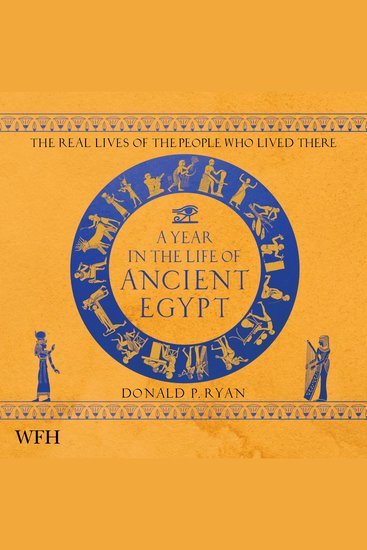
  • A Year in the Life of Ancient Egypt - cover

    A Year in the Life of Ancient Egypt

    Dr Donald P. Ryan

    • 0
    • 0
    • 0
    Spend a year in the company of the ancient Egyptians, during the twenty-sixth and final year of the reign of Amenhotep II (c.1400 BC), which saw a royal transition bringing Thutmose IV to the throne of Upper and Lower Egypt. 
     
    While builders from the secluded village of royal tomb workers rush to complete Amenhotep's tomb, and craftsmen labour to finish the numerous extravagant objects to accompany the god-king in his burial, most Egyptians go about their daily lives in ways unchanged for eons. 
     
    Following the Egyptian calendar year, which was divided into three seasons (inundation, sowing and harvest), we will meet a farmer and his family, an embalmer, an artisan, a royal physician, a priest and even a royal wife as they live their lives in Thebes and Memphis during the eighteenth dynasty of the New Kingdom in this remarkable year in ancient Egyptian history.
    Ver libro
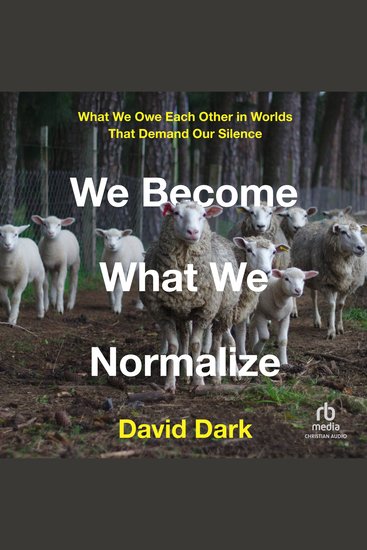
  • We Become What We Normalize - What We Owe Each Other in Worlds That Demand Our Silence - cover

    We Become What We Normalize -...

    David Dark

    • 0
    • 0
    • 0
    From one of the most respected thinkers and public intellectuals of our day comes a book that is both a cultural critique of the state of our country and a robust summons to resist complicity. As we move through the world, we constantly weigh our conscience against what David Dark calls "deferential fear"—going along just to get along, especially in relation to our cultural, political, and religious conversations. Dark reveals our compromised reality: the host of hidden structures and tacit social arrangements that draw us away from ourselves and threaten to turn us slowly into what we decry in others. 


    We Become What We Normalize counsels a creative, slow, and artful response to the economy of reaction, hurry, shaming, and fearmongering. Dark offers a deep analysis of the ways our conceptions of ourselves and our use of technology often lead us away from what we believe, reinforcing the false narrative that we must humiliate others in order to survive. "I suspect we become what we sit still for, what we play along with, and what we abide in our attempts to access more perceived power and more alleged influence," Dark writes. We Become What We Normalize calls for a new kind of struggle, ethic, witness, and spirit that helps us step away from the infinite loop of normalizing harm into effecting true change for ourselves and the worlds we inhabit.
    Ver libro
  • Healing Grounds - Climate Justice and the Deep Roots of Regenerative Farming - cover

    Healing Grounds - Climate...

    Liz Carlisle

    • 0
    • 0
    • 0
    A powerful movement is happening in farming—farmers are reconnecting with their roots to fight climate change. 


    In Healing Grounds, Liz Carlisle tells the stories of Indigenous, Black, Latinx, and Asian American farmers who are reviving their ancestors' methods of growing food—techniques long suppressed by the industrial food system. These farmers are restoring native prairies, nurturing beneficial fungi, and enriching soil health. While feeding their communities and revitalizing cultural ties to land, they are steadily stitching ecosystems back together and repairing the natural carbon cycle. This is the true regenerative agriculture—not merely a set of technical tricks for storing CO2 in the ground, but a holistic approach that values diversity in both plants and people. 


    Cultivating this kind of regenerative farming will require reckoning with our nation's agricultural history—a history marked by discrimination and displacement. And it will ultimately require dismantling power structures that have blocked many farmers of color from owning land or building wealth. 


    By coming together to restore these farmlands, we can not only heal our planet, we can heal our communities.
    Ver libro
  • Muscle Shoals Sound Studio - How the Swampers Changed American Music - cover

    Muscle Shoals Sound Studio - How...

    Carla Jean Whitley

    • 0
    • 0
    • 0
    An estimated four hundred gold records have been recorded in the Muscle Shoals area. Many of those are thanks to Muscle Shoals Sound Studio and the Muscle Shoals Rhythm Section, dubbed "the Swampers." 


    Some of the greatest names in rock, R&B and blues laid tracks in the original, iconic concrete-block building—the likes of Cher, Lynyrd Skynyrd, the Rolling Stones, and the Black Keys. The National Register of Historic Places now recognizes that building, where Lynyrd Skynyrd recorded the original version of "Free Bird" and the Rolling Stones wrote "Brown Sugar" and "Wild Horses." By combing through decades of articles and music reviews related to Muscle Shoals Sound, music writer Carla Jean Whitley reconstructs the fascinating history of how the Alabama studio created a sound that reverberates across generations.
    Ver libro
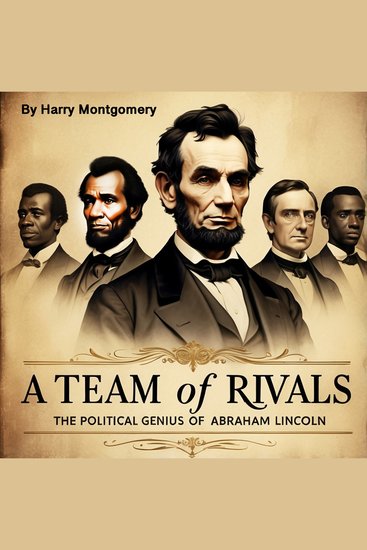
  • A Team of Rivals - The Political Genius of Abraham Lincoln - cover

    A Team of Rivals - The Political...

    Harry Montgomery

    • 0
    • 0
    • 0
    Abraham Lincoln’s early years were marked by hardship, poverty, and a relentless drive to rise above his circumstances. Born in a one-room log cabin in Kentucky in 1809, Lincoln experienced the difficulties of frontier life. His family moved frequently, and his formal education was limited to less than a year’s worth of school. Yet, even in these early years, he developed a deep curiosity and love for learning. He read whatever books he could find, often borrowing them from neighbors, and was known to read by firelight late into the night. This hunger for knowledge became a central part of his identity and would later feed into his political ambitions. 
    Lincoln’s entry into politics began in Illinois, where he settled in the town of New Salem. There, he earned a reputation for honesty, storytelling, and a sharp intellect. He first ran for the state legislature in 1832 and lost, but he tried again two years later and won. As a member of the Illinois State Legislature, he began to develop his political skills and established a clear stance on important issues such as internal improvements and economic development. He aligned himself with the Whig Party, inspired by Henry Clay’s vision of a strong national economy. During this time, Lincoln also began to study law, teaching himself the subject and eventually becoming a successful lawyer in Springfield, where he built a respectable career and deepened his connections. 
    Though he was gaining traction in law and state politics, Lincoln’s ambition reached further. He served a single term in the U.S. House of Representatives in the late 1840s, during which he opposed the Mexican-American War and supported internal improvements. However, his criticism of the war was unpopular, and after his term, he faded from national politics for a while. Yet, Lincoln was far from finished. The moral and political debate over slavery rekindled his interest in national affairs.
    Ver libro