Junte-se a nós em uma viagem ao mundo dos livros!
Adicionar este livro à prateleira
Grey
Deixe um novo comentário Default profile 50px
Grey
Assine para ler o livro completo ou leia as primeiras páginas de graça!
All characters reduced
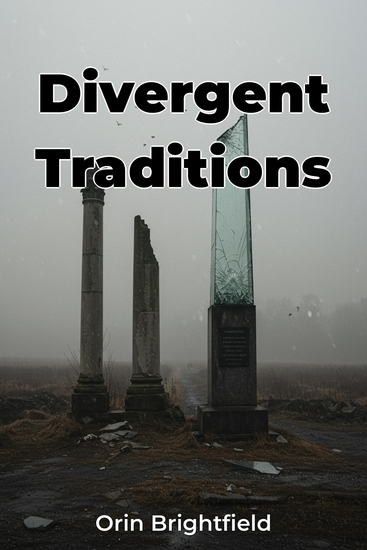
Divergent Traditions - cover
LER

Divergent Traditions

Orin Brightfield

Tradutor A AI

Editora: Publifye

  • 0
  • 0
  • 0

Sinopse

Divergent Traditions examines a critical question: Is societal progress faltering as traditional values decline without adequate replacements from the modern order? The book explores the erosion of established norms and the shortcomings of modern ideologies, focusing on how this divergence impacts societal well-being.

 
The decline of traditional social structures, such as family and community, is examined alongside the rise of new ideologies, questioning whether these new frameworks truly address the needs previously met by tradition. This analysis considers the resulting societal fragmentation, where shared values become elusive, hindering collective action.

 
The book argues that our current era is not a simple transition from old to new, but a period of "divergence" leading to a loss of social capital and increased polarization. Drawing from historical and social science perspectives, the book presents a nuanced understanding of tradition, acknowledging its limitations while also recognizing its functional roles. For instance, the decline in civic engagement and intergenerational knowledge transfer are explored as specific examples of eroding traditions.

 
Beginning with a framework for understanding tradition and modernity, the book progresses through case studies and analyses of contemporary ideologies. It supports its arguments with sociological surveys, historical analysis, and case studies, offering a balanced assessment of both tradition and modernity. Divergent Traditions provides valuable insights for students, policymakers, and anyone interested in the challenges facing contemporary societies, particularly those concerned about social cohesion and political polarization.
Disponível desde: 20/02/2025.
Comprimento de impressão: 70 páginas.


Outros livros que poderiam interessá-lo

  • Teaching Fiercely - Spreading Joy and Justice in Our Schools - cover

    Teaching Fiercely - Spreading...

    Kass Minor

    • 0
    • 0
    • 0
    In Teaching Fiercely: Spreading Joy and Justice in Our Schools, accomplished educator Kass Minor delivers an inspiring and practical exploration of what it means to be a just teacher in a system that actively incentivizes injustice. The author explains how to build joyful experiences even in the face of inevitable injustice and demonstrates how to accept the seemingly conflicting experience of joy in the face of heartbreak. 


    In the book, you'll learn to be a catalyst for change, unlearning the patterns of school that have marginalized children while becoming aware of tenets of justice as they manifest in educational spaces. You'll also discover: 


    ● Strategies for creating human-centered care and joy, in which thoughts, actions, and decisions are drawn from the school community 


    ● Techniques for creating student-centered experiences within standards-based classrooms 


    ● How to raise the level of family involvement in your students' education and improve communication 


    An essential blueprint for K-12 educators, school support staff, and school administrators, Teaching Fiercely will also earn a place on the bookshelves of education policymakers, researchers, and students.
    Ver livro
  • The Power of Nothing to Lose - The Hail Mary Effect in Politics War and Business - cover

    The Power of Nothing to Lose -...

    Anônimo

    • 0
    • 0
    • 0
    Following books by Malcolm Gladwell and Dan Ariely, noted economics professor William L. Silber explores the Hail Mary effect, from its origins in sports to its applications to history, nature, politics, and business. 
    A quarterback like Green Bay’s Aaron Rodgers gambles with a Hail Mary pass at the end of a football game when he has nothing to lose -- the risky throw might turn defeat into victory, or end in a meaningless interception. Rodgers may not realize it, but he has much in common with figures such as George Washington, Rosa Parks, Woodrow Wilson, and Adolph Hitler, all of whom changed the modern world with their risk-loving decisions. 
    In The Power of Nothing to Lose, award-winning economist William Silber explores the phenomenon in politics, war, and business, where situations with a big upside and limited downside trigger gambling behavior like with a Hail Mary. Silber describes in colorful detail how the American Revolution turned on such a gamble. The famous scene of Washington crossing the Delaware on Christmas night to attack the enemy may not look like a Hail Mary, but it was. Washington said days before his risky decision, “If this fails I think the game will be pretty well up.” Rosa Parks remained seated in the white section of an Alabama bus, defying local segregation laws, an act that sparked the modern civil rights movement in America. It was a life-threatening decision for her, but she said, “I was not frightened. I just made up my mind that as long as we accepted that kind of treatment it would continue, so I had nothing to lose.” 
     The risky exploits of George Washington and Rosa Parks made the world a better place, but demagogues have inflicted great damage with Hail Marys. Towards the end of World War II, Adolph Hitler ordered a desperate counterattack, the Battle of the Bulge, to stem the Allied advance into Germany. He said, “The outcome of the battle would spell either life or death for the German nation.” Hitler failed to change the war’s outcome, but his desperate gamble inflicted great collateral damage, including the worst wartime atrocity on American troops in Europe. 
    Silber shares these illuminating insights on these figures and more, from Woodrow Wilson to Donald Trump, asylum seekers to terrorists and rogue traders. Collectively they illustrate that downside protection fosters risky undertakings, that it changes the world in ways we least expect.
    Ver livro
  • The Princess and the Pea - cover

    The Princess and the Pea

    Hans Christian Andersen, Kari James

    • 0
    • 0
    • 0
    Beautiful music and fun sound-effects help tell the classic tale of “The Princess and the Pea.” Prince Fastidious travels the world to find his perfect princess. But something is not quite right about any of them. They either talk too much, or not at all. Some are too old for him, or too young. Others are spoiled or have too many noisy, little dogs. Find out what happens when Princess Rose accidentally comes to the castle at night because of a fierce storm. How does she prove to the Queen that she's a real princess? A happy ending adds interest to this fairy tale and encourages a lifelong love of great storytelling.
    Ver livro
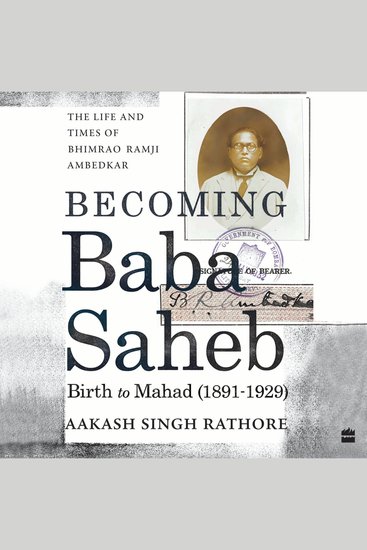
  • Becoming Babasaheb - The Life and Times of Bhimrao Ramji Ambedkar (Volume 1): Birth to Mahad (1891-1929) - cover

    Becoming Babasaheb - The Life...

    Aakash Singh Rathore

    • 0
    • 0
    • 0
    There are many intellectual biographies of Dr B.R. Ambedkar, but until now none has sought to reveal the personality of the man. They will tell you what he thought or what he wrote, but remain silent about who he actually was, his inner struggles, how he felt. They give information about Ambedkar, but do not talk about his interior life, his personal growth or how he came to be the man who left such an indelible mark on modern India's constitutional, political, social and religious landscapes.  
    The first of an ambitious two-volume biography, Becoming Babasaheb traces Ambedkar's life journey, from his birth in 1891 to the transformative Mahad Satyagraha in 1929. It takes a completely fresh look at Ambedkar's lived experiences and teases out the nature and character of the man behind the legend. It offers an extensive, personality-driven narrative covering Ambedkar's life, along with salient aspects of his contemporary legacy, unfolding as a tale of remarkable tenacity, which it chronicles in all its rich vitality. 
    All of Ambedkar's books and speeches are publicly available, so large volumes will forever appear interpreting his writings and presenting his ideas. Meanwhile, old myths and inaccurate 'facts' about his thought and life events, even his relationships, persist. Becoming Babasaheb has been written on the basis of entirely original archival research to set the historical record straight. A vivid portrait of the man in his times, both volumes of this biography will present readers with a new Ambedkar, the true Ambedkar.
    Ver livro
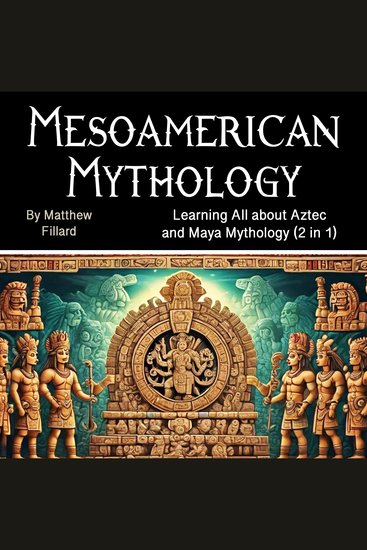
  • Mesoamerican Mythology - Learning All about Aztec and Maya Mythology (2 in 1) - cover

    Mesoamerican Mythology -...

    Matthew Fillard

    • 0
    • 0
    • 0
    This book contains three separate books, all related to myths on the North and South American Continents: 
    Aztec Mythology: The Aztec Empire, one of the most powerful and complex civilizations of Mesoamerica, was not only remarkable for its military conquests and grand architecture but also for its deeply spiritual and mythological worldview. At the heart of Aztec society was a profound belief in the gods and the sacredness of ritual, which governed everything from daily life to the empire's grandest ceremonies. Aztec mythology, rich with gods, cosmic battles, and creation stories, shaped the culture and practices of this ancient civilization. Understanding Aztec mythology is essential to understanding the values, actions, and worldview of the Aztec people, as it provided the framework within which they interpreted their world and their place within it. 
    Inca Mythology: The Inca Empire, at its zenith, spanned much of South America, including present-day Peru, Ecuador, Bolivia, and parts of Chile and Argentina. Known for its advanced architecture, agricultural systems, and administrative organization, the Inca civilization also possessed a deeply spiritual culture. Central to their worldview was a rich tapestry of mythology that explained the creation of the world, the origins of humankind, and the roles of the gods in the natural and spiritual realms.  
    Maya Mythology: Maya mythology stands as one of the most intricate and profound systems of stories and beliefs in the ancient world, reflecting the depth of a civilization that thrived for thousands of years. These myths, preserved through oral traditions and later written texts such as the Popol Vuh, reveal the Maya’s understanding of the cosmos, their relationship with nature, and their spiritual connection to the divine.
    Ver livro
  • Roman Legions - The Military Might of an Empire - cover

    Roman Legions - The Military...

    Rogan Fish

    • 0
    • 0
    • 0
    The Roman legions were the backbone of one of the most formidable military forces in history. Before the rise of the professional army, Rome’s early military structure was largely based on citizen soldiers who fought in times of need. This early system was influenced by both the Etruscans and the Greeks, shaping the foundation of what would become the highly disciplined and organized Roman legions. Over time, reforms, particularly those of Gaius Marius, transformed the Roman military into a professional and highly efficient force that would dominate the ancient world. 
    In the early days of Rome, military service was tied to land ownership. The army was made up of citizen militias, with each man providing his own weapons and armor. This system was similar to that of the Greek hoplites, where soldiers fought in close formations with shields and spears. However, as Rome expanded, it became clear that a more structured and permanent military force was needed. The influence of the Etruscans introduced elements of hierarchy and organization, while the Greeks contributed to Rome’s use of phalanx-style formations in battle. Despite these early influences, the Roman army continued to evolve, adapting to new threats and challenges. 
    The real transformation of the Roman military came during the late Republic, when Gaius Marius introduced the Marian Reforms. These changes allowed for the recruitment of landless citizens, shifting the army from a temporary force to a standing professional military. Soldiers were now equipped by the state, ensuring uniformity in weapons and armor. The structure of the army was also refined, replacing the older phalanx formations with the more flexible manipular and cohort systems. This allowed for greater maneuverability on the battlefield, giving the Romans a significant advantage over their enemies.
    Ver livro