¡Acompáñanos a viajar por el mundo de los libros!
Añadir este libro a la estantería
Grey
Escribe un nuevo comentario Default profile 50px
Grey
Suscríbete para leer el libro completo o lee las primeras páginas gratis.
All characters reduced
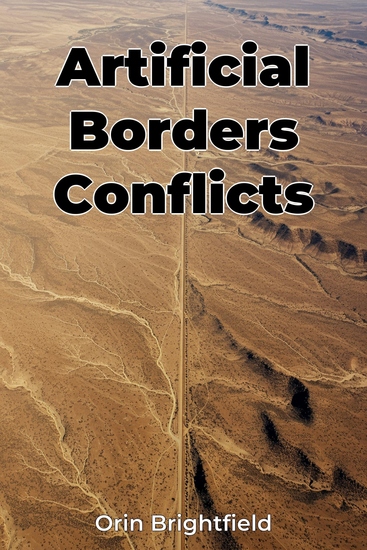
Artificial Borders Conflicts - cover

Artificial Borders Conflicts

Orin Brightfield

Traductor A AI

Editorial: Publifye

  • 0
  • 0
  • 0

Sinopsis

"Artificial Borders Conflicts" examines how artificially imposed borders, often drawn by colonial powers with little regard for existing populations, continue to fuel conflict and instability worldwide. The book argues these borders aren't just lines; they actively shape political landscapes. It's crucial to understand the history of imperialism, such as the scramble for Africa, to understand the contemporary geopolitical landscape. These borders often disrupt social structures and exacerbate inter-group tensions, directly causing conflict. The book explores the historical context of artificial border creation, the socio-political ramifications for affected populations, and the long-term impact on international relations. 

 
Beginning with a theoretical framework for border studies, the book progresses chronologically and thematically, analyzing specific cases across Africa, Asia, and the Middle East. Consider the Sykes-Picot Agreement, where arbitrary lines redrew the Middle East, impacting current conflicts. The book analyzes potential solutions and strategies for mitigating the negative impacts of these borders. 

 
Through historical records, treaties, maps, demographic data, and case studies, the book demonstrates the impact of artificial borders. Readers will gain insights into the underlying causes of ongoing conflicts and critically evaluate policy proposals related to border management, conflict resolution, and international development. The book also addresses debates surrounding sovereignty, self-determination, and the legacy of colonialism.
Disponible desde: 04/03/2025.
Longitud de impresión: 77 páginas.

Otros libros que te pueden interesar

  • The Roman Revolution - Crisis and Christianity in Ancient Rome - cover

    The Roman Revolution - Crisis...

    Nick Holmes

    • 0
    • 0
    • 0
    It was a time of revolution. The Roman Revolution describes the little known "crisis of the third century", and how it led to a revolutionary new Roman Empire. Long before the more famous collapse of the Western Roman Empire in the fifth century, in the years between AD 235-275, barbarian invasions, civil war, and plague devastated ancient Rome. Out of this ordeal came new leaders, new government, new armies, and a new vision of what it was to be Roman. Best remembered today is the rapid rise of Christianity in this period, as Rome's pagan gods were rejected, and the emperor Constantine converted to this new religion. Less well remembered is the plethora of other changes that conspired to provide an environment well suited to a religious revolution. 


    Drawing on the latest research, Nick Holmes looks for new answers to old questions. He charts the rise of the Roman Republic and the classical Roman Empire, examining the roles played by sheer good luck and the benign climate. Focusing on the reigns of the critically important but under-researched emperors in the third century, such as Aurelian, Diocletian, and Constantine, he vividly brings to life how Rome just escaped catastrophe in the third century, and embarked on a journey that would take it into a brave new world—one which provided the foundations for modern Europe and America.
    Ver libro
  • The History of Midtown Manhattan’s Most Famous Buildings - cover

    The History of Midtown...

    Charles River Editors

    • 0
    • 0
    • 0
    Of all the great cities in the world, few personify their country like New York City. As America’s largest city and best known immigration gateway into the country, the Big Apple represents the beauty, diversity and sheer strength of the United States, a global financial center that has enticed people chasing the “American Dream” for centuries. 
    Given that history, it’s no surprise that New Yorkers have always wanted to construct the biggest and best structures possible, even in the early 1930s at the height of the Great Depression. Indeed, those years produced the Empire State Building, which remains the city’s most iconic building, but New York’s most famous skyscraper wouldn’t have been possible without the Chrysler Building, a landmark in its own right that was the tallest building in the world for nearly a year before its more famous counterpart’s completion. In fact, the spirit of competition between the groups working on the two buildings helped ensure that both look like they do today, and the Chrysler Building only reached the height it did because a large skyscraper at 40 Wall Street was also trying to claim the mantle of tallest building at the same time. 
    The Chrysler Building was the first man-made object to surpass 1,000 feet in height, and while it has been surpassed by considerably taller projects since, it remains the largest steel-supported brick building in the world. Although it has since been sold to new groups, the name has remained, and the Chrysler Building continues to be a conspicuous part of the skyline in Midtown. 
    The Empire State Building was constructed using the Art Deco style, which was trendy during the era and had been used for other skyscrapers like the Chrysler Building, but that’s where the comparisons end, because the Empire State Building was unprecedented in almost every aspect at the time of its creation.
    Ver libro
  • Masters of Literature – 20 Great Writers - Famous Lives in 5 Minutes – Fast Facts About Great Minds - cover

    Masters of Literature – 20 Great...

    Anónimo

    • 0
    • 0
    • 0
    Whether you're commuting, relaxing, or curious to learn something new:These short, vivid biographies offer quick insights, big ideas, and timeless inspiration. Explore the stories behind the storytellers: from Nathaniel Hawthorne to Hemingway, Emily Dickinson to Franz Kafka, Goethe to Jack Kerouac, William Shakespeare to Arthur Miller, Charles Dickens to Toni Morrison. Short and sharp audio biographies for lovers of words and worlds.
    Ver libro
  • Persuasion Psychology - Harnessing the Power of Persuasion in Everyday Interactions - cover

    Persuasion Psychology -...

    Wesley Felt

    • 0
    • 0
    • 0
    This book contains two titles. Here are some snippets of what you can find in there: 
    Book 1 - Why does understanding a psychological risk lead to physical reactions? The answer lies in human anatomy, specifically in the mechanisms behind real pain. Is mental pain comparable to physical pain? How does intense pain manifest? When it comes to physical pain, the process is straightforward. We rarely consider the basic motor reflexes controlled by the spine. 
    During physical sensation, a nervous impulse is transmitted through the nerves to the corresponding part of the brain, which then sends a response impulse to an organ. But how does mental pain occur? Our bodies possess a self-regulation function for all physiological processes. In essence, the brain responds to changes in the body's chemical processes. 
    Book 2 - Many believe that the most successful people in the world have mastered the ability to use their minds to attract what they desire. Imagine being able to draw what you want most into your life effortlessly, without having to take direct action. Imagine being able to manifest your goals and desires through the discipline of your thoughts. 
    Everything begins with thoughts, which most people don’t fully grasp, as actions are rooted in these ideas. Before diving into the methods that harness the power of the mind, it’s important to ask: What is the subconscious mind? 
    The subconscious is a part of the mind that, while not fully conscious, influences a person’s actions and feelings. Some view the subconscious as connected to the spirit or soul, capable of shaping your reality based on the messages it receives from your actions and beliefs.
    Ver libro
  • Viral Cultures - Activist Archiving in the Age of AIDS - cover

    Viral Cultures - Activist...

    Marika Cifor

    • 0
    • 0
    • 0
    Serving as a vital supplement to the existing scholarship on AIDS activism of the 1980s and 1990s, Viral Cultures is the first book to critically examine the archives that have helped preserve and create the legacy of those radical activities. Marika Cifor charts the efforts activists, archivists, and curators have made to document the work of AIDS activism in the United States and the infrastructure developed to maintain it, safeguarding the material for future generations to remember these social movements and to revitalize the epidemic's past in order to remake the present and future of AIDS. 


    Drawing on large institutional archives such as the New York Public Library, as well as those developed by small, community-based organizations, this work of archival ethnography details how contemporary activists, artists, and curators use these records to build on the cultural legacy of AIDS activism to challenge the conditions of injustice that continue to undergird current AIDS crises. Cifor analyzes the various power structures through which these archives are mediated, demonstrating how ideology shapes the nature of archival material and how it is accessed and used. Positioning vital nostalgia as both a critical faculty and a generative practice, this book explores the act of saving this activist past and reanimating it in the digital age.
    Ver libro
  • Bet the Farm - The Dollars and Sense of Growing Food in America - cover

    Bet the Farm - The Dollars and...

    Beth Hoffman

    • 0
    • 0
    • 0
    Beth Hoffman was living the good life: she had a successful career as a journalist and professor, a comfortable home in San Francisco, and plenty of close friends and family. Yet in her late forties, she and her husband decided to leave the big city and move to his family ranch in Iowa—all for the dream of becoming a farmer. There was just one problem: money. 


    Half of America's two million farms made less than $300 in 2019. Between rising land costs, ever-more expensive equipment, the growing uncertainty of the climate, and few options for health care, farming today is a risky business. For many, simply staying afloat is a constant struggle. 


    Bet the Farm chronicles this struggle through Beth's eyes as a beginning farmer. She must contend with her father-in-law, who is reluctant to hand over control of the land. Growing oats is good for the environment but ends up being very bad for the wallet. The couple also must balance the books, hoping that farming isn't a romantic fantasy that takes every cent of their savings. 


    Bet the Farm is a first-hand account of the perils of farming today and a personal exploration of more just and sustainable ways of producing food.
    Ver libro