Junte-se a nós em uma viagem ao mundo dos livros!
Adicionar este livro à prateleira
Grey
Deixe um novo comentário Default profile 50px
Grey
Assine para ler o livro completo ou leia as primeiras páginas de graça!
All characters reduced
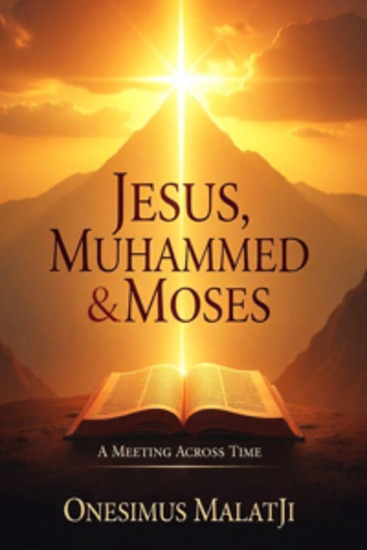
Jesus Muhammad And Moses - A Meeting Across Time - cover
LER

Jesus Muhammad And Moses - A Meeting Across Time

ONESIMUS MALATJI

Editora: Onesimus Malatji

  • 0
  • 0
  • 0

Sinopse

In a serene and timeless realm where the sacred revelations of the Torah, the Bible, and the Qur’an converge, three of the most influential figures in human history Jesus, Muhammad, and Moses come together in dialogue. Against the backdrop of a majestic mountain reminiscent of Mount Sinai, they reflect on their divine missions, their teachings, and the state of the world today.

Moses, the liberator and lawgiver, recalls receiving the Ten Commandments and leading the Israelites out of Egypt. He acknowledges that laws alone are not enough without the transformation of the heart, as humanity often falls into pride and idolatry.

Jesus, the Messiah and the Son of God, emphasizes the fulfillment of the law through love. Quoting the Bible, he highlights the greatest commandments: loving God and loving one’s neighbor, which form the foundation for peace and reconciliation.

Muhammad, the Seal of the Prophets, brings the wisdom of the Qur’an, emphasizing justice, mercy, and submission to God’s will. He reflects on the unity of all nations and tribes under one Creator and laments how humanity focuses more on divisions than on the shared truth of the revelations.
Together, they discuss how the Torah laid the foundation with the law, the Gospel fulfilled it with love, and the Qur’an reaffirmed it with justice and submission. Their dialogue transcends differences, showcasing how their teachings complement one another, pointing humanity to the same God.

This profound meeting symbolizes hope and unity, reminding their followers that the faiths they represent are threads in a divine tapestry. Their words call for a renewed focus on shared values, urging humanity to embrace compassion, understanding, and harmony in an increasingly divided world.
Disponível desde: 30/01/2025.

Outros livros que poderiam interessá-lo

  • Operation Greif: The History of the Infamous Waffen-SS Commando Operation during the Battle of the Bulge - cover

    Operation Greif: The History of...

    Editors Charles River

    • 0
    • 0
    • 0
    During the Battle of the Bulge, the Allies became understandably nervous, and Hitler hoped to capitalize on German momentum with a top-secret special operation that he named Operation Greif. This mission would utilize German soldiers, trained in sabotage techniques and disguised in American and British uniforms, and have them cross Allied lines to hold strategic targets for the German advance while destroying communication lines and ammunition depots. Most importantly, they would cause chaos and confusion by misdirecting the enemy, as Hitler explained in his orders: “I want you to command a group of American and British troops and get them across the Meuse and seize one of the bridges. Not, my dear Skorzeny, real Americans or British. I want you to create special units wearing American and British uniforms. They will travel in captured Allied tanks. Think of the confusion you could cause! I envisage a whole string of false orders which will upset communications and attack morale.” 
    	The Skorzeny he was addressing was none other than Otto Skorzeny, who had become famous by the late stages of the war because of his role in rescuing Benito Mussolini via the Gran Sasso raid. One thing that characterized Skorzeny was a continuing talent for self-aggrandizement and exaggeration of his role in events, which naturally worked on someone like Hitler. In the wake of the Gran Sasso raid, Hitler awarded Skorzeny the Knight’s Cross (one of the highest German awards for valor) and promoted him to Sturmbannführer (Major). Heinrich Himmler, who personally disliked and distrusted Skorzeny, seized the opportunity to raise the profile of the SS and to suggest that the success of the Gran Sasso raid was entirely due to the SS. As a result, it would be Skorzeny who led the Waffen-SS operation that Hitler envisioned for the Battle of the Bulge.
    Ver livro
  • The Folklore of Rome - Myth Magic Dying and the Making of The Empire - cover

    The Folklore of Rome - Myth...

    Davis Truman

    • 0
    • 0
    • 0
    Step beyond the ruins and into the pulse of ancient Rome—not the Rome of marble triumphs and imperial decrees, but of whispered spells, ghostly omens, and mythic memory. The Folklore of Rome: Myth, Magic, Dying, and the Making of the Empire is an immersive exploration of how stories, superstitions, and sacred rites shaped the world’s most enduring civilization from its legendary beginnings to its imperial zenith. 
    In these pages, history meets enchantment. Chapter by chapter, the book reveals how Roman identity was bound to its folklore: the way Livy’s histories blurred myth and moral lesson, how domestic charms and street-corner incantations governed daily life, and how rituals of dying transformed death into a civic and spiritual act. From household gods to battlefield omens, from public festivals to private fears, Rome’s imagination was alive with unseen forces—powers that both inspired and restrained its people. 
    With vivid scholarship and a storyteller’s touch, The Folklore of Rome uncovers the Empire’s hidden heartbeat: the dreams, doubts, and supernatural beliefs that gave meaning to conquest and glory. More than a study of myths and rituals, it is a rediscovery of Rome as a living myth itself—a civilization forever poised between the mortal and the divine.
    Ver livro
  • Islamic Golden Age - A History of Economic Cultural and Artistic Growth - cover

    Islamic Golden Age - A History...

    Kelly Mass

    • 0
    • 0
    • 0
    The Islamic Golden Age, a period marked by extraordinary cultural, economic, and scientific prosperity, spanned roughly from the 8th to the 14th century. This era is often considered to have begun during the reign of the Abbasid caliph Harun al-Rashid (786–809), particularly with the establishment of the House of Wisdom in Baghdad. At this time, Baghdad was the world's largest city, serving as the epicenter of intellectual activity. The House of Wisdom became a hub for scholars and polymaths from a diverse range of backgrounds who were tasked with gathering, translating, and preserving the classical knowledge of the ancient world. Key works from Greek, Syriac, Middle Persian, and Sanskrit texts were translated into Arabic and Syriac, with some later making their way into Latin and Hebrew. This immense intellectual undertaking played a significant role in preserving and expanding upon the knowledge that would later form the foundation of the Renaissance in Europe. 
    The decline of the Abbasid caliphate, culminating in the Mongol invasions and the Siege of Baghdad in 1258, is commonly regarded as marking the end of this flourishing period. However, the exact timeline of the Golden Age’s conclusion is debated among scholars. Some place the end around 1350, coinciding with the Timurid Renaissance, while others extend it until the 15th or even the 16th century, linking it with the rise of the Islamic Gunpowder Empires. 
    One of the driving forces behind the Islamic Golden Age was the emphasis placed on learning within Islamic teachings. The Quran and Hadiths, which contain numerous references to the pursuit of knowledge, were fundamental in motivating Muslims during this period to engage in scientific, philosophical, and literary endeavors.
    Ver livro
  • Jewish Family Life - Customs Rituals and Values in Daily Living - cover

    Jewish Family Life - Customs...

    Joseph Arston

    • 0
    • 0
    • 0
    Jewish family life is deeply rooted in tradition, values, and a strong sense of community. The family is not just a social unit but the very foundation of Jewish identity, shaping the faith, customs, and moral principles passed down through generations. Through daily practices, holidays, and shared rituals, Jewish families cultivate a home environment that nurtures both spiritual and ethical development. 
    At the core of Jewish family life is the concept of shalom bayit, or peace in the home. This principle emphasizes harmony, mutual respect, and love among family members. Parents play a crucial role in modeling these values, creating an atmosphere where kindness, patience, and understanding are prioritized. The Torah provides guidance on fostering a household filled with compassion and justice, reinforcing the idea that family is a sacred space where Jewish teachings come to life. 
    Another fundamental aspect of Jewish family life is the observance of Shabbat. The Sabbath is more than just a day of rest—it is a time for families to reconnect, reflect, and step away from the distractions of daily life. The preparation for Shabbat, including lighting the candles, reciting blessings over wine and bread, and sharing a festive meal, strengthens family bonds. Shabbat serves as a reminder of the importance of slowing down, appreciating one another, and finding holiness within the home. It is a time when parents pass down traditions and children absorb the rhythms of Jewish living.
    Ver livro
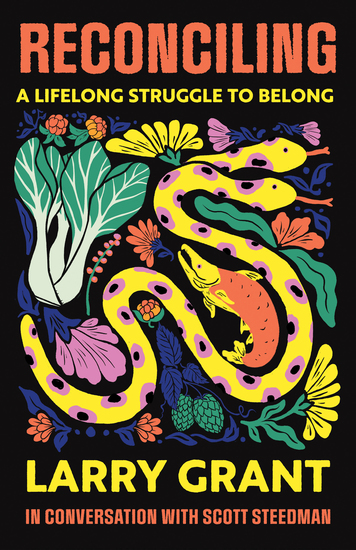
  • Reconciling - A Lifelong Struggle to Belong - cover

    Reconciling - A Lifelong...

    Scott Steedman, Larry Grant

    • 0
    • 0
    • 0
    “Larry Grant’s life is a model of what it means to rise above hardship, transcend preconceived notions, and live life in a good way. I’ve had the honour of meeting him, but this book makes me feel as if I know him. And that is a profound gift.” — Shelagh Rogers, Honorary Witness, Truth and Reconciliation Commission; broadcast journalist, CBC Radio
    		 
    A personal and historical story of identity, place, and belonging from a Musqueam-Chinese Elder caught between cultures
    		 
    It’s taken most of Larry Grant’s long life for his extraordinary heritage to be appreciated. He was born in a hop field outside Vancouver in 1936, the son of a Musqueam cultural leader and an immigrant from a village in Guangdong, China. In 1940, when the Indian agent discovered that their mother had married a non-status man, Larry and his two siblings were stripped of their status. With one stroke of the pen, they were disenfranchised—no longer recognized as Indigenous.
    		 
    Reconciling is a series of conversations between Larry and writer Scott Steedman as they visit pivotal geographical places together, including the Musqueam reserve, Chinatown, the site of the Mission residential school, the Vancouver docks and the University of British Columbia. Larry tells the story of his life, including his thoughts on reconciliation and the path forward for First Nations and Canada. His life echoes the barely known story of Vancouver and spans key events of the last two centuries, including Chinese immigration and the Head Tax, the ravages of residential school and now Indigenous revival and the accompanying change in worldview. 
    		 
    When Larry talks about reconciliation, he uses the verb reconciling, an ongoing, unfinished process we’re all going through, Indigenous and settler, immigrant and Canadian-born. “I have been reconciling my whole life, with my inner self,” he explains. “To not belong was forced upon me by the colonial society that surrounded me. But reconciling with myself is part of all that.”
    Ver livro
  • Supes Ain't Always Heroes - Inside the Complex Characters and Twisted Psychology of The Boys - cover

    Supes Ain't Always Heroes -...

    Matthew Snyder, Lynn S. Zubernis

    • 0
    • 0
    • 0
    Go deeper inside the hit TV show The Boys and its characters with psychologists, media experts, filmmakers, and more—including the original comic series' cocreator and the actors behind Soldier Boy and Stormfront. 


    Supes Ain't Always Heroes offers a fresh look at The Boys, delving into the show's unflinching depiction of celebrity, politics, social media, corporate greed, racism, sexism, and more: 


    ● The true difference between Homelander and Billy Butcher—and who the show's biggest villain really is 


    ● What Soldier Boy's characterization says about how we define masculinity 


    ● How today's media landscape has contributed to The Boys' success 


    ● What the evolutions of Hughie, Starlight, A-Train, Mother's Milk, and other show standouts reflect about addiction, family, identity, and self-acceptance 


    PLUS: Exclusive interviews with The Boys comics cocreator Darick Robertson and actors Jensen Ackles, Jim Beaver, Aya Cash, and Nathan Mitchell provide a unique glimpse behind the scenes. Comments from editor interviews with more of the show's stars give further insight into their experiences in bringing these complex characters to life.
    Ver livro