Junte-se a nós em uma viagem ao mundo dos livros!
Adicionar este livro à prateleira
Grey
Deixe um novo comentário Default profile 50px
Grey
Assine para ler o livro completo ou leia as primeiras páginas de graça!
All characters reduced
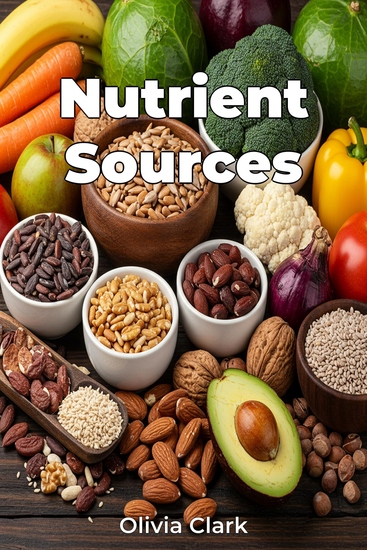
Nutrient Sources - cover
LER

Nutrient Sources

Olivia Clarke

Tradutor A AI

Editora: Publifye

  • 0
  • 0
  • 0

Sinopse

Nutrient Sources offers a comprehensive exploration into the essential components of a balanced diet, emphasizing the importance of vitamins, minerals, and macronutrients for optimal health and well-being. This book stands out by prioritizing natural food sources over synthetic supplements, challenging the reliance on quick fixes and processed foods. Readers will discover that understanding nutrient functions and their natural sources is key to making informed dietary choices, cutting through confusing diet trends with unbiased, science-based facts.

 
The book adopts an informative tone, presenting facts and research findings in a clear and concise manner. It begins by introducing the core concepts of macronutrients and micronutrients, then delves into each nutrient's specific role, recommended daily intake, deficiency symptoms, and best natural food sources.

 
Finally, it examines nutrient interactions and provides practical guidelines for creating personalized meal plans that prioritize nutrient density and natural food sources, making it a valuable resource for anyone seeking to improve their health through better nutrition and dietary choices.
Disponível desde: 17/03/2025.
Comprimento de impressão: 105 páginas.
Outros livros que poderiam interessá-lo

  • Optimizing Outcomes - Integrated Specialty Healthcare for Individuals with Neurodevelopmental Disabilities - cover

    Optimizing Outcomes - Integrated...

    Mark Mintz

    • 0
    • 0
    • 0
    What if neurodiverse individuals, including those dealing with autism, could find an integrated approach — in one place — that actually worked? What if they didn’t have to embark on a costly Diagnosis Odyssey, only to end up frustrated and no closer to a solution than when they started?  Pediatric neurologist Mark Mintz, MD will show you that it doesn’t have to be this way — because he has found a new path that has been transforming health care and producing better outcomes for his patients.  Wrong and inefficient treatment, over-reliance of medications, Byzantine healthcare bureaucracies and antiquated reimbursement systems disconnected from the actual value of care are affecting outcomes. Dr. Mintz will show you the problems with the system, some of which you know about, some of which may surprise you. He will take you to the bottom line and prove why cheaper doesn’t mean less expensive, and show you how a multi-disciplinary approach, inviting many perspectives to each case, actually streamline care and serves patients better. Working with the vast knowledge of his team consisting of professionals who specialize in both the medical and behavior side of diagnosis and treatment, he will show you how they were able to create an integrated system, stop the Diagnosis Odyssey in its tracks and bring real help to children, adults and their families.  Join Dr. Mintz on this journey through the healthcare “system” and meet the patients it has ill-served , only to be rescued by him and his team of caregivers. His head-and-heart approach will leave parents of children with autism and other neurological conditions realizing that, no matter their previous experiences, there is still hope.
    Ver livro
  • Welcome to the Metaverse - Unlocking the Potential of Virtual Worlds - cover

    Welcome to the Metaverse -...

    David L. Shrier

    • 0
    • 0
    • 0
    The metaverse. That term elicits a wide range of ideas and opinions. For many, it represents the next evolutionary phase of the internet—a fully immersive, digital universe where people can interact, work, and play in virtual environments. For others, it's yet another overhyped technology. So what is it, exactly? And what will its impact be? 


    While speculation and predictions about the metaverse are varied, one thing is clear: it is impacting the world of business as well as people's lives, and it will continue to do so in the future. The global metaverse market is predicted to be worth about $1 trillion by 2030, with over two billion users participating in some form of immersive experience. 


    There's a reason why companies are investing heavily in spatial computing and why platforms like Roblox are thriving. The metaverse, along with the technologies that underpin it, is still evolving, but it will eventually offer more ways for people to experience the world and each other. 


    In Welcome to the Metaverse, David Shrier, a world-leading futurist and the author of Welcome to AI, offers an entertaining look at the potential uses and impacts of this virtual space on business and life.
    Ver livro
  • You are what you eat - cover

    You are what you eat

    Brittany Forrester

    • 0
    • 0
    • 0
    For decades, the medical profession has advocated for nutritional management as a treatment strategy for various illnesses, including diabetes, heart disease, high blood pressure, and excessive cholesterol. There are currently no such recommendations for brain aging and dementia.Nutrition was only recently accorded scientific-field status. Eating is a valid technique for defending oneself against brain aging and disorders such as Alzheimer's. Scientists have gradually realized the vital link between the foods we eat and our mental health. This insight has spawned a rapidly rising body of studies indicating that we may be eating our way to dementia.What has gone unreported until now is that, of all the organs in our bodies, the brain is the one most easily harmed by a poor diet. Everything in the brain, from its architecture to its ability to perform, begs for optimal nutrition. Many of us are ignorant that the only way to fuel the brain is through our food. The meals we eat are broken down into nutrients, absorbed into the bloodstream, and transported to the brain to replenish depleted stores, stimulate cellular responses, and, most critically, be incorporated into brain tissue.We are what we eat!
    Ver livro
  • The Forgotten Sense - The New Science of Smell—and the Extraordinary Power of the Nose - cover

    The Forgotten Sense - The New...

    Jonas Olofsson

    • 0
    • 0
    • 0
    A New York Public Library "Best Book of the Year" “The Forgotten Sense leaves us with the hope of new discoveries and new recoveries—so that we may once again revel in the glorious, fragrant world around us.”—Wall Street Journal 
    By one of the world’s leading researchers into the science of smell, a fascinating exploration of our most essential yet least understood sense—enabling us to appreciate food and drink, warning us of dangers, and even influencing who we fall in love with 
    Our sense of smell guides our lives far more than our screen-heavy, sight-privileged era would suggest. It animates our experience of food and drink, helps us access memories, and strengthens our intimacy with each other. But, long considered our most “beastly” sense, the inner workings of smell have stumped scientists for centuries. 
    Now, cognitive scientist and leading smell researcher Jonas Olofsson uncovers the sophisticated processes that drive our olfactory system, with profound implications for how we perceive the world around us. Drawing from cutting-edge original research, Olofsson shows that not only is our sense of smell extraordinarily sensitive, its process of chemical exchange shaped human evolution on its most fundamental level. 
    From the pheromones, environmental signals, and emotions we process with each breath, olfaction makes us the individuals we are. Moreover, smelling is an intellectual exercise, Olofsson argues, one that we have the remarkable capacity to strengthen and, with some effort, even regain after illness. 
    With infectious curiosity and a host of applications—from emotional health and gastronomy to literature and even politics—The Forgotten Sense is a wide-ranging and entertaining look at this most understudied function of human life.
    Ver livro
  • Inside the Britannic - Uncovering the Wreck of the Titanic's Sister Ship - cover

    Inside the Britannic -...

    Simon Mills

    • 0
    • 0
    • 0
    The Olympic Class ships were intended to be the greatest liners to ever sail the oceans, but the Britannic sank only four years after her sister ship the Titanic. While the wreck of the Titanic is two miles below the surface and rapidly deteriorating, the Britannic is much more accessible (only 400 ft down) and remains largely intact. One of the largest passenger ships ever to have sunk, her wreck presents a unique opportunity to explore the interior of the Olympic Class liners, and examine areas which on the Titanic simply no longer exist. 


    Simon Mills bought the wreck of the Britannic in 1996 and has spent more time exploring it than anyone else. Inside the Britannic is the sum of decades of work covering every inch of the shipwreck as he searches for answers to century-old questions, and discovers new mysteries to solve. Simon takes a forensic approach but this book is more than just the autopsy report of a ship. 


    The Britannic may have been lost over a century ago, but Simon Mills's fascinating new book gives everyone unparalleled access to rediscover her.
    Ver livro
  • Deepwater Alchemy - Extractive Mediation and the Taming of the Seafloor - cover

    Deepwater Alchemy - Extractive...

    Lisa Yin Han

    • 0
    • 0
    • 0
    How underwater mediation has transformed deep-sea spaces into resource-rich frontiers 


    Green energy technologies such as windmills, solar panels, and electric vehicles may soon depend on material found at the seabed. How did a space once imagined to be empty and unfathomable come to be thought of as a treasure trove of resources? Lisa Yin Han traces how contemporary developments in underwater sensing and imaging materially and imaginatively transmogrify the ocean bottom into a resource frontier capable of sustaining a digitally connected global future. 


    Set against the backdrop of climate change, energy transition, and the expansion of industrial offshore extractions, Deepwater Alchemy looks at oceanic media and its representation of the seabed in terms of valuable resources. From high-tech simulations to laboratories and archives that collect and analyze sediments, Han explores the media technologies that survey, visualize, and condition the possibility for industrial resource extraction, introducing the concept of extractive mediation to describe the conflations between resource prospecting and undersea knowledge production. Moving away from anthropocentric frameworks, she argues that we must equalize access to deep ocean mediation and include the submerged perspectives of multispecies communities.
    Ver livro