¡Acompáñanos a viajar por el mundo de los libros!
Añadir este libro a la estantería
Grey
Escribe un nuevo comentario Default profile 50px
Grey
Suscríbete para leer el libro completo o lee las primeras páginas gratis.
All characters reduced
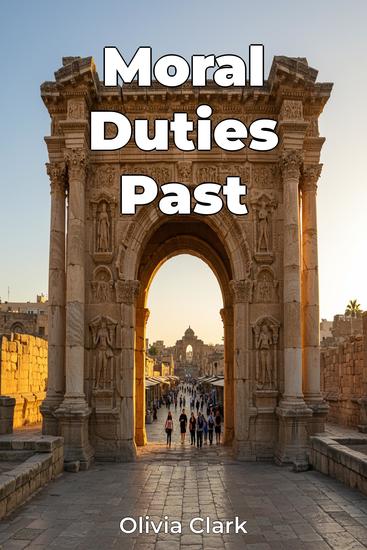
Moral Duties Past - cover

Moral Duties Past

Olivia Clarke

Traductor A AI

Editorial: Publifye

  • 0
  • 0
  • 0

Sinopsis

Moral Duties Past explores the role of honor and ethics in shaping societies before modern times, examining whether these societies operated on a higher moral plane than our own. The book delves into historical codes and social structures, from Mesopotamia to medieval Europe, to understand how societies defined and enforced ethical standards. It argues that an emphasis on honor, though flawed, fostered trust and stability, facilitating societal cohesion.

 
The book progresses by first introducing honor as a social and economic force, then analyzing historical codes like the Code of Hammurabi and Roman civil law to identify governing ethical principles. It further examines social structures that enforced these principles, such as guilds, before investigating the decline of honor-based systems. This approach provides a nuanced assessment of the strengths and weaknesses of past ethical norms.

 
Unique in its approach, the book combines historical analysis with philosophical reflection, challenging the modern assumption that ethical behavior is solely a matter of individual conscience or legal compliance. By drawing parallels between historical and contemporary ethical challenges, Moral Duties Past offers insights into promoting ethical behavior in the 21st century, emphasizing the importance of social accountability and collective reputation as complements to individual responsibility and legal frameworks.
Disponible desde: 20/02/2025.
Longitud de impresión: 62 páginas.

Otros libros que te pueden interesar

  • Abraham Lincoln’s Greatest Speeches: The History of the Addresses that Changed America - cover

    Abraham Lincoln’s Greatest...

    Charles River Editors

    • 0
    • 0
    • 0
    Abraham Lincoln was still not considered a real option for the Republican presidential nomination until he delivered a speech at New York City’s Cooper Union in February 1860, just a few months before the Republicans’ convention in May. Lincoln had gained a bit of a national profile by debating Stephen Douglas during an Illinois Senate Race in 1858, and though he lost that election, Lincoln continued discussing the same themes, most notably slavery and Dred Scott in his Cooper Union speech. Although just 7,000 words long, the Cooper Union Address was almost universally praised in the North. 
    Over 160 years later, Lincoln's Gettysburg Address is still considered arguably the greatest speech in American history. The address only took a few minutes, but in those few minutes, Lincoln invoked the principles of human equality espoused by the Declaration of Independence. In the process, he redefined the Civil War as a struggle not merely for the Union but as "a new birth of freedom" that would bring true equality to all of its citizens, ensure that democracy would remain a viable form of government, and would also create a unified nation in which states' rights were no longer dominant.  
    Lincoln wasn’t given a chance to finish his work, but his thoughts and visions were eloquently saved for posterity in his Second Inaugural Address, delivered a month before his death and considered one of America’s greatest speeches. With the war nearing the end, Lincoln struck a conciliatory tone, reminding both sides that they prayed to the same God for victory and that neither side could divine God’s will. “With malice toward none, with charity for all,” Lincoln called for peace and reunion, his eye clearly on Reconstruction. Nobody will ever know how Lincoln would’ve managed Reconstruction, but in many respects, the Second Inaugural Address was a fitting postscript of sorts to his life and legacy.
    Ver libro
  • Moral Compass The: Navigating Right and Wrong in Modern Times - cover

    Moral Compass The: Navigating...

    Henry J. Howes

    • 0
    • 0
    • 0
    Description: The Moral Compass: Navigating Right and Wrong in Modern Times 
    In today's fast-paced and complex world, the line between right and wrong often blurs, presenting individuals with ethical dilemmas that challenge their values. The Moral Compass: Navigating Right and Wrong in Modern Times explores the intricate dynamics of morality, offering a guide to understanding and addressing these challenges with integrity and purpose. 
    This book delves into the philosophical foundations of morality, the impact of societal and cultural shifts on ethical behavior, and practical strategies for making sound decisions. With a focus on real-world examples and contemporary issues, it provides readers with the tools to navigate moral complexities in both personal and professional settings. 
    Key themes include:The evolution of morality in the modern era.The influence of technology, globalization, and cultural diversity on ethical standards.Practical frameworks for resolving ethical conflicts.The role of empathy, self-reflection, and personal responsibility in moral decision-making. 
    The Moral Compass inspires readers to reflect on their values, embrace critical thinking, and foster a deeper understanding of right and wrong in a world that often tests the limits of morality.
    Ver libro
  • Khalsa Butt Na Manne Koi Part- 2 - (ਖਾਲਸਾ ਬੁੱਤ ਨਾ ਮਾਨੌ ਕੋਇ -2) - cover

    Khalsa Butt Na Manne Koi Part- 2...

    Edited by: Parmjeet Singh Gazi,...

    • 0
    • 0
    • 0
    Book: Khalsa Butt Na Manne Koi Part-2 
    Edited By: Parmjeet Singh Gazi, Ravinderpal Singh 
    Khalsa But Na Maane Koi Part- 2 is a thoughtful and important book that explains why idol worship is not allowed in Sikhism. The book includes a collection of articles written by different Sikh writers and scholars. These articles talk about how Sikh history, teachings of the Gurus, and Gurbani clearly say that Sikhs should not use statues or pictures for worship. 
    Khalsa But Na Maane Koi Part- 2 gives answers to new ideas that try to bring idol worship into the Sikh community. The writers use strong examples from Sikh scriptures and history to explain why such practices go against Sikh beliefs. The book is edited by Parmjeet Singh Gazi and Ravinderpal Singh, who have carefully chosen articles that are full of useful information and references. 
    The main message of this book is to stay true to Sikh values and to avoid any practice that changes the original path shown by the Gurus. The book helps readers understand the difference between true Sikh practice and ideas that have come from outside.If you want to learn more about Sikh beliefs or understand why idol worship is not part of Sikhism, this book is a great book to read. It is simple, clear, and based on facts. Get your copy and reconnect with the true teachings of Sikhism.
    Ver libro
  • The Revelation of Baha-ullah in a Sequence of Four Lessons - cover

    The Revelation of Baha-ullah in...

    Isabella Matilda Davis Brittingham

    • 0
    • 0
    • 0
    Isabella Matilda Davis Brittingham was a significant early American Bahá'í and was posthumously designated by Shoghi Effendi as one of the 19 Disciples of 'Abdu'l-Bahá and Heralds of the Covenant. She was born in 1852, the daughter of Benjamin Davis, who was a grandson of John Morton, a signer of the Declaration of Independence. Her sister-in-law heard about the Bahá'í Faith in 1897 and in 1898 Isabella herself became a part of the nascent American Bahá'í community. In September 1901, Isabella went on pilgrimage to the Holy Land, where she met 'Abdu'l-Bahá, the leader of the Bahá'í Faith and son of the Founder, Bahá'u'lláh. She used the knowledge she gained there to write "The Revelation of Baha-ullah in a Sequence of Four Lessons", which was published by the Bahai Publishing Society of Chicago in 1902. There were nine editions of this work, the last being in 1920. It was one of the earliest accurate accounts of the Bahá'í Faith published in the West. The main purpose of the book is to demonstrate the truth of Bahá'u'lláh's Revelation through Biblical prophecy.
    Ver libro
  • Being White Today - A Roadmap for a Positive Antiracist Life - cover

    Being White Today - A Roadmap...

    Christine Saxman, Shelly Tochluk

    • 0
    • 0
    • 0
    The idea that White people are under attack has permeated political discourse in recent elections. The election of 2024 will be no different. Being White Today: A Roadmap for a Positive Antiracist Life helps White people navigate the myriad messages they encounter about race. The book applies the White racial identity framework developed by psychologist Dr. Janet Helms to take a strong stance against racism. Using fictionalized scenarios and case studies, it offers a way to resist extremist messaging and recruitment. A helpful resource for White people who care about US society, in particular, White parents, educators, activists, and racial/social justice practitioners, this book also helps people understand antiracist messaging and how to use it strategically to create a larger community of White antiracists.
    Ver libro
  • The life of the samurai in Japan - cover

    The life of the samurai in Japan

    KidsChoice

    • 0
    • 0
    • 0
    KidsChoice: World knowledge for Children is an engaging audiobook series that takes young listeners on a fascinating journey to explore and understand the world around them. Aimed at curious children aged 7 to 99, this series dives into a variety of topics in science, society, and culture, making complex ideas accessible and exciting.  Each episode brings a unique theme to life—whether exploring the mysteries of space, uncovering the secrets of the human body, or discovering the diversity of cultures and traditions worldwide. With lively narration, interesting facts, and interactive elements, the series guides young listeners on an adventure full of discovery, encouraging them to ask questions and expand their understanding in a fun way.  In the scientific world of KidsChoice, children learn about the wonders of nature and the universe. Concepts like the solar system, animal behavior, the human body, and Earth's various ecosystems are explained in a way that is easy for kids to grasp and find fascinating. Exciting analogies and vivid examples help spark curiosity, turning learning into an adventure.  Societal topics also have a special place in the series. KidsChoice introduces young listeners to the basics of community, compassion, and making a positive impact. Children learn what it means to be a good citizen and how they can make small, meaningful contributions to their communities.  Additionally, KidsChoice opens a window to the vibrant world of global cultures. Through a virtual journey around the globe, children discover how people in other countries live, the customs and traditions they follow, the languages they speak, and the foods they enjoy. This fosters understanding and respect for diverse ways of life, celebrating the richness of human experience as a beautiful, valuable part of the world.  With its vivid language and captivating soundscapes, "KidsChoice: World knowledge for Children" turns learning into an exciting experience, sparking a lifelong curiosity and a deeper understanding of the world around them.
    Ver libro