¡Acompáñanos a viajar por el mundo de los libros!
Añadir este libro a la estantería
Grey
Escribe un nuevo comentario Default profile 50px
Grey
Suscríbete para leer el libro completo o lee las primeras páginas gratis.
All characters reduced
Dark Humor - cover

Dark Humor

Olivia Clarke

Traductor A AI

Editorial: Publifye

  • 0
  • 0
  • 0

Sinopsis

"Dark Humor" explores the intriguing intersection of comedy and tragedy, examining why we laugh at subjects that often scare us. Delving into philosophical and psychological underpinnings, the book uncovers how dark humor acts as a lens for processing morbid, taboo, and controversial topics. It sheds light on psychological defense mechanisms like sublimation, which help manage anxiety, and analyzes laughter's philosophical implications when directed at sensitive issues like death or injustice. This interdisciplinary approach uniquely combines insights from psychology and philosophy, moving beyond simplistic notions of good or bad taste.

 
The book argues that dark humor isn't just offensive, but a vital tool for coping and social commentary. Chapters progress from defining dark humor and exploring psychological theories to examining ethical considerations and real-world applications in trauma, political discourse, and difficult conversations.

 
Ultimately, "Dark Humor" challenges traditional views of humor, revealing its potential as a complex form of social commentary and psychological coping mechanism. By understanding its mechanisms, motivations, and societal implications, readers can appreciate dark humor as a multifaceted phenomenon with significant psychological and social value.
Disponible desde: 05/05/2025.
Longitud de impresión: 64 páginas.

Otros libros que te pueden interesar

  • The Adverse Childhood Experiences Guided Journal - Neuroscience-Based Writing Practices to Rewire Your Brain from Trauma - cover

    The Adverse Childhood...

    Donna Jackson Nakazawa, LCSW...

    • 0
    • 0
    • 0
    Trauma and its effects can feel like a never-ending storm, and there's no safe harbor in sight from the thoughts and emotions that toss and turn so violently and unpredictably in your head. But healing is possible. Your brain can actually rewire these thoughts and emotions. And you can direct that powerful healing process through journaling. By putting your thoughts to paper, you can identify, choose, and permanently adopt new ways of responding to stress. You can create a new narrative of your life—one that breaks you out of your most deeply ingrained and self-destructive thoughts and behaviors. 


    In this powerful guided journal, internationally acclaimed neuroscience journalist and author Donna Jackson Nakazawa outlines her inspiring, innovative, trauma-informed, and mindful Neural Re-Narrating™ program to help you: acknowledge your past while engaging in the present moment; create a new and empowering written narrative you can revisit again and again; release worry and trauma from your body by putting it onto the page; reduce your anxiety and alleviate symptoms of depression; and access inner calm—even in stressful situations. The act of unburdening oneself is essential when working through troubling or traumatic experiences. Through thoughtful, guided writing experiences, you'll find the strength to live authentically—with hope and optimism for the future.
    Ver libro
  • Mauryan Empire - cover

    Mauryan Empire

    Saurabh Kumar

    • 0
    • 0
    • 0
    The Mauryan Empire was established in 322 B.C. by the great king Chandragupta Maurya. The era of the Mauryas is a milestone throughout the entire existence of Ancient India. The Mauryan Empire was broad and the most powerful in the realm of old Indian history in the ruling from 322 BC to 185 BC.
    Ver libro
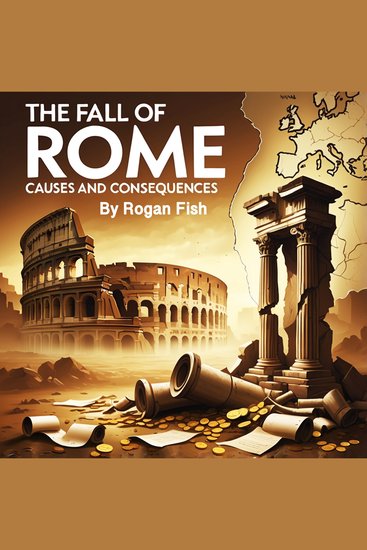
  • The Fall of Rome - Causes and Consequences - cover

    The Fall of Rome - Causes and...

    Rogan Fish

    • 0
    • 0
    • 0
    The decline of the Roman Empire is one of the most studied events in world history, with numerous scholars and historians seeking to explain the causes and contributing factors that led to its fall. It is a complex process that unfolded over centuries, involving a combination of internal weaknesses and external pressures. Although the empire had been a dominant force for centuries, by the 5th century AD, it was struggling to maintain its territorial integrity and power. Several key elements contributed to this gradual decline. 
    One of the primary causes of the empire's decline was economic instability. Over time, the Roman economy became strained under the weight of military expansion, government spending, and inefficient management. Inflation began to plague the empire as the government devalued its currency to finance its military campaigns and public works. Additionally, the empire faced a growing reliance on slave labor, which hindered innovation and economic development. As the economy weakened, the cost of maintaining the empire’s vast infrastructure and military forces became increasingly difficult to manage, leading to a cycle of financial crises. 
    Political corruption and instability were also central to the empire's decline. Throughout its later years, the Roman government became riddled with corruption, particularly within the ruling elite. Emperors were often chosen based on their ability to maintain power rather than their administrative abilities, leading to a lack of effective leadership. The Senate, once a powerful institution, lost its influence, and political factions within the empire vied for control, often undermining efforts to address the empire’s growing problems. This fragmentation of political power weakened the central authority, making it difficult to implement coherent policies across the empire.
    Ver libro
  • Nadi te Naari - cover

    Nadi te Naari

    Bhupinder Singh Raina

    • 0
    • 0
    • 0
    This novel is dedicated to the woman who devotes her entire life to her family and helping others. In the novel, a woman is compared to a river—one that brings happiness, life, and love to everyone. Just as a river overcomes rocks, cliffs, and other obstacles to reach its destination, a woman, too, faces numerous challenges while nurturing and supporting her family. Despite these hardships, she remains calm and composed, gracefully completing her journey through life like a flowing river.
    Ver libro
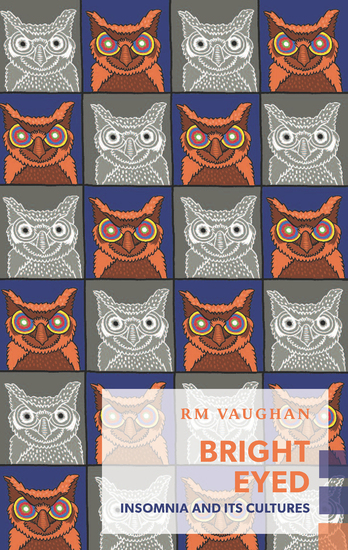
  • Bright Eyed - Insomnia and Its Cultures - cover

    Bright Eyed - Insomnia and Its...

    RM Vaughan

    • 0
    • 0
    • 0
    For forty years, RM Vaughan has been fighting, and failing, to get his forty winks each night. He's not alone, not by any stretch. 
    More and more studies highlight the health risks of undersleeping, yet we have never been asked to do more, and for longer. And we can't stop thinking that a lack of sleep is heroic: snoozing is a kind of laziness, after all. But why, when we know more about the value of sleep, are we obsessed with twenty­-four-­hour workdays and deliberate sleep deprivation? 
    Working outward from his own experience, Vaughan explores this insomnia culture we've created, predicting a cultural collision -- will we soon have to legislate rest, as France has done? -- and wondering about the cause-and-effect model of our shorter attention spans. Does the fact that we are almost universally underslept change how our world works? We know it's an issue with, say, pilots and truck drivers, but what about artists-- does an insomnia culture change creativity? And what are the longterm cultural consequences of this increasing sacrifice for the ever elusive goal of 'total productivity'? 
    ‘With his usual caustic wit and gut-churning insight, Vaughan guides us through pills, sleep clinics (where even the therapists don’t sleep) and the nightly nightmare of Restless Leg Syndrome. Interviewing long-term insomniacs, neuroscientists and Douglas Coupland, Vaughan battles an always-on culture – taking us right to the core of a dreamless empire.’ – Redfern Jon Barrett, author of The Giddy Death of the Gays & the Strange Demise of Straights 
    ‘RM Vaughan has taken his lifelong affliction with insomnia and (dare I say it) made it funny and sexy.’ – Dr. Brian Goldman, host of CBC Radio’s White Coat, Black Art and author of The Secret Language of Doctors
    Ver libro
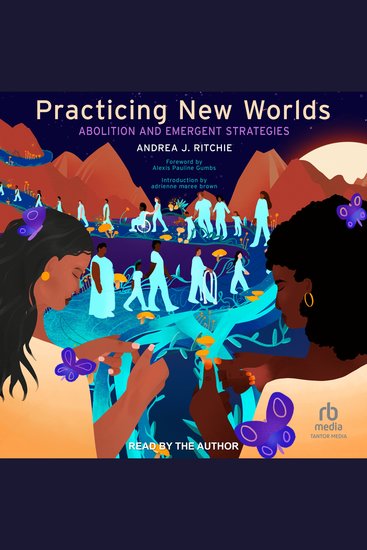
  • Practicing New Worlds - Abolition and Emergent Strategies - cover

    Practicing New Worlds -...

    Andrea J. Ritchie, Alexis...

    • 0
    • 0
    • 0
    Practicing New Worlds explores how principles of emergence, adaptation, iteration, resilience, transformation, interdependence, decentralization, and fractalization can shape organizing toward a world without the violence of surveillance, police, prisons, jails, or cages of any kind, in which we collectively have everything we need to survive and thrive. 


    Drawing on decades of experience as an abolitionist organizer, policy advocate, and litigator in movements for racial, gender, economic, and environmental justice and the principles articulated by adrienne maree brown in Emergent Strategy: Shaping Change, Changing Worlds, Ritchie invites us to think beyond traditional legislative and policy change to create more possibilities for survival and resistance in the midst of the ongoing catastrophes of racial capitalism—and the cataclysms to come. Rooted in analysis of current abolitionist practices and interviews with on-the-ground organizers resisting state violence, building networks to support people in need of abortion care, and nurturing organizations and convergences that can grow transformative cities and movements, Practicing New Worlds takes listeners on a journey of learning, unlearning, experimentation, and imagination to dream the worlds we long for into being.
    Ver libro