¡Acompáñanos a viajar por el mundo de los libros!
Añadir este libro a la estantería
Grey
Escribe un nuevo comentario Default profile 50px
Grey
Suscríbete para leer el libro completo o lee las primeras páginas gratis.
All characters reduced
Dark Humor - cover

Dark Humor

Olivia Clarke

Traductor A AI

Editorial: Publifye

  • 0
  • 0
  • 0

Sinopsis

"Dark Humor" explores the intriguing intersection of comedy and tragedy, examining why we laugh at subjects that often scare us. Delving into philosophical and psychological underpinnings, the book uncovers how dark humor acts as a lens for processing morbid, taboo, and controversial topics. It sheds light on psychological defense mechanisms like sublimation, which help manage anxiety, and analyzes laughter's philosophical implications when directed at sensitive issues like death or injustice. This interdisciplinary approach uniquely combines insights from psychology and philosophy, moving beyond simplistic notions of good or bad taste.

 
The book argues that dark humor isn't just offensive, but a vital tool for coping and social commentary. Chapters progress from defining dark humor and exploring psychological theories to examining ethical considerations and real-world applications in trauma, political discourse, and difficult conversations.

 
Ultimately, "Dark Humor" challenges traditional views of humor, revealing its potential as a complex form of social commentary and psychological coping mechanism. By understanding its mechanisms, motivations, and societal implications, readers can appreciate dark humor as a multifaceted phenomenon with significant psychological and social value.
Disponible desde: 05/05/2025.
Longitud de impresión: 64 páginas.


Otros libros que te pueden interesar

  • History of Switzerland The - Celtic Roots Roman Legacy Medieval Alliances the Swiss Confederation and the Alpine Passes - Neutrality and Direct Democracy - Global Basics 101 - Your Series for Modern Knowledge Folge 20 (unabridged) - cover

    History of Switzerland The -...

    Bert Alexander Petzold

    • 0
    • 0
    • 0
    How did a territory once settled by Celts, conquered by the Romans and long shaped by small domains become the country now known for neutrality, federalism and direct democracy? Listeners who know Switzerland not merely as an Alpine idyll or financial centre, but wish to understand its historical development, will find in 'A History of Switzerland' a clear and well-founded account of political order, transformation and historical significance.
    
    The early centuries already reveal how unusual the Swiss path was. After the Roman conquest in the first century BC and the collapse of the Roman Empire, the region came under Alemannic and Frankish rule. In the Middle Ages, no unified state emerged. Instead, a patchwork of counties, duchies and city-states took shape. Out of this fragmentation developed the political culture that still marks Switzerland today.
    
    With vivid clarity, the audiobook follows the beginnings of the 'Confederation'. When Uri, Schwyz and Unterwalden joined forces in 1291, they formed a loose alliance for common defence. Yet from that alliance a lasting order gradually emerged. More territories joined, institutions hardened, and in the fifteenth century the Confederates asserted their independence against the Habsburgs and other opponents.
    
    The account also shows how Switzerland processed conflict. The 'Reformation' brought religious tensions between Protestant and Catholic cantons in the sixteenth century. In the 'Peace of Westphalia' of 1648, independence from the 'Holy Roman Empire' was recognised internationally. This gave historical support to the neutrality that later became one of Switzerland's defining features.
    
    The audiobook casts equally engaging light on the upheavals of the modern age. The occupation by French revolutionary troops, the conflict-ridden 'Helvetic Republic', the 'Congress of Vienna' of 1815 and the path to the federal state of 1848 all mark crucial stages in modern Swiss history. The new constitution combined stronger central authority with substantial cantonal rights. This balance between unity and diversity makes the Swiss special path remarkable.
    
    One particular strength of the audiobook is that it does not omit the difficult sides of history. Neutrality during the world wars, Switzerland's role as a refuge for displaced people, the severe criticism of banking transactions with National Socialist Germany and the 'Nazi gold' scandal are placed in sober context. The narrative then moves into the post-war decades, economic growth, relations with the 'European Union', accession to the 'United Nations' in 2002 and Switzerland's present role as a model of stability and civic participation.
    
    Bert Alexander Petzold combines historical precision with clear language and makes 'A History of Switzerland' far more than an overview. The audiobook explains connections, situates turning points and shows why Switzerland followed an independent path in Europe, one that continues to fascinate. It is ideally suited to preparation for school-leaving examinations leading to university entrance and to university study.
    
    Clear, compact and carefully structured, this audiobook is designed for listeners who want reliable orientation without losing sight of the larger story. It leads from tribal settlement and imperial rule to confessional division, federal compromise, economic ascent and the challenges of the present.
    
    Anyone wishing to understand Switzerland in its full historical depth will find in 'A History of Switzerland' an informed non-fiction audiobook that goes far beyond clichés. It makes visible the emergence of neutrality, federalism and direct democracy, and it shows how a small Alpine country became a durable political model. Secure your copy now and discover a country whose past explains why it is still regarded as a unique example of political stability and active civic engagement.
    Ver libro
  • How to Learn Any Language in 30 Days - Build a Strong Foundation in Any Language in Just 30 Days - cover

    How to Learn Any Language in 30...

    Benjamin Recker, Benjamin Robin...

    • 0
    • 0
    • 0
    How to Learn Any Language in 30 Days is not another grammar-heavy textbook—it's a clear, motivating, and science-based guide that shows how anyone can build a solid foundation in a new language within just 30 days. Instead of promising unrealistic "Fluent in a month!" results, this book gives you a proven sprint system that actually gets you learning, using, and progressing every single day.    This book walks you step by step through a structured 30-day plan designed around what beginners truly need: focus, real-life situations, consistency, and a method that continues working long after the sprint is over. You'll discover how your brain naturally acquires languages, how to use the 80/20 principle to your advantage, and how to create simple routines that deliver visible results with only 30–90 minutes per day.    Inside you will learn:    Why talent is overrated—and what really determines language-learning success    How to design your personal 30-day Language Mission    Which words, phrases, and patterns actually matter in the beginning    How to combine input, output, and review for maximum progress    How to build a daily routine you can follow anywhere    What to do after the sprint to keep improving without burning out    With clear weekly plans, practical examples, real-life scenarios, and a carefully curated toolkit, this book helps you move from "I wish I could learn a language" to "I'm actually doing it—and it works."    Whether you're preparing for travel, living abroad, connecting with loved ones, or simply proving to yourself that you can learn something new, this 30-day sprint gives you everything you need to start confidently and continue successfully.
    Ver libro
  • Conduct of Life volume 1 - cover

    Conduct of Life volume 1

    R. Moses Almosnino, Walter...

    • 0
    • 0
    • 0
    The major work of Rabbi Moses Almosnino (1515-1580), “Conduct of Life,” remains to this day an essential reference in classical Judeo-Spanish literature, now finally available in English in its first translation. First published in Ladino in 1564 as, Sefer Hanhagat ha-hayimIn 1729 as “Reghimiento de la vyida”, this three-volume edition is part of the prestigious collection Veritas è terra orietur. The introduction by Jean-Pierre Rothschild, Director of Research at CNRS and Director of Studies at EPHE, specializing in medieval philosophy, enlightens the reader on the foundations and stakes of the work. The first volume aims to provide practical advice for leading a good life from an early age. It emphasizes the distinction between spiritual, physical, and external goods (Volume 1, chapters 1-3), including suggestions on dietary habits, sleep and waking, going to bed and getting up, walking and sitting, speaking and silence (chapters 4-10), the four types of discourse, and why the righteous die young (chapter 11). Finally, it addresses questions on eschatology, classical philosophy, and theodicy (chapters 12-14). “Conduct of Life” draws heavily from the Nicomachean Ethics but transcends this source by situating itself at the universal intersection of several traditions: Greco-Arabic philosophy, Judeo-Christian scholasticism, classical Sephardic Judaism, and medieval Jewish thought. Thus, this work contributes to peace and intercultural understanding among peoples.
    Ver libro
  • Viking Myths Legends and History: An Enthralling Exploration of Norse Mythology Stories of Norsemen and Vikings in England - cover

    Viking Myths Legends and...

    Billy Wellman

    • 0
    • 0
    • 0
    Discover the Fascinating World of Vikings and Norse Mythology 
    Two manuscripts in one book:Viking Myths and Legends: Enthralling Tales, Stories, and History of the Vikings and Norse MythologyVikings in England: An Enthralling Guide to the Great Heathen Army and the Viking Raids, Wars, and Settlement in Britain 
    Part One: Viking Myths and LegendsCreation Myths: Find out how the world was made from a giant’s body and how a great ash tree held up nine realms.Gods and Goddesses: Learn about the lives and flaws of Norse gods like Odin, Thor, and Freyja.Mythical Creatures: Meet the elves, dwarves, and monsters of Norse myths.Medieval Manipulations: Discover how Christian scholars changed ancient stories.Thor’s Disguise: Learn why Thor once dressed as a bride and almost married a giant.The Norns’ Weaving: See how these beings controlled the fate of gods and humans.Mjölnir’s Creation: Read about the making of Thor’s powerful hammer.Mistletoe’s Role: Understand how mistletoe led to the end of the world. 
    Part Two: Vikings in EnglandLegendary Raiders and Rulers: Meet famous Vikings like Ragnar Lodbrok and Leif Erikson.The Great Heathen Army: Learn how this powerful force changed England forever.Rule under Danelaw: See how Vikings ruled parts of England and influenced its culture.The Battle of Stamford Bridge: Discover the final battle that ended the Viking era in England.History and Intrigue: Experience the battles, politics, and blending of Viking and Anglo-Saxon cultures. 
    Step into the epic world of Vikings and Norse mythology! Whether you love history or thrilling stories, this book is for you. Click "Add to Cart" to begin your adventure!
    Ver libro
  • The Prince - cover

    The Prince

    Niccolò Machiavelli

    • 0
    • 0
    • 0
    One of history's most influential books on power, leadership, and political strategy.
    
    Discover "The Prince" by Niccolò Machiavelli, the legendary work that transformed political thought and continues to shape discussions of leadership, governance, and strategy more than five centuries after it was written. Bold, thought-provoking, and endlessly relevant, this classic remains essential reading for students of politics, history, philosophy, and leadership.
    
    Written as practical advice for rulers, The Prince examines the realities of acquiring, exercising, and maintaining political power. Through historical examples and sharp analysis, Machiavelli explores themes such as leadership, decision-making, diplomacy, military strength, public perception, and the complex relationship between ethics and effective governance. Its enduring insights encourage readers to think critically about authority, ambition, and the challenges of leadership in any era.
    
    Completed in 1513 and first published in 1532, "The Prince" is widely regarded as one of the foundational works of modern political philosophy. Its influence extends far beyond politics, inspiring leaders, military strategists, business professionals, scholars, and readers interested in understanding the dynamics of power and human behavior.
    
    Perfect for readers of political philosophy, history, leadership, strategy, ethics, and classic nonfiction, this timeless masterpiece offers profound insights that continue to spark debate and reflection around the world.
    
    Explore one of the most influential works ever written on leadership and power. Add "The Prince" to your Kindle library today and discover a classic that has shaped political thought for generations.
    Ver libro
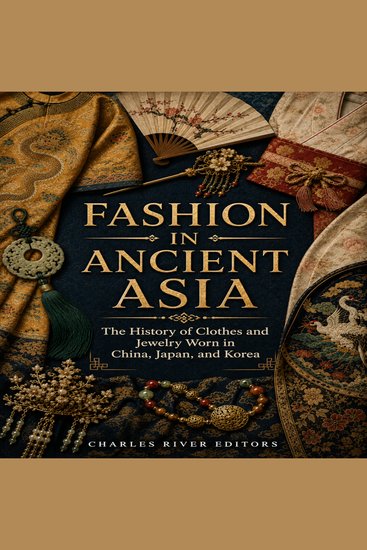
  • Fashion in Ancient Asia: The History of Clothes and Jewelry Worn in China Japan and Korea - cover

    Fashion in Ancient Asia: The...

    Charles River Editors

    • 0
    • 0
    • 0
    For most of recorded history, the peoples of East Asia dressed themselves according to a single elegant idea. They did not cut cloth to the shape of the body and stitch it close, the way the tailors of Europe learned to do. They wrapped the body instead, taking long panels of woven silk or hemp, crossing one over the other at the breast, and binding the whole with a sash so that a person stood inside their clothing rather than inside a set of fitted seams. From that one idea, repeated and refined across 3,000 years, came some of the most beautiful garments the world has ever produced. 
    	It's tempting to imagine that China, Korea, and Japan all dressed alike, and a casual glance can make the mistake seem reasonable. All three favored the wrapped robe and prized silk above every other fiber. All three treated fashion as a moral and cosmological statement rather than a matter of private taste. But the differences are as real as the family resemblance, and they run deep. China gave the region the wrapped robe, the cross-collar, and the loom itself, and its court dress radiated outward for 2,000 years like heat from a fire. Korea took the same starting materials and built something no one could mistake for Chinese, a short jacket riding above a great bell of a skirt. Japan borrowed the Chinese court wholesale in its early centuries, then shut the door on the mainland and spent 300 years turning the borrowed robe into a national art of layered color, out of which the kimono was eventually born. 
    	In all of these places, societies were determining how a civilized person should cover their body, but the answers eventually varied considerably. The answers ranged from silk to hemp and ramie, curved hems and straight ones, the exact direction in which a collar crossed the chest, the number of robes a noblewoman layered against the winter, and the precise shade of yellow that only an emperor was allowed to wear. None of it was casual.
    Ver libro