Junte-se a nós em uma viagem ao mundo dos livros!
Adicionar este livro à prateleira
Grey
Deixe um novo comentário Default profile 50px
Grey
Assine para ler o livro completo ou leia as primeiras páginas de graça!
All characters reduced
The Breakdance Revolution - cover
LER

The Breakdance Revolution

Oliver Scott

Tradutor A AI

Editora: Publifye

  • 0
  • 0
  • 0

Sinopse

The Breakdance Revolution tells the dynamic story of breaking, from its emergence in the 1970s Bronx as a form of street dance born from socio-economic hardship and vibrant hip-hop culture, to its global spread and ultimate recognition as an Olympic sport. This book traces the dance's evolution, exploring how media representation in the 1980s significantly shaped its identity and how competitions evolved from informal street battles to formal athletic events. It is a cultural phenomenon that balances preserving its improvisational roots with adapting to mainstream acceptance.

 
The book uniquely presents this history in three distinct sections. It begins by contextualizing breaking’s Bronx origins, then examines its spread via music videos and films, and finally analyzes the debates surrounding its Olympic inclusion. Through archival research and interviews, the book highlights the tensions between street credibility and commercial appeal, artistic expression and athletic performance. It aims to provide a nuanced understanding of the challenges and opportunities facing breaking today, making it valuable for anyone interested in sports history, dance, and the cultural evolution of popular culture.
Disponível desde: 24/02/2025.
Comprimento de impressão: 63 páginas.

Outros livros que poderiam interessá-lo

  • The Impact of Populism - How Populist Policies Affect Global and National Governance - cover

    The Impact of Populism - How...

    Arlo Holders

    • 0
    • 0
    • 0
    Populism has become one of the most significant political phenomena of the 21st century, influencing governance on a global scale. The term "populism" has been used to describe a wide range of political movements, parties, and ideologies, but its meaning often remains fluid and context-dependent. At its core, populism is a political approach that seeks to represent the interests of "the people" against a perceived elite or establishment that is seen as corrupt, self-serving, and out of touch with the common citizen. While this core idea is consistent, the ways in which populism is expressed and implemented vary dramatically depending on the political, cultural, and economic context. 
    The roots of populism stretch back to the 19th century, with early movements advocating for the empowerment of ordinary citizens, particularly in agricultural societies. However, the modern manifestation of populism began to take shape in the mid-20th century and accelerated in the 21st century, fueled by growing disillusionment with traditional political elites. The rise of social media, economic inequality, and a globalized world have all contributed to populism's recent resurgence, particularly in Western democracies. 
    Contemporary populism is often characterized by a charismatic leader who claims to speak directly for the people, bypassing traditional political institutions and sometimes challenging the rule of law. These leaders often portray themselves as outsiders, positioned against the political establishment, and frequently use simple, direct rhetoric that resonates with disaffected voters. The populist narrative, which pits the common people against the elite, is one of the most powerful tools in shaping public opinion and driving political discourse.
    Ver livro
  • Rome's Imperial Legacy - The Empire's Enduring Impact - cover

    Rome's Imperial Legacy - The...

    Rogan Fish

    • 0
    • 0
    • 0
    The rise of the Roman Empire marks one of the most transformative periods in world history. Emerging from humble beginnings as a small settlement on the banks of the Tiber River, Rome grew to dominate the ancient world through a combination of military prowess, political innovation, and cultural assimilation. This chapter explores the foundations of Roman power, the empire’s expansive reach across continents, and the key figures who shaped its rise. 
    Rome's origins date back to the 8th century BCE, with its legendary founding attributed to Romulus and Remus. Initially a monarchy, Rome evolved into a republic around 509 BCE after the overthrow of the last Etruscan king. This transition marked the beginning of a new political era, where power rested with the Senate and elected magistrates. The republican framework, characterized by a system of checks and balances, laid the foundation for Rome's expansive ambitions. As the republic matured, it developed a complex legal system and a robust military structure that would be instrumental in its growth. 
    One of Rome’s most significant advantages was its strategic location. Positioned at the crossroads of the Mediterranean, Rome became a hub for trade and communication. The city's ability to integrate conquered territories through road networks and infrastructure projects further solidified its control. Additionally, the Roman practice of granting varying levels of citizenship to conquered peoples helped maintain loyalty and stability within the expanding state.
    Ver livro
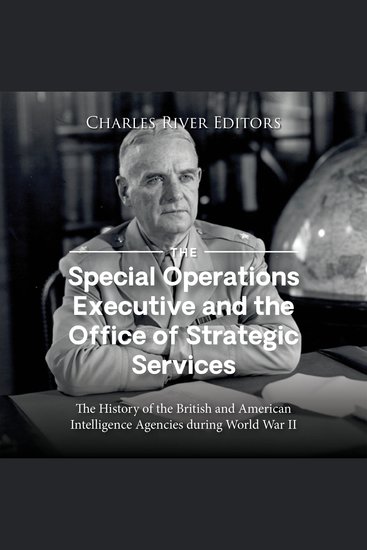
  • Special Operations Executive and the Office of Strategic Services The: The History of the British and American Intelligence Agencies during World War II - cover

    Special Operations Executive and...

    Editors Charles River

    • 0
    • 0
    • 0
    When people think about the Second World War, they seldom think in terms of silence and small acts. This was a war in which the industry of entire nations was rearranged to feed fighting, and it was fought on a scale in which battles could include hundreds of thousands of combatants. Whole cities and populations were destroyed, with millions of casualties occurring at places like Leningrad. 
    But World War II was also a conflict in which modern covert operations first hit their stride. From the jungles of Burma to the streets of Paris, spies, saboteurs, and commandos carried out missions built on secrecy and cunning. Precise, self-contained operations could be as important to the outcome of the war as acts of massive destruction, whether it involved targeted assassinations, sabotaging key logistics, or counterintelligence to break up the enemy’s own rings. At the time, most of these operations were hidden from the public since that was the only way they could be successfully carried out, but in the years since, stories about various missions have emerged. They paint a picture of incredible courage and ingenuity, whether in war zones, enemy territory, or far from the front lines. 
    Though it might be hard to believe, the Americans did not have a covert operations organization when they joined the war, and like the British, it took them some time to realize it could be a powerful tool. In time, all the hard work led to the growth of the OSS into an organization with over 13,000 staff and 40 offices scattered across the world. Its purposes were initially similar to that of Britain’s Special Operations Executive, including espionage, sabotage, and intelligence assessments, but with time and experience, it expanded to include economic, psychological, and guerrilla warfare, as well as counter-intelligence work. And of course, it would all chart a path for the early days of America’s most famous intelligence agency, the CIA. 
    Ver livro
  • Healthcare - Patient-Centered Care in a Changing Landscape - cover

    Healthcare - Patient-Centered...

    Kevin Thorley

    • 0
    • 0
    • 0
    This book includes two different titles, which are: 
    Nursing - Nursing is more than just a profession; it is a calling that blends compassion, science, and clinical expertise to promote health and well-being. As one of the most trusted professions globally, nursing plays a critical role in the healthcare system, directly impacting patients' lives and outcomes. This chapter provides an overview of nursing careers, introducing the diverse roles within the field and the various paths one can take to become a nurse. 
    Nurses are at the heart of patient care, often serving as the bridge between patients and other healthcare professionals. They are involved in a wide range of activities, from administering medications and performing clinical procedures to providing emotional support and educating patients about their health conditions. Nurses work in various settings, including hospitals, clinics, nursing homes, community centers, schools, and even patients' homes, adapting their skills to meet the specific needs of each environment. 
    Social Work - Social work is a vital profession dedicated to improving the quality of life for individuals, families, and communities. It encompasses a broad range of practices aimed at addressing social issues, alleviating suffering, and promoting social change. Rooted in the principles of social justice, human rights, and empowerment, social work strives to enhance the well-being of marginalized populations while fostering an equitable society. 
    At its core, social work is grounded in the understanding that individuals exist within the context of their environment. This ecological perspective highlights the interplay between personal, social, economic, and cultural factors that influence people’s lives.
    Ver livro
  • Kamakura Shogunate - Samurai Power and the Mongol Invasions - cover

    Kamakura Shogunate - Samurai...

    Rolf Hedger

    • 0
    • 0
    • 0
    The rise of the Kamakura Shogunate marks a pivotal moment in Japanese history, transitioning from the aristocratic Heian period to the feudal system dominated by the samurai. This era began with the victory of Minamoto no Yoritomo, who, after the Genpei War (1180-1185), established a new form of governance centered in Kamakura, a small coastal town far from the imperial capital of Kyoto. 
    The Genpei War was a civil conflict between the Taira and Minamoto clans, which ultimately ended with the defeat of the Taira in the Battle of Dan-no-ura in 1185. Minamoto no Yoritomo, the leader of the Minamoto clan, emerged as the victor, but his triumph was not simply a personal or clan-based success. Yoritomo's victory laid the foundation for a shift in the political landscape of Japan. The Taira had represented the old courtly aristocracy that governed Japan through the imperial system, but the rise of the Minamoto signaled the beginning of samurai dominance and a move toward military rule. 
    In 1192, Yoritomo was granted the title of shogun by the emperor, an act that formalized his military authority. This title, meaning "generalissimo" or "commander of the army," was traditionally given to military leaders in times of war but had never been used as the primary governing title before. This marked the official beginning of the Kamakura Shogunate, a military dictatorship that would rule Japan for over a century. Though the emperor remained the nominal ruler, Yoritomo’s power was based in Kamakura, far from the imperial court, which shifted the balance of power from the capital to the military elite.
    Ver livro
  • Hacking College - Why the Major Doesn't Matter―and What Really Does - cover

    Hacking College - Why the Major...

    Ned Scott Laff, Scott Carlson

    • 0
    • 0
    • 0
    College is a high-stakes game, according to authors Ned Scott Laff and Scott Carlson, but students can learn how to win it. Hacking College offers college advisors, faculty, and staff in student and academic affairs a groundbreaking guide to rethinking higher education so that students can succeed in an increasingly complex world. Drawing from extensive research and real student experiences, this essential book exposes the hidden challenges and bureaucratic traps that undermine student success, from convoluted transfer processes to a single-minded emphasis on majors. 


    Each chapter provides strategies to help advisors lead students to tailor their education to their aspirations. Through vivid case studies, Laff and Carlson advocate for a proactive approach to education—encouraging students to "hack" their college experience by crafting a personalized field of study. This method challenges the traditional focus on declaring a major and empowers students to link their personal interests with academic pursuits so that their education aligns with future career and life goals. Enriched with insights on how to find underutilized institutional resources and foster meaningful mentor relationships, Hacking College encourages students, educators, and institutions to transform passive educational experiences into dynamic journeys of discovery and self-fulfillment.
    Ver livro