Junte-se a nós em uma viagem ao mundo dos livros!
Adicionar este livro à prateleira
Grey
Deixe um novo comentário Default profile 50px
Grey
Assine para ler o livro completo ou leia as primeiras páginas de graça!
All characters reduced
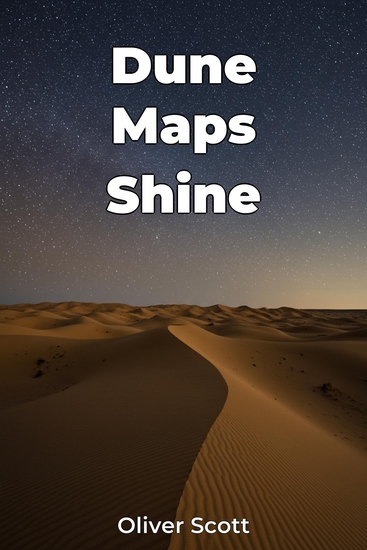
Dune Maps Shine - cover
LER

Dune Maps Shine

Oliver Scott

Tradutor A AI

Editora: Publifye

  • 0
  • 0
  • 0

Sinopse

Dune Maps Shine explores the fascinating history of Tuareg navigation across the Sahara, highlighting their profound geographic literacy and potential use of sophisticated location-finding techniques. This book delves into how the Tuareg people, relying on environmental cues like wind patterns and terrain variations, navigated vast distances. Intriguingly, evidence suggests they may have utilized crafted maps and non-electronic GPS-like devices, challenging conventional narratives that often overlook non-Western contributions. The book emphasizes the importance of studying indigenous knowledge systems and their role in shaping historical trade routes.

 
The book examines the historical context of trans-Saharan trade, including the exchange of gold, salt, and slaves, illustrating the critical role of the Tuareg's navigational skills in sustaining these networks. By drawing from historical texts, interviews, and satellite imagery, Dune Maps Shine argues that the Tuareg combined innate skill with deliberate technological adaptation, offering a fresh perspective on ancient navigation.

 
The book progresses by first introducing the Tuareg culture and traditional techniques, then presenting evidence of advanced mapping, and finally exploring the impact of this knowledge on Saharan history.
Disponível desde: 27/02/2025.
Comprimento de impressão: 64 páginas.


Outros livros que poderiam interessá-lo

  • Moche Civilization - Warriors Pottery and the Pyramid Builders of Northern Peru - cover

    Moche Civilization - Warriors...

    Rolf Hedger

    • 0
    • 0
    • 0
    The Moche civilization emerged along the northern coast of present-day Peru, flourishing between approximately 100 and 750 CE. This society developed in a region marked by arid deserts, fertile river valleys, and proximity to the Pacific Ocean, which shaped its economy, culture, and political structure. The Moche were not a singular unified state but rather a collection of regional polities connected through shared traditions, artistic styles, and religious beliefs. Their rise was influenced by earlier Andean cultures, particularly the Cupisnique and Chavín, which had already laid the foundations for complex societies in the region. 
    The origins of the Moche civilization can be traced to the early centuries of the Common Era when small communities along the coast began to expand due to agricultural advancements and increasing social stratification. The region's rivers, fed by Andean runoff, allowed for irrigation-based farming that supported large populations. Over time, leaders emerged who controlled land, labor, and water resources, leading to the development of hierarchical societies. These early rulers likely solidified their power through religious authority, military strength, and their ability to organize large-scale construction projects. 
    One of the defining aspects of Moche civilization was its adaptation to the harsh environment. The coastal deserts of northern Peru posed challenges for sustaining large populations, yet the Moche mastered irrigation technology, channeling river water to expand arable land. This agricultural innovation provided surplus food, which in turn fueled urban growth, specialization of labor, and the rise of elite classes. Moche settlements grew into centers of political and religious activity, with monumental architecture such as pyramids and temples becoming focal points of their cities.
    Ver livro
  • South America’s Economy - Booms Busts and Transformations (4 in 1) - cover

    South America’s Economy - Booms...

    Anya Solace

    • 0
    • 0
    • 0
    South America’s Economy delves into the dramatic rises, falls, and reinventions of four major economies: Argentina, Brazil, Colombia, and Venezuela. This 4-in-1 collection offers a sweeping view of a continent shaped by political upheaval, resource wealth, policy experiments, and the constant push-pull between growth and crisis. From hyperinflation to privatization, oil booms to currency collapses, this volume captures the complexity and volatility of the region’s economic story. 
    Argentina’s economic crises highlight the consequences of policy missteps and external shocks, revealing how a once-thriving nation became a case study in recurring collapse. Brazil’s economic evolution shows a journey through industrialization, reform, and global integration, alongside persistent inequality and corruption. Colombia’s transformation tells a story of resilience—rising from the shadows of conflict to emerge as a growing economy with expanding global ties. Finally, Venezuela presents perhaps the most extreme example of economic meltdown in recent memory, offering crucial lessons about dependency, mismanagement, and populism. 
    Whether you’re a student, global observer, or simply curious about South America’s economic puzzle, this book provides both historical depth and modern relevance to help you understand the region's shifting fortunes.
    Ver livro
  • Why You Should Go to Zanzibar - cover

    Why You Should Go to Zanzibar

    Mark Ferdinand

    • 0
    • 0
    • 0
    Zanzibar is an island paradise with a soul. Just off the coast of Tanzania, it’s a place where turquoise waters meet white sand beaches, spice plantations fill the air with fragrance, and centuries of history unfold in the winding alleys of Stone Town. Both exotic and welcoming, Zanzibar offers an unforgettable escape. 
    Mark Ferdinand takes you on a journey through this enchanting archipelago: snorkeling in coral reefs teeming with life, exploring historic forts and markets, savoring the island’s rich fusion of Swahili, Arab, and Indian influences, and watching the sun set over the Indian Ocean. Whether you’re seeking adventure, relaxation, or cultural discovery, Zanzibar is a destination that will awaken your senses and capture your heart.
    Ver livro
  • Flowers of War - cover

    Flowers of War

    Llŷr Gwyn Lewis

    • 0
    • 0
    • 0
    When the author is given a small package, containing letters and papers relating to his grandfather's brother, who was killed in Syria during the Second World War, it leads him on an extended personal journey. An exploration of history, imagination and the process of memory, shifting imperceptibly from autobiography to travelogue, from letters and diaries to official records, from text to visual image.
    
    In his first prose work Lewis reveals a rare and consummate literary talent. Deeply rooted in his Welsh identity, this young writer locates his own and his family's experience within the wider European world in a thoughtful, mature and highly original book.
    
    Flowers of War is a translation of Rhyw Flodau Rhyfel (Y Lolfa, 2014), which won the Creative Non-Fiction category in the 2015 Wales Book of the Year award.
    Ver livro
  • Warrior Empires of India - Conquerors and Defenders (3 in 1) - cover

    Warrior Empires of India -...

    Rolf Hedger

    • 0
    • 0
    • 0
    The history of India is filled with tales of powerful warrior empires that shaped the destiny of the subcontinent. Among them, the Hoysala Empire, the Rashtrakuta Empire, and the Kakatiya Dynasty stood as formidable forces in the Deccan region, each leaving behind a unique legacy of conquest, governance, and cultural patronage.  
    The Rashtrakutas, known for their military might, expanded their rule across vast territories, engaging in wars with the Pratiharas and Palas while fostering art and architecture, as seen in the magnificent Kailasanatha temple at Ellora.  
    The Hoysalas, emerging later, were fierce warriors and master builders, commissioning iconic temples such as those at Belur and Halebidu while defending their kingdom against rival invasions.  
    The Kakatiya Dynasty, renowned for its defensive strategies, constructed impressive fortifications like the Warangal Fort and resisted repeated invasions, including those from the Delhi Sultanate.  
    These warrior empires not only fought to expand and defend their territories but also enriched Indian culture, trade, and architecture, leaving an enduring impact on the history of the Deccan.
    Ver livro
  • Typhoon - cover

    Typhoon

    Joseph Conrad

    • 0
    • 0
    • 0
    This is the novel Typhoon. Written fir you by Joseph Conrad, and read by Jim Edmark.
    Ver livro