Junte-se a nós em uma viagem ao mundo dos livros!
Adicionar este livro à prateleira
Grey
Deixe um novo comentário Default profile 50px
Grey
Assine para ler o livro completo ou leia as primeiras páginas de graça!
All characters reduced
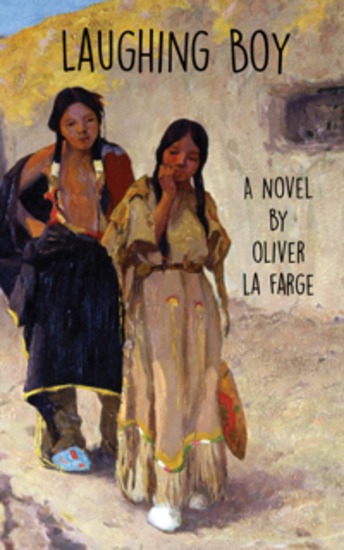
Laughing Boy (Classicus Edition) - cover
LER

Laughing Boy (Classicus Edition)

Oliver La Farge

Editora: Classicus

  • 0
  • 0
  • 0

Sinopse

Published in 1929, Laughing Boy by Oliver La Farge is a tender and evocative exploration of cultural identity, love, and resilience in the face of change. Set in the early 20th century, the novel provides a vivid portrayal of Navajo life during a period when traditional ways were increasingly threatened by external pressures and assimilationist policies.
     The story follows Laughing Boy, a proud and traditional Navajo man skilled in the arts of silversmithing and deeply connected to his heritage. When he meets Slim Girl, a fellow Navajo raised in an Anglo-American boarding school, their romance blooms, but it is fraught with challenges. Slim Girl, shaped by her experiences outside the Navajo community, longs to reconcile the cultural values she was taught with the traditions of her people. Their love becomes a microcosm of the broader cultural struggles faced by Indigenous peoples during this era, as they navigate the pull between preserving their identity and adapting to a changing world.
     La Farge, an anthropologist as well as a writer, brings a keen eye for detail and a genuine respect for Navajo culture to his work. However, the novel is not without controversy. Written by a non-Native author, Laughing Boy raises important questions about authenticity, representation, and the ethical dimensions of storytelling. Critics and readers have debated its depiction of Navajo characters and culture, examining the ways in which the novel reflects both the limitations and the aspirations of its time.
     Awarded the Pulitzer Prize for Fiction in 1930, Laughing Boy endures as a complex and multifaceted work. It invites readers to reflect on themes of love, belonging, and cultural survival while grappling with the legacies of colonization and assimilation. For modern audiences, the novel serves as both a historical artifact and a starting point for deeper engagement with Indigenous voices and perspectives.
Disponível desde: 14/01/2025.

Outros livros que poderiam interessá-lo

  • This is the End - cover

    This is the End

    Stella Benson

    • 0
    • 0
    • 0
    It is the story of a Family halfheartedly searching for a missing relation who does not want to be found, while just off-stage, World War I is raging on the continent. It is a story about ordinary people trying to live ordinary lives in extraordinary times. The things they do are less important than the ways in which they do them: often comic, occasionally tragic, but always touching and true to life. It reminds us that Poetry and Romance can be found anywhere, hidden beneath the surface of the most commonplace things.
    Ver livro
  • Anna Karenina (Part 1) - cover

    Anna Karenina (Part 1)

    Leo Tolstoy

    • 0
    • 0
    • 0
    Part 1: Prince Stepan Arkadyevich Oblonsky ("Stiva"), a Moscow aristocrat and civil servant, has been unfaithful to his wife, Princess Darya Alexandrovna ("Dolly"). Dolly has discovered his affair with the family's governess, and the household and family are in turmoil. Stiva informs the household that his married sister, Anna Arkadyevna Karenina, is coming to visit from Saint Petersburg in a bid to calm the situation.
    Anna Karenina is a novel by the Russian author Leo Tolstoy, first published in book form in 1878. Many writers consider Anna Karenina the greatest work of literature ever, and Tolstoy himself called it his first true novel. It was initially released in serial installments from 1873 to 1877 in the periodical The Russian Messenger.
    Ver livro
  • The Prisoner of Zenda - cover

    The Prisoner of Zenda

    Anthony Hope

    • 0
    • 0
    • 0
    Rudolf Rassendyll travels to the small kingdom of Ruritania for what should be a quiet holiday. But when the newly crowned king is drugged and kidnapped, Rudolf’s uncanny resemblance to him pulls him into a dangerous plan. 
    To prevent a national crisis, he agrees to impersonate the king. As he steps into royal life, Rudolf must navigate court politics, betrayal, and a plot to seize the throne. 
    At the heart of it all is Princess Flavia, whose loyalty is torn between duty and the man who only pretends to rule. 
    The Prisoner of Zenda is a fast-paced story of disguise, honor, and impossible choices. It remains one of the most enduring adventure novels of its time. 
    Perfect for readers who enjoy political intrigue, romantic tension, and classic heroism.
    Ver livro
  • The Beasts of Tarzan - cover

    The Beasts of Tarzan

    Edgar Rice Burroughs

    • 0
    • 0
    • 0
    In this story, Tarzan (formerly Lord Greystoke) is now in his mid-twenties and he and Jane have had a son, whom they've named Jack.  
    Tarzan is in his new home on the Waziri lands in Uziri, Africa, but has returned to his ancestral estate in London for the rainy season. when suddenly his son is kidnapped by marauders. 
    Determined to rescue his son, Tarzan must once again perilously navigate through treacherous jungles, fight dangerous animals, and outwit those who seek to harm his family.  With his faithful  friends in the jungle, Tarzan tests his strength, agility and resolve for his family's welfare.  
    E. R. Burroughs' vivid descriptions and heart-pounding action capture the essence of adventure and heroism, transporting readers into a world where courage and loyalty triumph over adversity.
    Ver livro
  • A Little Holiday - From their pens to your ears genius in every story - cover

    A Little Holiday - From their...

    Oswald Sickert

    • 0
    • 0
    • 0
    The bookshelves of British literature are incredible collections that have gathered together centuries of very talented authors.  From these Isles their fame spread and whilst among their number many are now forgotten or neglected their talents endure.  Among them is Oswald Sickert.
    Ver livro
  • The Portrait of Mr W H - cover

    The Portrait of Mr W H

    Anônimo

    • 0
    • 0
    • 0
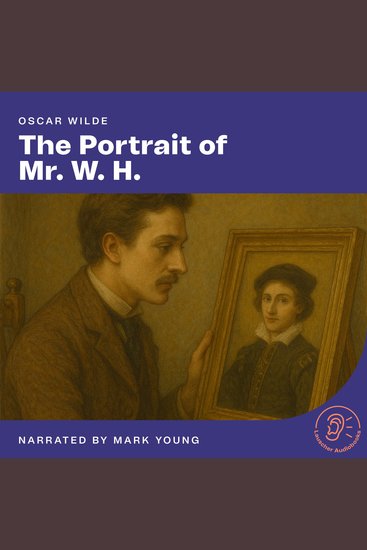
    "The Portrait of Mr. W. H." is a story written by Oscar Wilde, first published in Blackwood's Magazine in 1889. It was later added to the collection Lord Arthur Savile's Crime and Other Stories, though it does not appear in early editions. An enlarged edition planned by Wilde, almost twice as long as the Blackwood's version, with cover illustration by Charles Ricketts, did not proceed and only came to light after Wilde's death. This was published in limited edition by Mitchell Kennerley in New York in 1921, and in a first regular English edition by Methuen in 1958, edited by Vyvyan Holland.
    Wilde's story is narrated by a friend of a man called Erskine, who is preoccupied by the Hughes theory. Erskine had learned the idea from one Cyril Graham, who had tried to persuade Erskine of it based on the text of the sonnets, but Erskine was frustrated by the lack of external historical evidence for Willie Hughes's existence. Graham tried to find such evidence but failed; instead, he fakes a portrait of Hughes in which Hughes is depicted with his hand on a book on which can be seen the dedication from the sonnets. Erskine is convinced by this evidence, but then discovers the portrait to be a fake, a discovery that leads him to yet again doubt the existence of Willie Hughes. Graham still believes in the theory, and to prove it, shoots himself.
    Ver livro