Junte-se a nós em uma viagem ao mundo dos livros!
Adicionar este livro à prateleira
Grey
Deixe um novo comentário Default profile 50px
Grey
Assine para ler o livro completo ou leia as primeiras páginas de graça!
All characters reduced
Home Prayer Limits - cover
LER

Home Prayer Limits

Oliver Faith

Tradutor A AI

Editora: Publifye

  • 0
  • 0
  • 0

Sinopse

"Home Prayer Limits" explores the controversial practice of governmental oversight, specifically focusing on the monitoring of private prayer by Scottish authorities. It highlights the tension between religious freedom and national security, questioning whether state power should extend to surveilling individuals in their own homes. The book delves into the rationale behind these policies, the methods employed, and the ethical implications for civil liberties and religious minorities.

 
The book examines the historical context and legal precedents that led to these monitoring policies in Scotland. It offers a detailed analysis of how surveillance laws intersect with human rights conventions, challenging readers to consider the impact on privacy and religious expression.

 
The book is structured to first introduce the case study, then delve into the historical and ethical context, and finally, analyze the implications for religious minorities and democratic governance.

 
Ultimately, "Home Prayer Limits" argues that such monitoring represents an overreach of governmental power, even if motivated by security concerns. Through its exploration of governmental oversight, the book aims to inform academics, policymakers, and anyone concerned about the balance between national security and individual liberties. It provides a comprehensive analysis of this complex issue, making it a valuable resource for understanding contemporary debates on surveillance and religious freedom.
Disponível desde: 18/02/2025.
Comprimento de impressão: 75 páginas.


Outros livros que poderiam interessá-lo

  • The Chinese Fairy Book - cover

    The Chinese Fairy Book

    Frederick Martens

    • 0
    • 0
    • 0
    Step into a magical world with The Chinese Fairy Book, a timeless collection of enchanting tales gathered by Frederick Martens. This compilation brings to life the rich folklore and vibrant traditions of ancient China, filled with mythological creatures, legendary heroes, and wise sages. Each story weaves a tapestry of cultural wisdom, mystical adventures, and moral lessons that have been passed down through generations. 
    What to Expect:📚 Classic Folktales: Explore a treasure trove of stories, from heartwarming fables to epic legends, capturing the essence of Chinese heritage.🌏 Cultural Insights: Gain a deeper understanding of Chinese mythology, history, and the values embedded within these timeless tales.🎙️ Engaging Narration: Each story is brought to life with captivating storytelling, perfect for listeners of all ages who enjoy myths and folklore. 
    Why You’ll Love This Audiobook:Immersive Storytelling: Dive into narratives that take you to distant lands filled with dragons, fairies, and ancient deities.A Journey Through Time: Discover stories that reflect the wisdom, humor, and creativity of one of the world’s oldest civilizations. 
    Perfect for Fans of:Fairy tales and fables from around the worldMythology enthusiastsThose interested in Chinese culture and storytelling traditions 
    Rediscover the magic of fairy tales with The Chinese Fairy Book. It’s a literary journey you won’t want to miss!
    Ver livro
  • Stories from Kathasaritasagara series -3 - From Various sources - cover

    Stories from Kathasaritasagara...

    Anusha HS

    • 0
    • 0
    • 0
    The book Kathasaritsagara has been created by Soma Deva. It consists of 21,500 shlokas. 
    This book Kathasaritsagara has been divided into 18 lambakaas, and those 18 lambakaas are still more divided into 125 Tharanga's. 
    Some lambakaas are very big, while some are very small. 
    If there are 115 Shlokas in the 11th Lambaka, there are around 4925 Shlokas in 12th Lambaka. 
    During ancient times from the mouth of Lord Shiva, this story got birth. Those who listen to this story will experience all sorts of worldly pleasures. They will be blessed by Lord Shiva and at last reach jnana Loka by the blessings of lord shiva.
    Ver livro
  • Coming Clean - The Rise of Critical Theory and the Future of the Left - cover

    Coming Clean - The Rise of...

    Eric Heinze

    • 0
    • 0
    • 0
    What has gone wrong with the left—and what leftists must do if they want to change politics, ethics, and minds. 


    Leftists have long taught that people in the West must take responsibility for centuries of classism, racism, colonialism, patriarchy, and other gross injustices. Of course, right-wingers constantly ridicule this claim for its "wokeness." 


    In Coming Clean, Eric Heinzerejects the idea that we should be less woke. In fact, we need more wokeness, but of a new kind. Yes, we must teach about these bleak pasts, but we must also educate the public about the left's own support for regimes that damaged and destroyed millions of lives for over a century—Stalin in the Soviet Union, Mao Zedong in China, Pol Pot in Cambodia, or the Kim dynasty in North Korea. 


    Criticisms of Western wrongdoing are certainly important, yet Heinze explains that leftists have rarely engaged in the kinds of open and public self-scrutiny that they demand from others. Citing examples as different as the Ukraine war, LGBTQ+ people in Cuba, the concept of "hatred," and the problem of leftwing antisemitism, Heinze explains why and how the left must change its memory politics if it is to claim any ethical high ground.
    Ver livro
  • Voices From Hollywood's Golden Age - cover

    Voices From Hollywood's Golden Age

    Stan Laurel, Buster Keaton,...

    • 0
    • 0
    • 0
    Hear live recordings of voices from Hollywood's golden age including Stan Laurel, Buster Keaton, Lillian Gish, Ethel Barrymore, John Barrymore, and Lionel Barrymore.
    Ver livro
  • Jewish Family Life - Customs Rituals and Values in Daily Living - cover

    Jewish Family Life - Customs...

    Joseph Arston

    • 0
    • 0
    • 0
    Jewish family life is deeply rooted in tradition, values, and a strong sense of community. The family is not just a social unit but the very foundation of Jewish identity, shaping the faith, customs, and moral principles passed down through generations. Through daily practices, holidays, and shared rituals, Jewish families cultivate a home environment that nurtures both spiritual and ethical development. 
    At the core of Jewish family life is the concept of shalom bayit, or peace in the home. This principle emphasizes harmony, mutual respect, and love among family members. Parents play a crucial role in modeling these values, creating an atmosphere where kindness, patience, and understanding are prioritized. The Torah provides guidance on fostering a household filled with compassion and justice, reinforcing the idea that family is a sacred space where Jewish teachings come to life. 
    Another fundamental aspect of Jewish family life is the observance of Shabbat. The Sabbath is more than just a day of rest—it is a time for families to reconnect, reflect, and step away from the distractions of daily life. The preparation for Shabbat, including lighting the candles, reciting blessings over wine and bread, and sharing a festive meal, strengthens family bonds. Shabbat serves as a reminder of the importance of slowing down, appreciating one another, and finding holiness within the home. It is a time when parents pass down traditions and children absorb the rhythms of Jewish living.
    Ver livro
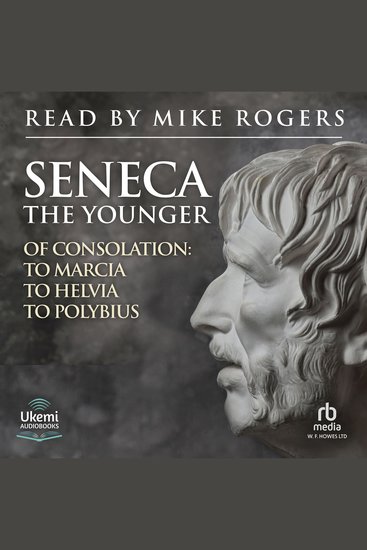
  • Of Consolation - To Marcia To Helvia To Polybius - cover

    Of Consolation - To Marcia To...

    Seneca the Younger

    • 0
    • 0
    • 0
    These three ‘Consolations’, written by Seneca to his mother and two friends, have been described as ‘the crowning achievement in the canon of ‘consolation letters’. But sentimental they are not, for they emerge from the writer’s deep-seated commitment to Stoicism, where individuals are exhorted to inhabit qualities of virtue, positivity, resilience, and indifference. This recording opens with Seneca’s consolatory letter to Marcia, who, after three years, was still mourning the death of her son. He recognises her exceptional personal qualities and what benefits she has brought to her family, having rescued her father’s legacy as a historian following his death. He cites other noble Roman mothers who lost their sons, and enjoins her to adopt a more Stoic attitude of mind: we are all destined to die, he declares.  
    The second letter is to his mother sent after he had been exiled to Corsica by Emperor Caligula. He counsels Helvia not to mourn his absence – not least because he himself does not feel grief at the prospect of his own exile. He acknowledges the trials of his mother during her life, remarking ‘ill-fortune has given you no respite’. But her grief at the absence of her son may be put to one side in the knowledge that as he has ‘never trusted in Fortune,’ she can be comforted that her son is not discommoded. And history points to far harsher separations.  
    The final letter is to Polybius, Emperor Claudius’s Literary Secretary, who was mourning his brother.  Written while in exile, Seneca’s unwavering commitment to Stoic philosophy is again in evidence. One of Seneca’s principal suggestions is for Polybius to distract himself from grief by an increasing involvement in work.  
    These ‘Consolations’ have been widely admired from Classical times to the present, but are periodically questioned for their emphasis on a somewhat detached approach to grief and bereavement. Not all can manage imperturbability in such circumstances. Nevertheless, there is a steadiness and emotional calm in these missives, which Seneca himself displayed when ordered to commit suicide by Emperor Nero.
    Ver livro