Rejoignez-nous pour un voyage dans le monde des livres!
Ajouter ce livre à l'électronique
Grey
Ecrivez un nouveau commentaire Default profile 50px
Grey
Abonnez-vous pour lire le livre complet ou lisez les premières pages gratuitement!
All characters reduced
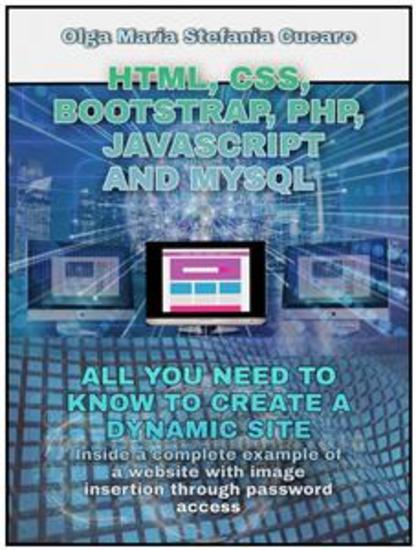
HTML CSS Bootstrap Php Javascript and MySql - All you need to know to create a dynamic site - cover

HTML CSS Bootstrap Php Javascript and MySql - All you need to know to create a dynamic site

Olga Maria Stefania Cucaro

Maison d'édition: ResearchFreelance

  • 0
  • 0
  • 0

Synopsis

This book aims to initiate those who want to independently create a website, to the world of domains and programming linked to the web. The author conceived this work as a scientific work intended for educational and study use for all those who approach the study of client-side and server-side programming.In the first place the difference between the various domains existing on the network will be explained and at a later time we will try to explain the CSS and HTML and then enter the PHP programming (server side) and JavaScript (client side) with the creation of databases via phpMyAdmin.All this will be explained through an example website created specifically using a free Bootstrap for simplicity and basic convenience and programming a control panel with login connected to the site via database for inserting images directly from the web by uploading them to the database created with connected phpMyAdmin to the site. Obviously, after entering the world of databases and programming, you can apply this knowledge to any other need for iteration by the user required by the site project.The aim of this study is not to create simple web pages that today can be done easily with WordPress or other easy-to-use software, but for purely educational purposes to explain the use of databases and server and client-side programming to make a dynamic otherwise static site. In summary, this work can be useful for those who want to approach the fascinating world of website programming from the beginning.
Disponible depuis: 08/02/2022.

D'autres livres qui pourraient vous intéresser

  • Cloud Security Handbook for Architects - Practical Strategies and Solutions for Architecting Enterprise Cloud Security using SECaaS and DevSecOps - cover

    Cloud Security Handbook for...

    Ashish Mishra

    • 0
    • 0
    • 0
    Cloud platforms face unique security issues and opportunities because of their evolving designs and API-driven automation. We will learn cloud-specific strategies for securing platforms such as AWS, Microsoft Azure, Google Cloud Platform, Oracle Cloud Infrastructure, and others. The book will help you implement data asset management, identity and access management, network security, vulnerability management, incident response, and compliance in your cloud environment. 
    This book helps cybersecurity teams strengthen their security posture by mitigating cyber risk when "targets" shift to the cloud. The book will assist you in identifying security issues and show you how to achieve best-in-class cloud security. It also includes new cybersecurity best practices for daily, weekly, and monthly processes that you can combine with your other daily IT and security operations to meet NIST criteria. 
    This book teaches how to leverage cloud computing by addressing the shared responsibility paradigm required to meet PCI-DSS, ISO 27001/2, and other standards. It will help you choose the right cloud security stack for your ecosystem. Moving forward, we will discuss the architecture and framework, building blocks of native cloud security controls, adoption of required security compliance, and the right culture to adopt this new paradigm shift in the ecosystem. 
    Towards the end, we will talk about the maturity path of cloud security, along with recommendations and best practices relating to some real-life experiences.
    Voir livre
  • Data Structures and Algorithms for Beginners - Comprehensive Guide for Beginners - cover

    Data Structures and Algorithms...

    Brian Paul

    • 0
    • 0
    • 0
    Embark on a transformative journey into the heart of problem-solving with "Data Structures and Algorithms for Beginners." Tailored for beginners, this comprehensive guide unravels the complexities of data structures and algorithms, turning what may seem daunting into an exciting exploration of logical thinking and efficient computation. 
    In the opening chapters, readers are gently introduced to the fundamental concepts, laying a solid foundation for the exciting adventure ahead. What are data structures, and why do algorithms matter? The book answers these questions and more, making the seemingly abstract world of computer science tangible and accessible. 
    Explore the core data structures such as arrays, linked lists, trees, and graphs, and grasp the essence of algorithmic paradigms like divide and conquer, greedy algorithms, and dynamic programming. The journey continues with practical applications, from searching and sorting to graph algorithms, offering readers a real-world perspective on how these concepts are utilized in solving everyday problems. 
    "Data Structures and Algorithms for Beginners" doesn't stop at the basics. Advanced topics like hashing, trie data structures, and complexity analysis are unveiled, giving readers a glimpse into the depth and breadth of the field. The journey concludes with invaluable tips for interview preparation, ensuring that readers are well-equipped to showcase their newfound knowledge in a professional setting. 
    Let the pages guide you through the maze of data structures and algorithms, transforming challenges into triumphs. Unlock the power of logical thinking and efficient problem-solving with "Data Structures and Algorithms for Beginners." Your journey begins now. 
     
    Voir livre
  • Lymphology - The Lymphatic System: The Unsung Hero of the Body - cover

    Lymphology - The Lymphatic...

    Mike Crawford

    • 0
    • 0
    • 0
    The lymphatic system is one of the most crucial yet underappreciated systems in the human body. It plays a vital role in maintaining fluid balance, supporting immune function, and facilitating the removal of waste and toxins. Unlike the circulatory system, which has the heart to pump blood, the lymphatic system relies on muscle movement and pressure changes within the body to circulate lymph fluid. This extensive network of vessels, nodes, and organs works silently in the background, keeping the body healthy and functioning efficiently. 
    At its core, the lymphatic system consists of lymph, a clear fluid that carries immune cells and waste products; lymph nodes, which filter harmful substances and house white blood cells; and an intricate system of vessels that transport lymph throughout the body. In addition, major lymphoid organs such as the spleen and thymus play essential roles in immune function and blood filtration. Despite its significance, the lymphatic system often goes unnoticed until problems arise, such as swelling, infections, or more serious conditions like lymphedema and lymphoma. 
    One of the primary functions of the lymphatic system is to maintain fluid balance. It collects excess fluid that leaks from blood vessels into tissues and returns it to the bloodstream. Without this process, the body would experience severe swelling and fluid retention, leading to tissue damage and impaired circulation. This drainage function is particularly important in preventing conditions like edema and ensuring that nutrients and oxygen reach the body's cells effectively.
    Voir livre
  • Software Development Metrics - A Comprehensive Guide to Measure Improve and Succeed - cover

    Software Development Metrics - A...

    Jacob Richardson

    • 0
    • 0
    • 0
    In the dynamic world of software development, success hinges on more than just writing code—it requires insightful measurement and analysis.  “Software Development Metrics" offers a comprehensive guide to understanding, implementing, and leveraging metrics to drive efficiency, quality, and innovation in software projects. 
    From the foundational principles of metrics to advanced techniques and emerging trends, this book covers it all. Readers will discover how to select the right metrics to align with business objectives, measure team performance, track product quality, and optimize development processes. 
    Drawing on real-world case studies and expert insights, "Software Development Metrics" equips readers with practical strategies for implementing metrics effectively, fostering a culture of measurement, and addressing ethical considerations. Whether you're a software developer, team lead, project manager, or executive, this book provides invaluable guidance for harnessing the power of metrics to propel your projects to success. 
    With a blend of theory, practical advice, and future-oriented insights, "Software Development Metrics" is essential reading for anyone seeking to navigate the complex landscape of software development with clarity, confidence, and purpose. 
     
    Voir livre
  • Sustainable Water Management In Agriculture - Conserving a Precious Resource - cover

    Sustainable Water Management In...

    Ruchini Kaushalya

    • 0
    • 0
    • 0
    Struggling with water scarcity in agriculture? "Sustainable Water Management in Agriculture: Conserving a Precious Resource" is your solution. This comprehensive audiobook offers groundbreaking insights and effective strategies for sustainable water management. Learn from industry experts how to optimize water usage, improve crop yields, and save costs while contributing to environmental preservation. 
    Benefits:Expert Knowledge: Gain insights from seasoned professionals.Improved Yields: Optimize water usage for better crop production.Cost Savings: Reduce water wastage and save money.Environmental Impact: Contribute to a sustainable future. 
    What You’ll Gain:Practical Solutions: Easy-to-implement, tailored strategies.Case Studies: Real-life examples of successful practices.Sustainable Farming: Ecological and economic benefits.Latest Technology: Discover cutting-edge water conservation tools. 
    Ready to transform your agricultural practices? Click "Buy Now" and start your journey towards a sustainable future today!
    Voir livre
  • Toxicology - Poison and Its Power - The Science of Toxins - cover

    Toxicology - Poison and Its...

    Mike Crawford

    • 0
    • 0
    • 0
    Toxicology, the study of poisons and their effects on living organisms, has deep historical roots dating back thousands of years. The earliest civilizations recognized the dangers of certain substances and documented their effects, often intertwining them with myths, medicine, and warfare. The origins of toxicology can be traced to ancient Egypt, Mesopotamia, Greece, and Rome, where early scholars and physicians laid the groundwork for what would eventually become a scientific discipline. 
    Ancient Egyptian texts, such as the Ebers Papyrus (circa 1550 BCE), contain some of the earliest references to poisons, including plant-based toxins and venomous animal bites. Egyptian priests and physicians were aware of toxic substances, both as medicinal agents and as potential means of assassination. Similarly, Mesopotamian records describe the use of poisons in both healing practices and criminal activities. 
    In ancient Greece, the philosopher and physician Hippocrates (circa 460–370 BCE) discussed the effects of poisons and the importance of dosage in determining whether a substance was harmful or beneficial. His work influenced later Greek and Roman physicians, including Dioscorides, a first-century CE pharmacologist who compiled De Materia Medica, an extensive guide to medicinal and poisonous substances derived from plants, animals, and minerals. The Greek philosopher Theophrastus (circa 371–287 BCE) also contributed to early toxicology by documenting the properties of various poisonous plants.
    Voir livre