Join us on a literary world trip!
Add this book to bookshelf
Grey
Write a new comment Default profile 50px
Grey
Subscribe to read the full book or read the first pages for free!
All characters reduced
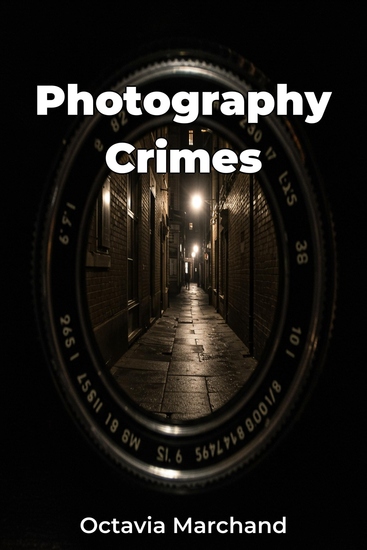
Photography Crimes - cover

Photography Crimes

Octavia Marchand

Translator A AI

Publisher: Publifye

  • 0
  • 0
  • 0

Summary

Photography Crimes explores the unsettling intersection of photography and crime, revealing how this powerful medium, designed to capture reality, can be manipulated for deception and exploitation. The book highlights photography's dual nature, examining instances where photographic evidence has been altered, leading to wrongful convictions, and how readily available images are used in crimes like blackmail and identity theft. It emphasizes the critical need to understand the potential for misuse within photography to combat crime and protect individual liberties.

 
The book progresses by first establishing a historical context, tracing photography's evolution from documenting crime scenes to modern digital forensics. It then delves into three major themes: the manipulation of photographic evidence, the use of photography as a tool for committing crimes, and the ethical considerations surrounding surveillance and privacy. Through case studies and legal analyses, Photography Crimes provides readers with a comprehensive understanding of the issues, connecting diverse fields like law, sociology, and technology.

 
Ultimately, this book aims to equip a broad audience—from photography enthusiasts to legal professionals—with the visual literacy needed to navigate an image-saturated world. It furnishes practical knowledge for understanding personal rights in public spaces where photography is permitted, and illustrates the impact of photography on social media and the role of visual misinformation.
Available since: 02/26/2025.
Print length: 80 pages.

Other books that might interest you

  • Apostate's Guide to Witchcraft An - Finding Freedom Through Magic - cover

    Apostate's Guide to Witchcraft...

    Moss Matthey, Mhara Starling

    • 0
    • 0
    • 0
    Join Moss Matthey as he recounts his uplifting journey from the confines of a fundamentalist Christian cult to an empowering Pagan coven. Weaving his lived experiences with a gentle introduction to Witchcraft, Moss explores what differentiates Paganism from cults and high-control religions, inviting you to shed oppressive spiritual experiences and find support. 


    Through his story of self-searching and religious liberation, Moss teaches that spiritual pursuits should be freeing and presents Paganism as one such path. He invites you to dip your toe in the waters of Witchcraft with a sampling of exercises and journal prompts inspired by Welsh and German traditions. A celebration of culture, authenticity, and spiritual recovery, this book will inspire you to question restrictive ideologies and develop a healthy practice of your own.
    Show book
  • A Dead Secret - From their pens to your ears genius in every story - cover

    A Dead Secret - From their pens...

    Lafcadio Hearn

    • 0
    • 0
    • 0
    Lafcadio Hearn was born on the 27th June 1850 on the Ionian isle of Levkás in Greece to a British Army officer and a Greek Mother. 
    His father, fearing for his career prospects at being married to a Greek Orthodox wife, sent them to Dublin whilst he continued to advance his career with further postings.  Life there was difficult for mother and son.  His father returned, wounded and traumatised, when Lafcadio was three.  He annulled the marriage and she remarried but had to give up care of Lafcadio to her sister-in law.   
    After brief periods for Catholic education in England and France he emigrated to Ohio in the United States when he was 19, taking on a series of casual jobs before embarking on a career as a journalist, publishing poems and essays in Cincinnati.  It was whilst here that he began a side-line in translating, starting with Gautier and Flaubert.  He married in 1874 to a 20 year old African-American woman in violation of Ohio's anti-miscegenation law.  The marriage soon failed. 
    In 1877 he relocated to New Orleans to write on a variety of themes before picking up a two year assignment from Harper’s to write in the West Indies, where he also wrote his first novel. 
    In 1890 Harper’s sent him to Japan.  Here he left journalism and took the remarkable decision to become a schoolteacher in the north of Japan.   Enraptured by the culture he was driven to explain it in various Western publications to those who had little, if any, knowledge of its culture.  Within the year he had fallen in love with, and married, a high-born Japanese lady, together they would have four children.   
    In 1895 he became a Japanese national and took the name Koizumi Yakumo, Koizumi being his wife’s family name. 
    The following few years, whilst a professor of Literature at the Imperial University of Japan, were his most creative and admired period.   
    Lafcadio Hearn died of heart failure on the 26th of September 1904, in Tokyo, Japan shortly before leaving to deliver a series of lectures at Cornell University in New York State.  He was 54.
    Show book
  • Amy Lowell Anew - A Biography - cover

    Amy Lowell Anew - A Biography

    Carl Rollyson

    • 0
    • 0
    • 0
    The controversial American poet Amy Lowell (1874-1925), a founding member of the Imagist group that included D. H. Lawrence and H. D., excelled as the impresario for the “new poetry” that became news across the U. S. in the years after World War I.  Maligned by T. S. Eliot as the “demon saleswoman” of poetry, and ridiculed by Ezra Pound, Lowell has been treated by previous biographers as an obese, sex-starved, inferior poet who smoked cigars and made a spectacle of herself, canvassing the country on lecture tours that drew crowds in the hundreds for her electrifying performances.   In fact, Lowell wrote some of the finest love lyrics of the 20th century and led a full and loving life with her constant companion, the retired actress Ada Russell.  She was awarded the Pulitzer Prize posthumously in 1926. This provocative new biography, the first in forty years, restores Amy Lowell to her full humanity in an era that, at last, is beginning to appreciate the contributions of gays and lesbians to American’s cultu
    Show book
  • Dark Tales of Mystery & Suspense - 15 Weird Thrillers - cover

    Dark Tales of Mystery & Suspense...

    Alan Nelson, Charles Hilan...

    • 0
    • 0
    • 0
    A collection of those intriguing thrillers that keep us on the edge of our seats. 
    Contents: 
    "Man in a Hurry" by Alan Nelson 
    The pudgy little man was always hurrying. 
    "Bitter Gold" by B. C. Bridges 
    A brief, grim tale of Siberia. 
    "The Gray Rider" by Charles Hilan Craig 
    The strange tale of a famous racing driver. 
    "What Is It?" by Charles M. Morris 
    Retribution, swift and terrible. 
    "The Sixth Tree" by E. L. Stewart 
    The weirdest game that ever was played. 
    "His Brother's Keeper" by George Fielding Eliot 
    A not-so-typical case of jealousy. 
    "Country House" by Ewen Whyte 
    A strange rendezvous with the beauty of the country. 
    "Murder Man" by Ewen Whyte 
    This perfect killing. 
    "They've Got a Killer View" by Ian Gordon 
    A woman adds her name to a strange waiting list. 
    "Croatan" by Malcolm Ferguson 
    Creatures summoned from outer eons. 
    "Stranger at Dusk" by Malcolm Kenneth Murchie 
    The plight of a boy visited by a mysterious stranger. 
    "The Three Marked Pennies" by Mary Elizabeth Counselman 
    A strange destiny awaited the holders of the pennies. 
    "Piecemeal" by Oscar Cook 
    He slipped in a pool of blood... 
    "The Oval Portrait" by Edgar Allan Poe 
    An odd portrait in a chateau. 
    "The Oblong Box" by Edgar Allan Poe 
    A sea voyage and a peculiar, pine box.
    Show book
  • Others Like Me - The Lives of Women Without Children - cover

    Others Like Me - The Lives of...

    Nicole Louie

    • 0
    • 0
    • 0
    A deeply personal exploration of childless and childfree women in their own words. 


    Others Like Me is the story of fourteen women around the world, from different walks of life, who don't have children. It's also the story of why Nicole Louie had to find these women and what they taught her. Part memoir, part exploration of childlessness through candid conversations, this book showcases the many ways in which people find fulfillment outside of parenthood. And because the social expectation to procreate weighs the most on women, Louie focuses solely on them, their experiences, and how they flourish outside of motherhood. In doing so, she upends the stereotypes that diminish women who are childless by choice, circumstance, or ambivalence and offers reassurance and companionship on a path less known.
    Show book
  • Tsar Nicholas II - Biography of the Last Romanov Emperor of Russia - cover

    Tsar Nicholas II - Biography of...

    Kelly Mass

    • 0
    • 0
    • 0
    Nicholas II, or Nikolai II Alexandrovich Romanov (18 May [O.S. 6 May] 1868 – 17 July 1918), was the last Emperor of Russia, reigning from 1 November 1894 to 15 March 1917. Revered as Saint Nicholas the Passion-Bearer in the Russian Orthodox Church, he also held the titles of King of Congress Poland and Grand Duke of Finland. His reign marked the end of the Romanov dynasty's 304-year rule over Russia. Though Nicholas supported economic and political reforms proposed by his prime ministers, Sergei Witte and Pyotr Stolypin, his adherence to authoritarianism and reluctance to empower the Duma stymied significant progress. His reign was further undermined by aristocratic resistance and military defeats during the Russo-Japanese War and World War I, which eroded public confidence in his leadership. 
    Internationally, Nicholas sought to bolster Russia's position through alliances and diplomatic agreements. He signed the Anglo-Russian Convention of 1907, aiming to counter German influence in the Middle East and end the longstanding Great Game rivalry with Britain. Earlier, he had initiated the Hague Convention of 1899, a pioneering but ultimately unsuccessful effort to promote disarmament and peaceful conflict resolution. These measures were part of his broader vision to solidify the Franco-Russian Alliance and strengthen Russia's global standing. 
    Domestically, however, Nicholas' reign was plagued by crises and controversies. He faced widespread criticism for his government's repressive policies, particularly during moments of significant unrest. The Khodynka Tragedy, a catastrophic stampede at his coronation celebrations, set a grim tone for his rule. His apparent complicity in anti-Jewish pogroms, the violent crackdown on Bloody Sunday in 1905, and the brutal suppression of the Russian Revolution that same year further tarnished his reputation.
    Show book