Junte-se a nós em uma viagem ao mundo dos livros!
Adicionar este livro à prateleira
Grey
Deixe um novo comentário Default profile 50px
Grey
Assine para ler o livro completo ou leia as primeiras páginas de graça!
All characters reduced
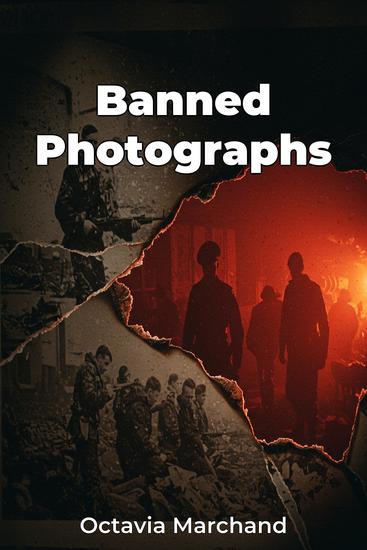
Banned Photographs - cover
LER

Banned Photographs

Octavia Marchand

Tradutor A AI

Editora: Publifye

  • 0
  • 0
  • 0

Sinopse

"Banned Photographs" explores the history and impact of photographic censorship, examining why certain images are deemed too dangerous for public consumption. The book delves into the suppression of visual media across various contexts, from politically sensitive photojournalism to controversial art, revealing how censorship reflects a society's values and power structures. One intriguing aspect is how the act of banning an image can paradoxically ignite social change, highlighting the complex relationship between visual media, freedom of speech, and social justice. 

 
The book progresses through historical case studies, illustrating how societal norms and political ideologies shape photographic censorship. It analyzes the arguments for and against censorship, focusing on the consequences of restricting visual information in both historical and contemporary contexts. 

 
By drawing on diverse evidence, including archival documents and personal accounts, "Banned Photographs" provides a nuanced understanding of the ethical and legal challenges posed by the proliferation of images, especially in the digital age. This book offers a framework for critically examining the motivations behind censorship and its potential effects on democracy and our understanding of the past.
Disponível desde: 26/02/2025.
Comprimento de impressão: 68 páginas.
Outros livros que poderiam interessá-lo

  • A Rare Recording of Film Icon Veronica Lake - cover

    A Rare Recording of Film Icon...

    Veronica Lake

    • 0
    • 0
    • 0
    Constance Frances Marie Ockelman (November 14, 1922 - July 7, 1973), born in Brooklyn, NY, known professionally as Veronica Lake, was an American film, stage, and television actress. Lake was best known for her femme fatale roles in films noir with Alan Ladd during the 1940s, her peek-a-boo hairstyle, and films such as Sullivan's Travels (1941) and I Married a Witch (1942). The following audio recording is from a 1971 television interview.
    Ver livro
  • Dvorak in Words and Music - cover

    Dvorak in Words and Music

    Davinia Caddy

    • 0
    • 0
    • 0
    The music of Bohemian composer Antonín Dvořák is suffused with natural nobility, fluency and freshness, and embodies the spirit of his native land. This revealing biography portrays Dvořák as a complex and wide-ranging composer, and explores the creation and performance of his music as well as its reception on both sides of the Atlantic, tracing his art in all its richness and variety. Musical excerpts include the Cello Concerto, the ‘New World’ Symphony and the Slavonic Dances, as well as selected chamber pieces, songs, opera excerpts, and more.
    Ver livro
  • Bruce Nauman - cover

    Bruce Nauman

    Robert Storr

    • 0
    • 1
    • 0
    How can we interpret the work of contemporary artists? Focal Points is a new book series of essays, articles and reviews by acclaimed curator and critic Robert Storr. Expertly edited by art historian and curator Francesca Pietropaolo, and richly illustrated, it lends Storr’s illuminating insights into an artist’s practice and way of thinking across recent decades. Brilliantly scholarly, accessible and engaging, Focal Points offers fresh interpretations of the varied territory of modern and contemporary art.????Through a selection of texts spanning from 1986 to 2016, volume one brings together thirty years of Storr’s writings on American artist Bruce Nauman (b.1941) whose practice encompasses sculpture, photography, neon, drawing, printmaking and performance. Much of Nauman’s work makes use of language games and visual puns, influenced by the linguistic theories of twentieth-century thinker Ludwig Wittgenstein and by the work of writer, poet and playwright Samuel Beckett. Describing his work in 1970, Nauman said: ‘Sometimes the activity involves making something, and sometimes the activity is the piece.’
    Ver livro
  • The Secession Talks - Exhibitions in Conversation 2011–2022 - cover

    The Secession Talks -...

    Lawrence Abu Hamdan, John...

    • 0
    • 0
    • 0
    The Secession Talks is a collection of artist talks on exhibitions that took place at the Secession from 2011 to 2022. They contextualize the exhibition history of the Secession and allow for a new consideration and evaluation of the program. As a collection, these conversations between artists and well-known art critics, art historians, curators, and artist colleagues form a unique interface between artistic work and art education.
    Ver livro
  • Immersive Storytelling for Real and Imagined Worlds - A Writer's Guide - cover

    Immersive Storytelling for Real...

    Margaret Kerrison

    • 0
    • 0
    • 0
    The emerging discipline of immersive storytelling recognizes the power of creative works that put the viewer at the center of the action. Theme-park designer Margaret Kerrison shares tips and tricks for writers on teams tasked with bringing a narrative to life. How do you take an idea from inspiration to manifestation? How do you move from telling a story to creating a world? In this book, the first of its kind written specifically for writers, Kerrison lays out the craft of immersive storytelling using case studies to show what works and highlighting the essential role of the writer on a complex creative team. Ready to take the kernel of an idea and turn it into a full-fledged experience? This book gives you the blueprint.
    Ver livro
  • Great Zimbabwe - Stone Cities Trade Networks and the Mystery of Southern Africa - cover

    Great Zimbabwe - Stone Cities...

    Rolf Hedger

    • 0
    • 0
    • 0
    The rise of Great Zimbabwe was shaped by geography, economic opportunities, and social organization, allowing it to become one of Africa’s most influential civilizations. Emerging around the 9th century, the settlement developed into a thriving political and economic center by the 11th century, reaching its peak between the 13th and 15th centuries. Its growth was fueled by abundant natural resources, a strategic location, and participation in regional and international trade. 
    The Zimbabwean plateau, with its fertile soil and favorable climate, provided ideal conditions for agriculture. The Shona people, who founded Great Zimbabwe, cultivated sorghum and millet, which sustained the growing population. In addition to farming, cattle herding played a crucial role in the economy. Cattle were a measure of wealth and social status, serving as currency in trade and marriage negotiations. The presence of large herds further reinforced the power of the elite, who controlled access to grazing lands and water sources. 
    Beyond agriculture, Great Zimbabwe’s location made it a key player in long-distance trade. The city was situated between the goldfields of southern Africa and the coastal trade hubs of the Swahili city-states. Gold mining became a major economic activity, with miners extracting the metal from riverbeds and underground deposits. This gold was traded with merchants from Kilwa, Sofala, and other Swahili ports, where it was exchanged for luxury goods such as Persian ceramics, Chinese porcelain, and Indian textiles. The wealth generated from trade allowed Great Zimbabwe to expand, attracting artisans, traders, and skilled laborers.
    Ver livro