Junte-se a nós em uma viagem ao mundo dos livros!
Adicionar este livro à prateleira
Grey
Deixe um novo comentário Default profile 50px
Grey
Assine para ler o livro completo ou leia as primeiras páginas de graça!
All characters reduced
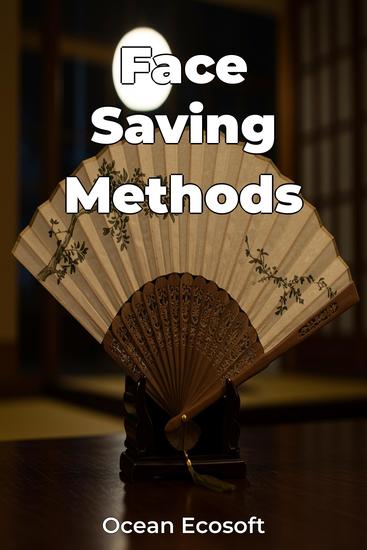
Face Saving Methods - cover
LER

Face Saving Methods

Ocean Ecosoft

Tradutor A AI

Editora: Publifye

  • 0
  • 0
  • 0

Sinopse

Face Saving Methods explores the universal human need to maintain dignity and avoid shame in social interactions, even at personal cost. It delves into the psychological and behavioral strategies cultures worldwide use to manage "face"—the public image we present. Understanding these strategies is vital for effective cross-cultural communication, as misunderstandings can lead to tensions in diplomacy, business failures, and personal conflicts. 

 
For example, the book highlights how indirect communication can be a face-saving tactic in some cultures, while directness is valued in others. The book draws from psychology, sociology, and anthropology to provide a cross-cultural perspective on face management. It examines how concepts of honor and shame have evolved historically while using social psychology to uncover biases that influence perceptions of face threats. 

 
The book progresses by first introducing core concepts of face and potential threats, then analyzes diverse face-saving strategies across cultures, illustrated with real-world examples. It offers a framework for understanding the psychological mechanisms driving cultural differences, making it valuable for anyone seeking to navigate cross-cultural interactions with greater confidence.
Disponível desde: 21/02/2025.
Comprimento de impressão: 72 páginas.


Outros livros que poderiam interessá-lo

  • Cratylus - On Names and Reality – Plato’s Inquiry into Language Etymology and the Nature of Truth - cover

    Cratylus - On Names and Reality...

    Plato, Tim Zengerink

    • 0
    • 0
    • 0
    What if words aren’t just signs—but symbols of truth? 
    Cratylus by Plato is an early and enduring exploration of language, etymology, and the connection between names and reality. This modern translation brings clarity and life to the dialogue between Socrates, Cratylus, and Hermogenes as they debate the origins and accuracy of words. Is language merely a social convention, or does it reflect the essence of things? 
    What you'll discover inside: 
    •	A Riveting Dialogue on Language and Truth – Socrates leads a spirited debate on the nature of names. 
    •	The Origins of Linguistic Philosophy – Engage with Plato’s pioneering ideas on semantics and reality. 
    •	A Modern, Accessible Translation – Readable and resonant for today’s listeners. 
    •	Philosophy That Still Speaks Today – Timeless questions about communication, meaning, and perception. 
    Cratylus challenges us to look beyond the words we use—and ask what they truly reveal.
    Ver livro
  • Answer to the Question An: What is Enlightenment? - cover

    Answer to the Question An: What...

    Immanuel Kant

    • 0
    • 0
    • 0
    "Answering the Question: What Is Enlightenment?" is a 1784 essay by the philosopher Immanuel Kant. In the December 1784 publication of the Berlinische Monatsschrift (Berlin Monthly), edited by Friedrich Gedike and Johann Erich Biester, Kant replied to the question posed a year earlier by the Reverend Johann Friedrich Zöllner, who was also an official in the Prussian government. Zöllner's question was addressed to a broad intellectual public community, in reply to Biester's essay entitled: "Proposal, not to engage the clergy any longer when marriages are conducted" (April 1783) and a number of leading intellectuals replied with essays, of which Kant's is the most famous and has had the most impact. Kant's opening paragraph of the essay is a much-cited definition of a lack of enlightenment as people's inability to think for themselves due not to their lack of intellect, but lack of courage.
    Kant's essay also addressed the causes of a lack of enlightenment and the preconditions necessary to make it possible for people to enlighten themselves. He held it necessary that all church and state paternalism be abolished and people be given the freedom to use their own intellect. Kant praised Frederick II of Prussia for creating these preconditions. Kant focused on religious issues, saying that "our rulers" had less interest in telling citizens what to think in regard to artistic and scientific issues.
    Ver livro
  • Bill of Rights The: The First Ten Constitutional Amendments - cover

    Bill of Rights The: The First...

    James Madison and Various Authors

    • 0
    • 0
    • 0
    This program is read by an AI-based synthesized voice.
    Ver livro
  • To Live Well - Practical Wisdom for Moving Through Chaotic Times - cover

    To Live Well - Practical Wisdom...

    Alan Noble, Justin Whitmel Earley

    • 0
    • 0
    • 0
    Our lives are shaped by contradictions. Competing voices tell us who to be, what to want, and how to live. The result? A fragmented moral imagination. We're handed a thousand broken messages and left to cobble together something resembling a life. But instead of clarity, we get exhaustion. Instead of wisdom, we get anxiety. This leaves you asking yourself: How can I get through when I feel alone and confused? How can I live well in this broken and chaotic world? 
     
    In To Live Well, Alan Noble shows you how you can not only endure but flourish in life. Through exploring the seven virtues of prudence, justice, fortitude, temperance, faith, hope, and love, you'll learn how to choose gracefully, act justly, suffer steadfastly, live moderately, believe soundly, hope resolutely, and love rightly. 
     
    This book won't give you a ten-step plan to fix everything. It doesn't promise clarity overnight. But it will invite you into something deeper: an ancient, time-tested path of habits of heart and mind that shape who we are and how we live. With honesty, theological depth, and a mentor's heart, Noble names your confusion and offers an antidote―not by escaping the mess but by learning how to live faithfully within it.
    Ver livro
  • Transformation of Rome - From Republic to Empire and Beyond (3 in 1) - cover

    Transformation of Rome - From...

    Rogan Fish

    • 0
    • 0
    • 0
    This bundle traces one of the most pivotal shifts in world history—the evolution of Rome from a democratic republic to a sprawling autocratic empire, and ultimately to its dramatic collapse. The journey begins with the political structures of the early Republic, where consuls, senators, and assemblies worked in a delicate balance of power. Readers will discover how the ideals of civic duty and public service were gradually overshadowed by corruption, ambition, and the thirst for control, setting the stage for inevitable conflict. 
    The second part centers on the charismatic and controversial figure of Julius Caesar, whose rise exposed the Republic’s vulnerabilities. His military conquests, political maneuvering, and ultimate assassination marked the end of the old order. Following his death, the book charts the tumultuous path to empire—highlighting the power struggles between Octavian, Antony, and Cleopatra that ended in the birth of the Roman Empire under Augustus. Reforms, propaganda, and centralization of authority created a new Rome—one ruled by emperors, not elected officials. 
    In the final section, the focus broadens to the rise and fall of the Roman Empire. From the Pax Romana to the chaos of civil wars, barbarian invasions, and economic crises, readers will see how internal instability and external pressure chipped away at the once-unbreakable empire. This segment also explores Rome's lasting legacy in law, architecture, language, and governance. Transformation of Rome offers a sweeping, yet richly detailed narrative of power, collapse, and the enduring impact of one of history’s greatest civilizations.
    Ver livro
  • New World Order - cover

    New World Order

    H. G. Wells

    • 0
    • 0
    • 0
    The New World Order – H.G. Wells. One of the central texts in explaining the psychopathic drive of elitists to enslave the world in a unified empire. H. G. Wells was an insider with a British group tasked with the revival of their once great empire—this time in conjunction with Venetian Black Nobility Khazar bankers (not mentioned this explicitly in the book). Wells evidently grew less sympathetic to their aims as time went on, and published a version of the plans for public consumption in this and other books. Needless to say, the cabal bent on world domination were displeased with Wells’ cavalier candor (perhaps they misjudged him all along), and destroyed nearly all such books.
    Ver livro