



Diary Of A Nigerian Witch
Oburoh Roli Hazel
Editorial: Floreat Systems
Sinopsis
A Nigerian witch tells her story, only the innocent delusion in the wrong space.
Disponible desde: 27/05/2024.
Longitud de impresión: 55 páginas.

Editorial: Floreat Systems
A Nigerian witch tells her story, only the innocent delusion in the wrong space.
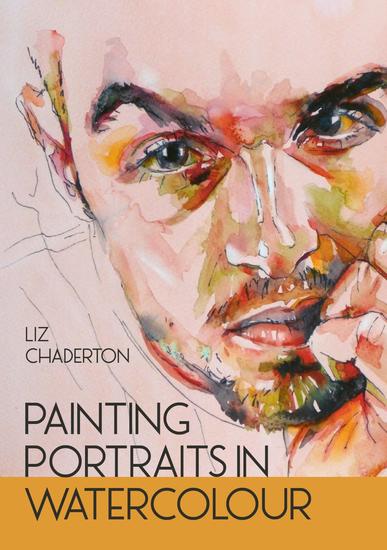
This joyful book gives you the confidence and skills to paint lively, contemporary faces and characters. Unusually, it teaches how to paint before exploring the drawing skillset necessary to capture a likeness, and thereby encourages the artist to try this genre. By explaining the techniques in clear steps with plenty of examples, it makes painting exciting and energetic portraits achievable for all.Ver libro
Progressive and libertarian, anti-Communist and revolutionary, Democratic and Republican, quintessentially American but simultaneously universal. By the late 1980s, rock music had acquired a dizzying array of political labels. These claims about its political significance shared one common thread: that the music could set you free.


Rocking in the Free World explains how Americans came to believe they had learned the truth about rock 'n' roll, a truth shaped by the Cold War anxieties of the fifties, the countercultural revolutions (and counter-revolutions) of the sixties and seventies, and the end-of-history triumphalism of the eighties. How did rock 'n' roll become enmeshed with so many different competing ideas about freedom? And what does that story reveal about the promise-and the limits-of rock music as a political force in postwar America?
Ver libro
A beloved Irish institution, RTÉ Radio 1's Sunday Miscellany has been woven into the lives of listeners for over half a century. Following on from the bestselling 2023 anthology, this collection brings together some of the best broadcasts of the past three years, arranged in calendar months. Featuring a spectrum of writing talent, from household names to striking new voices, it offers solace, joy and entertainment for all seasons.
Featuring:
Dermot Bolger

Jan Carson

Gerald Dawe

Wendy Erskine

Michael Harding

Michael D. Higgins

Paul Howard

Louise Kennedy

Rosaleen McDonagh

Liz Nugent

Joseph O'Connor

Olivia O'Leary

Donal Ryan


and many more …
Ver libro
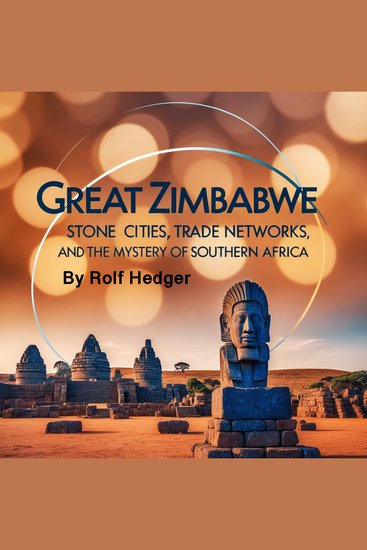
The rise of Great Zimbabwe was shaped by geography, economic opportunities, and social organization, allowing it to become one of Africa’s most influential civilizations. Emerging around the 9th century, the settlement developed into a thriving political and economic center by the 11th century, reaching its peak between the 13th and 15th centuries. Its growth was fueled by abundant natural resources, a strategic location, and participation in regional and international trade.
The Zimbabwean plateau, with its fertile soil and favorable climate, provided ideal conditions for agriculture. The Shona people, who founded Great Zimbabwe, cultivated sorghum and millet, which sustained the growing population. In addition to farming, cattle herding played a crucial role in the economy. Cattle were a measure of wealth and social status, serving as currency in trade and marriage negotiations. The presence of large herds further reinforced the power of the elite, who controlled access to grazing lands and water sources.
Beyond agriculture, Great Zimbabwe’s location made it a key player in long-distance trade. The city was situated between the goldfields of southern Africa and the coastal trade hubs of the Swahili city-states. Gold mining became a major economic activity, with miners extracting the metal from riverbeds and underground deposits. This gold was traded with merchants from Kilwa, Sofala, and other Swahili ports, where it was exchanged for luxury goods such as Persian ceramics, Chinese porcelain, and Indian textiles. The wealth generated from trade allowed Great Zimbabwe to expand, attracting artisans, traders, and skilled laborers.
Ver libro
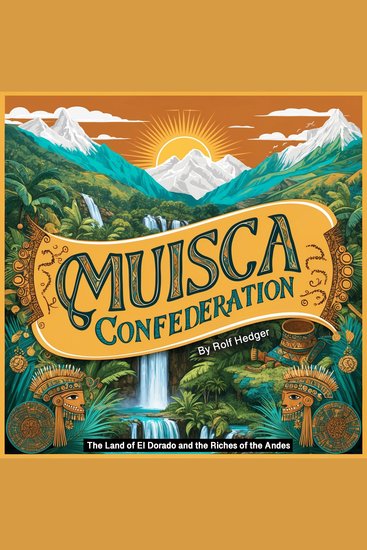
The Muisca Confederation was one of the most sophisticated political entities in pre-Columbian South America, emerging in the highlands of present-day Colombia. The origins of this powerful society can be traced back to the earliest inhabitants of the Eastern Cordillera of the Andes, a region characterized by fertile valleys, cool mountain climates, and abundant natural resources. Over time, these early settlers developed complex social structures, agricultural techniques, and political institutions that would form the foundation of the Muisca Confederation.
The first groups to settle in the high-altitude plateaus of the Andean region arrived thousands of years ago, likely migrating from Central America or other parts of South America. These early inhabitants lived in small, semi-nomadic communities, relying on hunting, fishing, and rudimentary farming. As they adapted to their environment, they developed advanced agricultural methods, cultivating maize, potatoes, quinoa, and other crops suited to the high-altitude terrain. The fertile lands and steady supply of food allowed for population growth, leading to the establishment of permanent settlements.
As Muisca society evolved, it became increasingly hierarchical, with distinct roles emerging among its members. The transition from small, scattered villages to organized chiefdoms marked a significant turning point in their history. Power began to concentrate in the hands of local leaders, or caciques, who governed their respective communities. Over time, these leaders expanded their influence, forming alliances and asserting control over larger territories. The most powerful of these rulers eventually became the Zipa of Bacatá and the Zaque of Hunza, the two principal leaders who governed the northern and southern regions of the Muisca Confederation.
Ver libro

How might film reveal God?
In its most basic form, film is a series of images displayed over time. Of course, film has developed greatly since the Lumière brothers by adding components such as sound, special effects, digital recording, and more to create an increasingly complex artistic medium. Historically, film studies has often focused on the narrative aspect of film as it seeks to tell a story. More recent studies, however, have turned attention to other elements of film, such as the musical score. Yet, film remains, in a sense, a series of images.
In this Studies in Theology and the Arts (STA) volume, theologian Richard Goodwin considers how the images that constitute film might be a conduit of God's revelation. By considering works by Carl Theodor Dreyer, Stanley Kubrick, Paul Thomas Anderson, Robert Bresson, Martin Scorsese, Terrence Malick, and more, Goodwin argues that by inviting emotional responses, film images can be a medium of divine revelation.
Blessed are those who have seen God... through film.
The Studies in Theology and the Arts  series encourages Christians to thoughtfully engage with the relationship between their faith and artistic expression, with contributions from both theologians and artists on a range of artistic media including visual art, music, poetry, literature, film, and more.
Ver libro





