¡Acompáñanos a viajar por el mundo de los libros!
Añadir este libro a la estantería
Grey
Escribe un nuevo comentario Default profile 50px
Grey
Suscríbete para leer el libro completo o lee las primeras páginas gratis.
All characters reduced
Pedro Sánchez's Spain - cover

Pedro Sánchez's Spain

Nora Franklin

Traductor A AI

Editorial: Publifye

  • 0
  • 0
  • 0

Sinopsis

'Pedro Sánchez's Spain' offers a comprehensive analysis of how Spain's current Prime Minister has redefined both national politics and his country's role in the European Union. The book chronicles Sánchez's journey from opposition leader to influential European figure, examining his distinctive approach to social democratic governance that combines progressive domestic policies with pragmatic economic management.Through three main sections, the book explores Sánchez's significant impact on modern Spanish politics, from his management of complex coalition relationships to his handling of the Catalonian crisis. His leadership during pivotal moments, including the COVID-19 pandemic, demonstrates a new model of governance that has strengthened Spain's position within the EU while addressing crucial domestic challenges. The narrative particularly highlights his administration's focus on labor market modernization, climate initiatives, and regional autonomy issues.The work stands out for its thorough examination of how national policy decisions influence European integration, supported by extensive research including government documents, expert interviews, and economic data. By weaving together political science, economics, and European studies, the book provides valuable insights for understanding contemporary European governance and coalition politics. It presents complex political dynamics in an accessible format, making it relevant for both policy professionals and general readers interested in modern European leadership and progressive politics.
Disponible desde: 17/01/2025.
Longitud de impresión: 108 páginas.

Otros libros que te pueden interesar

  • Symbols of Freedom - Slavery and Resistance Before the Civil War - cover

    Symbols of Freedom - Slavery and...

    Matthew J. Clavin

    • 0
    • 0
    • 0
    In the early United States, anthems, flags, holidays, monuments, and memorials were powerful symbols of an American identity that helped unify a divided people. A language of freedom played a similar role in shaping the new nation. Resonating across the country, they encouraged the creation of a republic where the right to "life, liberty, and the pursuit of happiness" was universal. 


    For enslaved people and their allies, the language and symbols that served as national touchstones made a mockery of freedom. Yet, as author Matthew J. Clavin reveals, it was these powerful expressions of American nationalism that inspired forceful and even violent resistance to slavery. 


    Symbols of Freedom is the surprising story of how enslaved people and their allies drew inspiration from the language and symbols of American freedom. Mindful and proud that theirs was a nation born in blood, these disparate patriots fought to fulfill the republic's promise by waging war against slavery. 


    In a time when the US flag, the Fourth of July, and historical sites have never been more contested, this book reminds us that symbols are living artifacts whose power is derived from the meaning with which we imbue them.
    Ver libro
  • The Politics of Obedience - A Discourse on Voluntary Servitude - cover

    The Politics of Obedience - A...

    Etienne de la Botie

    • 0
    • 0
    • 0
    In this seminal work of political philosophy, Boetie asks one of the most obvious questions of political theory: why is it that a minority of rulers can remain in power over a majority of subjects who pay all the taxes? 
    The answer might be quite surprising to us all. The conclusion is that the people tend to enslave themselves, to let themselves be governed by tyrants. 
    Liberty is the natural condition of the people. Servitude, however, is fostered when people are raised in subjection. People are trained to adore rulers. While freedom is forgotten by many, there are always some who will never submit. 
    What is the answer then? 
    The author brilliantly and obviously outlines these points in the pages that follow in a way that is illuminating and also simple. It is we who enslave ourselves at the beck and call of 'authority'. Enjoy this classic work that roots sovereignty into philosophy and demonstrates how simply the tides can change.
    Ver libro
  • Imperialism - cover

    Imperialism

    Vladimir Lenin

    • 0
    • 0
    • 0
    Written in 1916 against the backdrop of the First World War, Imperialism: The Highest Stage of Capitalism explains the flaws and power of capitalism, which inevitably lead to monopolies, imperialism and colonialism. Lenin develops Marx’s theories of political economy, which had been put forward 50 years earlier in Das Kapital. He goes on to argue that imperialism is the most advanced state of capitalism, characterised by the domination of monopolies on an international scale, with the export of capital leading to the big imperialist powers carving up the world.More than a century later, Imperialism remains highly relevant in understanding the historical background to the strategies of many of today’s major nations.
    Ver libro
  • The Cost of "Non-Maghreb" - Unpacking the Political and Economic Costs of Disunion and Divisions - cover

    The Cost of "Non-Maghreb" -...

    Aldo Liga

    • 0
    • 0
    • 0
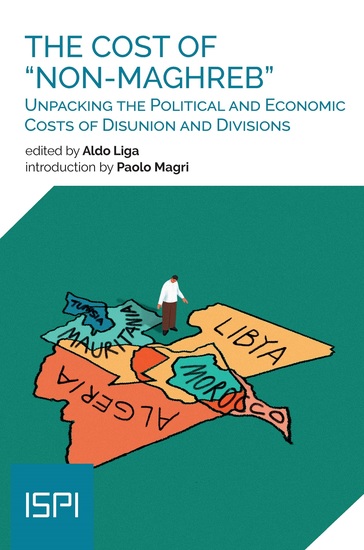
    Over the last decades, rivalries, bilateral disagreements, and distrust between Maghreb states have taken a toll on common political and security challenges, like the Western Sahara issue, the Libyan conflict, the destabilisation in the Sahel region and transnational clandestine flows. Moreover, the Maghreb is one of the least economically integrated regions in the world, and this leads to the region's loss in growth, and the disheartening record of missed opportunities for stability and prosperity. This is the cost of the "non-Maghreb".
    This Report aims to unpack the political and economic costs of the "non-Maghreb", understand its historical genesis and geopolitical implications and, more broadly, what the future might hold for individual countries and the Maghreb as a divided, fractious but potentially coherent whole.
    Ver libro
  • The Capital Dilemma - Balancing Growth and Fairness in the Free Market - cover

    The Capital Dilemma - Balancing...

    Arlo Holders

    • 0
    • 0
    • 0
    The free market and capitalism have long been foundational principles of economic systems around the world. At their core, they represent the idea that economic decisions, such as production, investment, and distribution, should be guided by the forces of supply and demand with minimal government intervention. In a truly free market, goods and services are exchanged in a competitive environment where prices are determined by the collective actions of consumers and producers rather than by central planning or state control. 
    Capitalism, as an economic system, emerged during the early stages of the Industrial Revolution in the 18th and 19th centuries. Its roots trace back even further to mercantilist policies that prioritized trade and accumulation of wealth through colonial ventures. Over time, capitalism has evolved from simple trade systems to complex global markets, driven by the desire for profit and the expansion of economic activities. The central tenet of capitalism is the pursuit of self-interest, where individuals or organizations are motivated to create wealth by competing in open markets. 
    This system offers several advantages, such as fostering innovation, encouraging efficiency, and enabling individuals to accumulate wealth. By allowing businesses and entrepreneurs to operate freely, capitalism encourages the creation of new products, services, and technologies, which in turn leads to economic growth and increased standards of living. Moreover, the competitive nature of free markets ensures that resources are allocated efficiently, as businesses strive to meet consumer demands at the lowest cost.
    Ver libro
  • Image Control - Art Fascism and the Right to Resist - cover

    Image Control - Art Fascism and...

    Patrick Nathan

    • 0
    • 0
    • 0
    Susan Sontag meets Hanif Abdurraqib in this fascinating exploration of the unexpected connections between how we consume images and the insidious nature of Fascism. 


    Images come at us quickly, often without context. A photograph of Syrian children suffering in the wake of a chemical attack segues into a stranger's pristine Instagram selfie. Before we can react to either, a new meme induces a laugh and a share. While such constant give and take might seem innocent, even entertaining, this barrage of content numbs our ability to examine critically how the world, broken down into images, affects us. Images without context isolate us, turning everything we experience into mere transactions. It is exactly this alienation that leaves us vulnerable to fascism—a reactionary politics that is destroying not only our lives and our nations, but also the planet's very ability to sustain human civilization. 


    Who gets to control the media we consume? Can we intervene, or at least mitigate the influence of constant content? Mixing personal anecdotes with historical and political criticism, Image Control explores art, social media, photography, and other visual mediums to understand how our culture and our actions are manipulated, all the while building toward the idea that if fascism emerges as aesthetics, then so too can anti-fascism.
    Ver libro