Join us on a literary world trip!
Add this book to bookshelf
Grey
Write a new comment Default profile 50px
Grey
Subscribe to read the full book or read the first pages for free!
All characters reduced
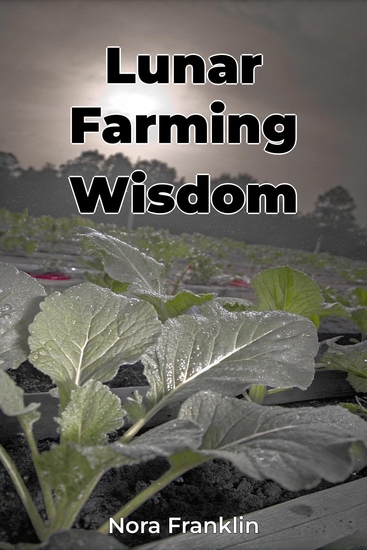
Lunar Farming Wisdom - cover

Lunar Farming Wisdom

Nora Franklin

Translator A AI

Publisher: Publifye

  • 0
  • 0
  • 0

Summary

Lunar Farming Wisdom explores the intersection of lunar cycles and biodynamic farming, examining their combined impact on crop yields and soil health. It investigates how aligning agricultural practices with lunar rhythms can enhance sustainability and productivity, offering a fresh perspective on conventional methods.

 
The book delves into the historical roots of biodynamic agriculture, tracing its origins to Rudolf Steiner and his concept of the farm as a living organism. It presents core concepts like composting and soil fertility.

 
The book argues that integrating lunar planting schedules and biodynamic principles improves soil quality and crop yields.

 
It explores lunar phases and their positions relative to the Earth, examining how these movements influence plant growth and nutrient uptake.

 
Evidence is presented from comparative studies, analyzing soil health indicators and crop yield data from farms using lunar planting calendars.

 
The book provides practical guidance for farmers and gardeners seeking to implement these principles, bridging the gap between scientific rigor and real-world application.
Available since: 02/13/2025.
Print length: 72 pages.

Other books that might interest you

  • The Uncommercial Traveller - cover

    The Uncommercial Traveller

    Charles Dickens

    • 0
    • 0
    • 0
    The Uncommercial Traveller by Charles Dickens is a captivating collection of essays blending travelogue, social commentary, and personal reflection. Written from the perspective of a wandering storyteller, Dickens explores London’s bustling streets and ventures beyond, observing the lives of its diverse inhabitants—from the impoverished to the privileged. With his trademark wit and vivid prose, he delves into themes of poverty, crime, memory, and human resilience. The essays range from haunting encounters with destitute children to nostalgic recollections of his own past, offering both humor and poignant critique. Dickens’ keen eye for detail and empathy for society’s marginalized make this work a timeless meditation on urban life and the human condition. A blend of fact and fancy, The Uncommercial Traveller reveals Dickens at his most introspective and incisive.
    Show book
  • Citizen of the World: Soon-Young and the UN (Abridged) - Abridged - cover

    Citizen of the World: Soon-Young...

    Soon-Young Yoon

    • 0
    • 0
    • 0
    From North Korean Refugee to the United Nations: A Courageous and Compassionate Memoir Soon-Young Yoon understood from an early age that people's destinies are connected to international events. This book is a collection of her reflections as a women's human rights advocate speaking up to end violence against women and change the world to ensure gender equality, sustainable development, and peace. Yoon has seen the struggle for human rights in all corners of the world, meeting with people in urban slums and the offices of the United Nations. She urges us to look at the world through women's eyes to understand why gender equality and women's empowerment, particularly for the poorest and most vulnerable populations, is essential to our collective good. In Citizen of the World, you'll be inspired by Yoon's stories on Ending violence against women and girls Finding the Earth's balance Claiming the right to social and economic development Portraits of great women leaders Collective voices that are changing the world Challenges working as a feminist anthropologist inside and outside the United Nations Written through the lens of an anthropologist, these essays reflect her belief that one needs to understand a wide range of issues to shape our common future. Students, academics, and activists in the fields of women's studies, international relations, anthropology, and social justice will find Citizen of the World both unique and eye-opening—and filled with hope for a better future for us all.
    Show book
  • Deadpool - The Ultimate Trivia And Curious Facts Collection - cover

    Deadpool - The Ultimate Trivia...

    Trivia Hub

    • 0
    • 0
    • 0
    DEADPOOL 
    THE ULTIMATE TRIVIA AND CURIOUS FACTS COLLECTION 
      
    CREATED BY TRIVIA HUB 
      
    Deadpool, also known as Wade Wilson, is a disfigured Canadian mercenary with a superhuman regenerative healing factor. Created by Rob Liefeld and Fabian Nicieza, he first appeared in New Mutants #98. Initially a supervillain, he later became an antihero, known for his humor and breaking the fourth wall. Deadpool's healing factor causes mental instability, making him an unpredictable fighter. He is a skilled marksman, swordsman, and martial artist. Over the years, Deadpool has been featured in numerous media, including films where he's portrayed by Ryan Reynolds. He is a complex and popular character with many alternate versions, and is considered one of Marvel's most beloved characters. 
      
    CURIOUS FACT SAMPLES: 
      
    Deadpool's first appearance was in The New Mutants #98 in 1990, where he was hired to attack Cable and the New Mutants. He was initially a supervillain, but later became known as an antihero. 
      
    Deadpool was created by Rob Liefeld and Fabian Nicieza, with Liefeld responsible for his visual design and name, and Nicieza for his speech mannerisms. Nicieza gave Deadpool the real name "Wade Wilson" as an inside joke, as a nod to the character "Slade Wilson," also known as Deathstroke from Teen Titans. 
      
    Deadpool's design was influenced by Spider-Man, with Liefeld wanting to create a similar character but with guns and swords. He was also influenced by Wolverine and Snake Eyes, wanting to create his own versions of those characters.
    Show book
  • Jesus Is Not Republican - A Secular Liberal's Adventures with Religion Politics and Sex - cover

    Jesus Is Not Republican - A...

    Kate Rice

    • 0
    • 0
    • 0
    This sassy memoir by a party girl with a broken heart takes an irreverent look at religious teachings that made her an easy victim of a love gone wrong. And in telling her story, she shows how the right hijacked Jesus—and gives moderates and progressives of all faiths and of no faith a recipe for taking back God, flag and country. 
    Here are revelations, Kate Rice style. For example, the Apostle Paul says (in ancient Greek), shit happens. (Corinthians 6; 1-13). Also, Bible wasn’t written in English. It was written Aramaic, Hebrew and ancient Greek. A literal interpretation of the Bible is impossible. 
    She introduces the tatted up minister who preaches the joy of sex, church-going progressives standing strong in a rural America that is not as red as you think, and believers and non-believers who work together! 
    This battle-scarred veteran of three different religions explains our nation’s wrestling match with religion, politics, and sex by viewing it through the prism of her own struggles. She pokes fun at hypocrites but shows love and respect for true people of faith. And then she gives us all a pep talk about what we can do to keep our nation one that guarantees freedom for all.
    Show book
  • Egyptian Symbolism - The Meaning and Use of Symbols in Ancient Culture - cover

    Egyptian Symbolism - The Meaning...

    Omar Khalil

    • 0
    • 0
    • 0
    Egyptian symbolism is one of the most captivating aspects of ancient Egyptian culture, reflecting their deeply spiritual worldview and providing insight into their daily lives, religious practices, and understanding of the universe. From the majestic pyramids to the intricate hieroglyphs on temple walls, symbolism played a crucial role in conveying meanings that went beyond the literal. It was a tool to communicate with the gods, mark divine power, and ensure continuity in both life and the afterlife. 
    At the heart of Egyptian symbolism was the belief that the world was filled with hidden meanings and spiritual forces, each symbol carrying its own power. This belief was manifested in art, architecture, rituals, and even the everyday objects used by the ancient Egyptians. Symbols were not just representations; they were believed to hold an active force that could influence the material world and the spiritual realm. For example, the Ankh, a symbol resembling a cross with a loop at the top, represented life and was often used in funerary texts to ensure immortality for the deceased. 
    In Egyptian society, symbols were central to religious practices. The gods and goddesses, each represented by specific symbols and animal forms, embodied different aspects of life, death, and the cosmos. The sun god Ra, for instance, was depicted as a falcon, symbolizing both the sun’s power and the bird's dominance in the sky. The scarab beetle, a symbol of rebirth and protection, was commonly used in amulets and artifacts, signifying the cyclical nature of life and the hope for resurrection.
    Show book
  • Northern Indian Invaders - Empires of Foreign Origin (3 in 1) - cover

    Northern Indian Invaders -...

    Rolf Hedger

    • 0
    • 0
    • 0
    Northern India has long been a battleground for powerful invaders who established vast empires, shaping the region’s culture, politics, and economy. Among these, the Kushan Empire, the Delhi Sultanate, and the Mughal Empire stood out for their foreign origins and lasting influence on Indian civilization.  
    The Kushans, originally from Central Asia, played a vital role in connecting India with the Silk Road, fostering trade and spreading Buddhism across the subcontinent.  
    The Delhi Sultanate, founded by Turkic and Afghan rulers, introduced Islamic governance, transforming India's political landscape through military conquests and administrative innovations.  
    Later, the Mughal Empire, with its Timurid roots, brought about a golden age of Indo-Islamic culture, marked by architectural marvels like the Taj Mahal, advancements in art, and economic prosperity.  
    These empires, though foreign in origin, became deeply intertwined with India's history, leaving behind a complex yet enduring legacy of conquest, governance, and cultural exchange.
    Show book