Join us on a literary world trip!
Add this book to bookshelf
Grey
Write a new comment Default profile 50px
Grey
Subscribe to read the full book or read the first pages for free!
All characters reduced
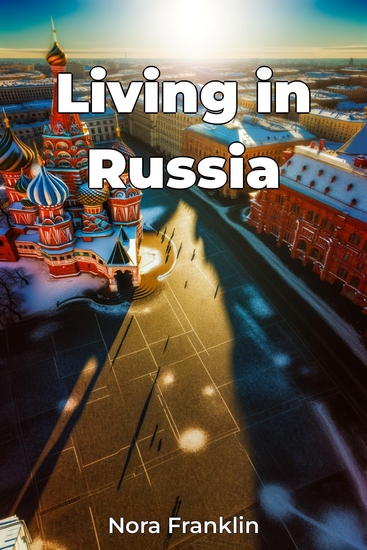
Living in Russia - cover

Living in Russia

Nora Franklin

Publisher: Publifye

  • 0
  • 0
  • 0

Summary

"Living in Russia" offers a comprehensive exploration of the world's largest nation, where ancient traditions and modern life converge across eleven time zones. The book masterfully weaves together three fundamental aspects of Russian society: its vast geographical and cultural diversity, the evolution of post-Soviet communities, and the complex social codes that govern daily life.

 
Through careful analysis of demographic data, sociological surveys, and firsthand accounts, the book reveals how different regions develop distinct cultural identities while maintaining connections to broader Russian traditions. The narrative progresses from an examination of Russia's geographical influence on local communities to an in-depth analysis of urban transformation in major cities and regional centers. Readers discover how Siberian communities adapt to extreme conditions while Baltic coastal regions develop their unique maritime-influenced cultures.

 
The book particularly shines in its detailed exploration of social structures, examining how traditional communal values intersect with modern individualistic tendencies in contemporary Russian society. Throughout its chapters, the work balances academic insight with practical knowledge, making it valuable for both scholars and those planning extended stays in Russia.

 
The book's unique approach combines various disciplines, from economics to linguistics, providing a multifaceted view of Russian life. By examining regional variations in social norms, business practices, and daily routines, while incorporating detailed maps and case studies, the text offers an essential resource for understanding the complexities of modern Russian society.
Available since: 01/08/2025.
Print length: 117 pages.

Other books that might interest you

  • Sandman - cover

    Sandman

    Sally Cook

    • 0
    • 0
    • 0
    Sandman tells the story of the origin of the Sandman, cultural sleeping habits around the world, sleeping in the Middle Ages, sleep remedies and potions, how humans fall asleep and where. and cultural customs and views regarding sleep as well as the plethora of things which keep us awake.
    Show book
  • Dirty Talk Sexy Surprises - 6 Erotic Stories - cover

    Dirty Talk Sexy Surprises - 6...

    Giselle Renarde

    • 0
    • 0
    • 0
    Get ready for a sizzling adventure with "Dirty Talk Sexy Surprises," a collection that explores the art of seduction through six tantalizing short stories. Dive into the steamy realm of characters who not only know what they want, but aren't afraid to express their deepest desires. 
    In these provocative tales, experience the thrill of phone sex like never before. From sultry whispers to explicit exchanges, each story unfolds with characters who are masters of naughty words. Whether it's partners exploring their fantasies or individuals boldly asking for what they crave, this collection promises to leave you breathless. 
    Indulge in the sensuality of language as lust comes to life. "Dirty Talk Sexy Surprises" invites you to explore a boundary-pushing, pulse-quickening world where desire is expressed with unabashed fervour. If you're ready for a collection that goes beyond the ordinary, this anthology is your passport to an unforgettable journey of explicit passion and unexpected surprises. 
    Read by the author
    Show book
  • The Genius of Lies - cover

    The Genius of Lies

    François Noudelmann

    • 0
    • 0
    • 0
    Is it a contradiction, a lie, a madness, a freedom to affirm a theory and live the opposite? 
    Rousseau writes a treatise on education thanks to the abandonment of his five children, Kierkegaard composes religious texts while living as a libertine, Beauvoir founds the philosophy of feminism while enjoying a servile relationship with her American lover, Foucault exalts the courage of truth and organizes the secrecy of his Aids, Deleuze hates traveling and becomes the philosopher of nomadism.
    Who are we when we think? Several, no doubt, as shown by the thinkers who invent multiple personalities through their theories. Instead of denouncing their errors or hypocrisy, François Noudelmann studies the most complex lie, the one towards oneself, through the anxieties, fugues, and metamorphoses of these double-sided philosophers.
    Show book
  • ABC Journey: A Rhyming Alphabet Book - cover

    ABC Journey: A Rhyming Alphabet...

    Myles E Jamison

    • 0
    • 0
    • 0
    📚 Make learning the alphabet fun with this delightful rhyming ABC book! 
    From A for Airplane to Z for Zipper, this engaging picture book takes young readers on a playful journey through the alphabet. Each page is filled with fun rhymes that make learning letters exciting and memorable! 
    ✨ Perfect for toddlers, preschoolers, and early learners 
    ✨ Encourages language development and phonics awareness 
    ✨ Great for read-aloud time with parents, teachers, and caregivers 
    Whether you're introducing the ABCs for the first time or looking for a fun way to reinforce letter recognition, ABC Journey: A Rhyming Alphabet Book is a wonderful addition to any child's library!
    Show book
  • Truth is a Pathless Land - cover

    Truth is a Pathless Land

    J. Krishnamurti

    • 0
    • 0
    • 0
    During his life, Jiddu Krishnamurti (1895–1986) was known for his ability to see the core issues of our day with a timeless vision. With a gift for crossing the barriers of time, space, and spirit, he influenced a host of great 20th-century minds, including George Bernard Shaw, Aldous Huxley, and Henry Miller.  On Truth Is a Pathless Land, Krishnamurti discusses a startling constellation of philosophical issues: love, greed, violence, separation, time, death, conflict, and fear. Includes commentary on the nature of personal and planetary problems and how to resolve inner conflicts. A New Dimensions production.
    Show book
  • Battle of Borodino The: The History and Legacy of Napoleon’s Pyrrhic Victory during the Invasion of Russia - cover

    Battle of Borodino The: The...

    Editors Charles River

    • 0
    • 0
    • 0
    On July 23, 1812, he launched his army across the border, despite the protestations of many of his Marshals. The Russian Campaign had begun, and it would turn out to be Napoleon’s biggest blunder. Russia’s great strategic depth already had a habit of swallowing armies, a fact many would-be conquerors learned the hard way. Napoleon, exceptional though he was in so many regards, proved that even military genius can do little in the face of the Russian winter and the resilience of its people. 
    From a purely military standpoint, much of the campaign seemed to be going in Napoleon’s favor since he met with little opposition as he pushed forwards into the interior with his customary lightning speed, but gradually this lack of engagements became a hindrance more than a help; Napoleon needed to bring the Russians to battle if he was to defeat them. On September 7, 1812, he must have thought his prayers had finally been answered, as the Russians had decided to stand and fight almost at the very gates of Moscow. Through his looking glass, Napoleon’s well-trained eye observed the weakness of his opponent’s defensive position. French and allied infantry advanced, anticipating that their Russian foes would again break as they had done two months earlier at Smolensk. The cavalry and Imperial Guard stood ready to complete the rout, this time preventing any organized withdrawal, and laying open an unopposed march to seize Moscow.  
    The Battle of Borodino, as it was later called, resulted in a combined casualty toll of over 75,000, a hideously long butcher’s bill that represented the bloodiest single day of the Napoleonic Wars. The Russian army retreated and Napoleon was able to occupy Moscow, hoping this would persuade the tsar to sue for peace. However, even as his advance guard pushed into the city, the retreating Russians put the capital to the torch. The Russian army’s retreat also ensured that it would live to fight another day, if necessary.
    Show book