Junte-se a nós em uma viagem ao mundo dos livros!
Adicionar este livro à prateleira
Grey
Deixe um novo comentário Default profile 50px
Grey
Assine para ler o livro completo ou leia as primeiras páginas de graça!
All characters reduced
Professionalism Training Structure - cover
LER

Professionalism Training Structure

Nora Bexley

Tradutor A AI

Editora: Publifye

  • 0
  • 0
  • 0

Sinopse

Professionalism Training Structure explores how law schools prepare students for the professional demands extending beyond legal doctrine. It examines the explicit curriculum focusing on ethics, and the implicit socialization shaping conduct, analyzing how schools address professionalism from dress codes to ethical dilemmas. A key insight is understanding how qualities like integrity and civility are nurtured within legal education, ensuring new lawyers are skilled, responsible, and ethical.

 
The book progresses from historical context of professionalism training to in-depth analysis of specific components. It examines the role of clinical legal education in fostering professional skills through client interaction scenarios and simulated courtroom experiences. Furthermore, it addresses ethical challenges in the digital age.

 
The book uses surveys, case studies, and legal precedents, incorporating management theory and organizational behavior. This book provides a critical assessment of current practices and offers recommendations for improving professionalism training. It is valuable to legal educators and administrators seeking to enhance legal education, and those interested in professional skills development and professional responsibility in the legal profession.
Disponível desde: 07/04/2025.
Comprimento de impressão: 82 páginas.

Outros livros que poderiam interessá-lo

  • Abundance vs Scarcity - How to Use Financial Education to Make the Right Choices - cover

    Abundance vs Scarcity - How to...

    Digital World

    • 0
    • 0
    • 0
    Hello everyone! I'm excited to introduce you to the fascinating world of financial psychology. In this series, we'll explore how our emotions, beliefs, and behaviors influence our financial decisions. We'll see how this understanding can transform our relationship with money and help us achieve our goals. What is Financial Psychology? Financial psychology studies the relationship between the human mind and money. It explores how psychological factors such as emotions, perceptions, and beliefs influence our financial decisions. It combines concepts from psychology and economics to understand financial behavior. Financial psychology isn't just about numbers and graphs. It helps us understand why we sometimes make financial decisions that don't make rational sense. By understanding the psychological mechanisms behind our decisions, we can make more informed decisions that align with our goals. The Power of Emotions in Finance Emotions such as fear, greed, and anxiety significantly influence our financial decisions. Fear of losing money can lead to conservative decisions, while greed can lead to excessive risk-taking. Hope for a better future can motivate us to save, but it can also lead us to invest in high-risk assets. Emotions are like an internal GPS that guides us in our financial decisions. However, they can lead us down a wrong path if not managed properly. By identifying and understanding our emotions, we can make more rational decisions that are aligned with our long-term goals. Cognitive Biases and Finance Cognitive biases are mental shortcuts we use to make decisions faster, but they can lead us to make mistakes. Examples of biases include loss aversion, confirmation bias, and herd behavior. How to identify and overcome these biases to make sounder financial decisions. Our brains are incredible machines, but they are also prone to making mistakes. Cognitive biases are like optical illusions that distort our perception of reality. By being aware of these biases, we can take steps to counteract their effects and make more rational decisions. The Importance of Financial Habits Our financial habits are shaped by our experiences and beliefs. The importance of developing healthy financial habits, such as saving, investing, and planning for the future. How to create new habits and break old financial habits. Our financial habits are like paths we follow on autopilot. If we want to change our financial results, we need to change our paths. By developing new positive financial habits, we can transform our financial lives. Financial psychology offers us a new perspective on money. Instead of seeing money as an end in itself, we can see it as a means to achieve our goals and live a more fulfilling life.
    Ver livro
  • Think Smart Work Sharp - Master Critical Thinking to Thrive in Any Job Any Time - cover

    Think Smart Work Sharp - Master...

    Professional Growth Vault

    • 0
    • 0
    • 0
    This audiobook is narrated by an AI Voice. Ever watch a colleague solve in 5 minutes what takes you 5 hours? Or sit in meetings wondering how everyone else seems to "get it" faster? 
    It's not intelligence. It's not experience. 
    It's a learnable skill you were never taught. 
    While schools dump facts into your brain, nobody teaches you how to think. So you end up guessing at decisions, drowning in data you can't analyze, and watching opportunities pass to people who just seem to "figure things out" faster. 
    Here's what happens without sharp thinking: 
    You spend hours on problems that should take minutes. You make decisions you regret by Monday. Your boss overlooks you for the promotion because you're "not strategic enough." You watch less-qualified people get ahead simply because they think more clearly. 
    Here's what changes when you master critical thinking: 
    Problems that used to paralyze you? You dissect them in minutes. Data overwhelm? You spot patterns others miss. Team debates? You cut through confusion with clarity. Career growth? You become the person leadership depends on when the stakes are high. 
    This book gives you the exact system top performers use: 
    ✓ The 3-step framework that breaks down any complex problem  
    ✓ How to make bulletproof decisions even with incomplete information  
    ✓ The communication tricks that make people actually listen to your ideas  
    ✓ Spotting misinformation and bad data before it sabotages your work  
    ✓ Creative problem-solving techniques that impress bosses and save hours  
    ✓ Strategic thinking methods used by executives—simplified for anyone  
    No fluff. No theory. Just eight chapters of frameworks you'll use Monday morning. 
    Start with Chapter 1 over coffee. Apply the first technique in your 10am meeting. Watch people's reactions shift by lunch. 
    Perfect for: Mid-career professionals tired of spinning their wheels. New managers drowning in decisions. Anyone sick of being the smartest person who gets overlooked.
    Ver livro
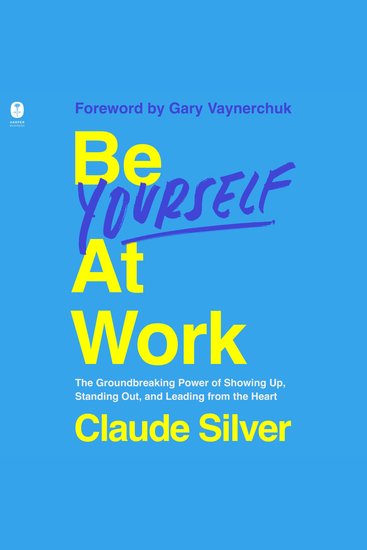
  • Be Yourself at Work - The Groundbreaking Power of Showing Up Standing Out and Leading from the Heart - cover

    Be Yourself at Work - The...

    Claude Silver

    • 0
    • 0
    • 0
    A powerful, timely, and inspiring guide for embracing your most authentic self at work—and why it matters—from the first-ever Chief Heart Officer at VaynerX. 
    Featuring a foreword by Gary Vaynerchuk 
    In a world obsessed with perfection—and workplaces wired for efficiency over humanity—Claude Silver offers a new language for the beautiful mess of being human at work: showing up as your true self. 
    No matter our role, seniority, or generation, we all want the same things: to feel valued, trusted, respected, and like we belong. When we stop performing and start being, we unlock our capacity to connect, thrive, and do our best work. Not only is this shift liberating—it’s the antidote to burnout, an end to the myth of “fitting in,” and a proven path to building bold, human-first teams.  
    Through her experience as the Chief Heart Officer at VaynerX, Silver offers a compelling vision for how authenticity and connection transform leadership, ignite innovation, and elevate workplace culture. Silver draws on research and thousands of hours of direct experience—listening, coaching, testing, team building, and speaking—and introduces a new framework based on three pillars: 
    Emotional Optimism – leading with hope and possibilityEmotional Bravery – having the hard conversations with heartEmotional Efficiency – driving clarity through compassion and focusBe Yourself at Work provides actionable insights, relatable stories, and a practical roadmap to navigate a workplace where the old models are failing. In an era where technology evolves faster than we can imagine, humanity is our greatest asset. Authentic presence is the currency of the future—a game-changer for individuals and organizations alike. 
    Supplemental enhancement PDF accompanies the audiobook.
    Ver livro
  • Personal Privacy in the Age of the Internet - The Influence of Information and Communication Technologies on Personal Privacy - cover

    Personal Privacy in the Age of...

    Yair Oppenheim

    • 0
    • 0
    • 0
    This audiobook is narrated by an AI Voice. For two decades, privacy has remained at the center of public debate, with repeated reports of cyber privacy violations highlighting the urgent need for clearer regulation. Yet fundamental questions persist: What is privacy? Where does the private sphere end and the public begin? How does privacy relate to freedom, autonomy, and liberty? How should individual rights be balanced against the public’s right to know in an era of pervasive information and communication technologies (ICTs)? 
     
    In this audiobook, Yair Oppenheim reviews existing definitions of personal privacy and distills their core components. He proposes dividing privacy into two categories: deep personal privacy and general personal privacy. By shifting the discussion toward deep and general personal privacy information, he draws a clear boundary around deep personal privacy when analyzing the impact of ICTs. 
     
    Oppenheim argues that until the age of ICTs, deep personal privacy was largely inaccessible and therefore not culture-dependent, unlike general personal privacy, which has always varied across cultures. While ICTs affect both types, their most profound impact lies in enabling, for the first time in history, the exposure of deep personal privacy. This sphere, he contends, is a fundamental human need, essential not only for individuals but also for society as a whole. 
     
    Dr. Yair Oppenheim holds degrees in mathematics, computer science, business, and cyber security, and earned his Ph.D. from Tel Aviv University’s Cohn Institute for the History and Philosophy of Science and Ideas. He has managed IT and information systems for multinational corporations including Delta-Galil, GE Healthcare, and Teva Pharmaceuticals.
    Ver livro
  • The New Science of Customer Relationships - Delivering the One-to-One Promise With AI - cover

    The New Science of Customer...

    Thomas H. Davenport, Jim Sterne

    • 0
    • 0
    • 0
    The New Science of Customer Relationships: Delivering the One-to-One Promise with AI is a science-based and insightful new approach to integrating the latest generative AI technologies into your company's customer communications. Analytics and marketing experts Thomas Davenport and Jim Sterne walk you through the technology and tools you need to understand, the data you need to collect, the processes you need to implement, and the ethics you need to observe to build an industry-leading customer relationship framework. 


    In the book, you'll learn to create systems that reliably generate smart, persuasive, and hyper-personalized interactions with your company's best customers. You'll also discover how to integrate these systems directly into your firm's existing operations so you can use the tools to realize tangible financial results. 


    Inside the book: tips for using generative AI to analyze customer responses and extract actionable insights about how they feel and what they think; specific tools and technologies you can use to collect customer data and conduct effective analytics to improve your products and services; and discussions of ethical guidelines to guide your organization's data and customer communication practices.
    Ver livro
  • Lean Startup to Lean Company to Rich Exit - cover

    Lean Startup to Lean Company to...

    Kenan Sahin

    • 0
    • 0
    • 0
    The turning $1,000 into $1.54 billion story… 
    In 1982, MIT professor Kenan Sahin took $1,000 from his savings and used it to undertake the most extraordinary entrepreneurial journey, culminating with a $1.54 billion rich exit just 17 years later. This is the story of Kenan’s turning his academic theories into axiomatic principles for building a Lean Startup into a Lean Company followed by a Rich Exit. 
    Among those principles are...Suffusing the organization with a "teach and learn, learn and teach" mindsetRecruiting and retaining the nation’s finest talent by hiring based on aptitude > attitude > willingness > experience (in order of importance)Finding a way to reject outside funding and retain full ownership 
    And every step and misstep along Kean’s road to success is brought into the present day—for Kenan remains the professor at heart and is deeply committed to helping fellow entrepreneurs forge models for outsized excellence in their own way forward.
    Ver livro