¡Acompáñanos a viajar por el mundo de los libros!
Añadir este libro a la estantería
Grey
Escribe un nuevo comentario Default profile 50px
Grey
Suscríbete para leer el libro completo o lee las primeras páginas gratis.
All characters reduced
The Nose - cover

The Nose

Nikolai Gogol

Editorial: CLXBX

  • 0
  • 0
  • 0

Sinopsis

The Nose by Nikolai Gogol is a brilliantly absurd and sharply satirical short story that showcases the author's unmatched talent for blending the grotesque with biting social commentary. First published in 1836, this classic of Russian literature remains a timeless exploration of vanity, bureaucracy, identity, and the fragile foundations of social status.

The story begins with an astonishing premise: Collegiate Assessor Kovalyov awakens one morning to discover that his nose has mysteriously disappeared from his face. As if that were not alarming enough, the missing appendage is soon found living an independent life—dressed in uniform and enjoying a rank higher than its former owner. What follows is a frantic and darkly comic quest as Kovalyov attempts to reclaim his wandering nose and restore his dignity.

Through this surreal and outrageous narrative, Gogol exposes the absurdities of social hierarchy and the obsession with rank that defined nineteenth-century Russian society. Kovalyov's distress is not merely physical; it is deeply social. Without his nose, he fears humiliation, lost opportunities, and the collapse of his carefully cultivated public image. Gogol uses exaggeration and absurdity to highlight how identity can become entangled with appearance, status, and external validation.

At once whimsical and profound, The Nose exemplifies Gogol's distinctive style—rich in irony, playful in tone, and layered with meaning beneath its comic surface. The tale moves effortlessly between the ridiculous and the reflective, inviting readers to laugh while quietly confronting deeper questions about self-importance and the illusions of authority.

More than a humorous oddity, The Nose is a pioneering work of satirical fiction that anticipates elements of modern absurdism and magical realism. Its influence can be seen in generations of writers who explore the strange and illogical to reveal uncomfortable truths about society and human nature.

Witty, imaginative, and delightfully bizarre, The Nose stands as one of Gogol's most memorable creations—a story that reminds us how easily identity can slip away, and how fragile the structures of pride and power truly are.
Disponible desde: 27/02/2026.
Longitud de impresión: 31 páginas.
Otros libros que te pueden interesar

  • Family of Noblemen - cover

    Family of Noblemen

    Mikhail Saltykov-Shchedrin

    • 0
    • 0
    • 0
    Meet the Golovliovs, the ultimate dysfunctional family. In the difficult transition years before and after the liberation of Russia’s serfs, the Golovliovs are a gentry family ill-equipped to face the adaptations necessary in the new social order. Petty, back-biting, greedy, rigid, ignorant, and cruel, their personalities are captured in the array of nicknames they themselves give each other: The Hag, Little Judas, Simple Simon, Pavel the Sneak, the Orphans, the Blood-Sucker. They hate each other ferociously and utterly despise the peasants around them, who are gradually awakening to the potentialities of their new freedoms. In this most famous of Saltykov-Shchedrin’s novels, there is a keen sympathy toward the plight of women caught in the complexities of social change: Anninka and Lubinka, the aristocratic orphans who, seeking independence, recklessly cast themselves into the bohemian life; the matriarch Arina Petrovna, whose desperately vigorous administration of the estate leads to an exhilarating but only temporary stability; the peasant girl Yevpraksia, who is resistlessly taken by the loathsome Porfiry Vladimirych as his mistress. Far from a piece of social propaganda, A Family of Noblemen shows a subtle portraiture of the complex characters and convoluted circumstances of the time. (Expatriate)
    Ver libro
  • Gulliver's Travels - cover

    Gulliver's Travels

    Jonathan Swift

    • 0
    • 0
    • 0
    A wickedly clever satire uses comic inversions to offer telling insights into the nature of man and society. Nominated as one of America's best-loved novels by PBS's The Great American Read.Gulliver's Travels describes the four voyages of Lemuel Gulliver, a ship's surgeon. In Lilliput he discovers a world in miniature; towering over the people and their city, he is able to view their society from the viewpoint of a god. However, in Brobdingnag, a land of giants, tiny Gulliver himself comes under observation, exhibited as a curiosity at markets and fairs. In Laputa, a flying island, he encounters a society of speculators and projectors who have lost all grip on everyday reality; while they plan and calculate, their country lies in ruins. Gulliver's final voyage takes him to the land of the Houyhnhnms, gentle horses whom he quickly comes to admire - in contrast to the Yahoos, filthy bestial creatures who bear a disturbing resemblance to humans. This text, based on the first edition of 1726, reproduces all the original illustrations and includes an introduction by Robert Demaria, Jr, which discusses the ways Gulliver's Travels has been interpreted since its first publication. Jonathan Swift (1667-1745) was born in Dublin.
    Ver libro
  • The Devil — With Wings - cover

    The Devil — With Wings

    L. Ron Hubbard

    • 0
    • 0
    • 0
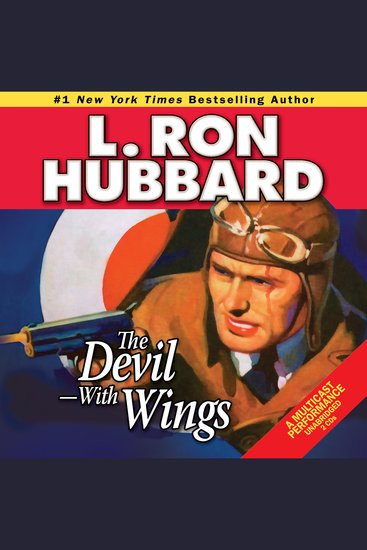
    Fighter pilot Gary Forsythe is a man on fire. He's British Secret Service with a chip on his shoulder and a .50 caliber machine gun in his flying killing machine. But his greatest battle awaits... against the woman he loves who has vowed to kill him. Soar to the heights of battle and descend to the depths of betrayal as the audio version of The Devil — With Wings takes you on a deadly journey to the Far East.
    Ver libro
  • The Prince and the Pauper - cover

    The Prince and the Pauper

    Mark Twain

    • 0
    • 0
    • 0
    "When I am king they shall not have bread and shelter only, but also teachings out of books, for a full belly is little worth where the mind is starved."
    
    A classic tale of switched identities, Mark Twain's The Prince and the Pauper is both a rollicking adventure yarn and a sharp social satire.
    
    In bustling Tudor London, two boys are born into opposite worlds: Edward Tudor, heir to the English throne, and Tom Canty, a ragged pauper from the slums. When chance brings them together, their uncanny resemblance sparks a daring exchange of identities. Suddenly, the prince is cast into the harsh realities of poverty, experiencing the brutal life of a London pauper and becoming aware of the stark class inequality in England, while the pauper is thrust into the bewildering splendour of royal life where he must navigate ceremonies, politics, and suspicion convincingly to avoid exposure.
    
    Using his trademark wit and humour to highlight inequality and the absurdity of rigid social divisions, and to highlight Edward's journey towards becoming a humane ruler, The Prince and the Pauper is a skilful blend of historical detail and fast-paced storytelling.
    Samuel Langhorne Clemens, better known by his pen name Mark Twain (1835–1910), grew up along the banks of the Mississippi River, and his early experiences inspired many of his most famous works, including The Adventures of Tom Sawyer and Adventures of Huckleberry Finn. Widely celebrated as America's greatest humorist, Twain captured the spirit of a rapidly changing nation, and his sharp wit, keen eye for human nature, and gift for storytelling made him not only a beloved novelist but also a popular lecturer and essayist.
    
    Twain's innovative style, character-driven storytelling and ability to interweave humour with profound social critique laid the groundwork for modern American literature and has inspired countless authors, including Ernest Hemingway and F. Scott Fitzgerald. Indeed, Hemingway famously declared that "all modern American literature comes from one book by Mark Twain called Huckleberry Finn."
    Ver libro
  • Fakist The: One Last Day - cover

    Fakist The: One Last Day

    Bill Meeks

    • 0
    • 0
    • 0
    This is a story about a flawed man, born of privilege, who only lived for himself (Paul DaFoe, aka The Fakist). It tells of the last day of his newscast; of how his enemies plotted against him until the final battle, and of how his partner LeAnne abandoned him just when he thought he had it all figured out. It ends with a podcast. It begins in the wreckage of KCOM Studios on the night of Deathember 13th, 2021. In Somewhere West of New York City, the faithful still tune in at six o'clock, waiting for the newscast to start... but it never will. The Fakist died two years ago. The Fakist: One Last Day, a new documentary, starting tonight on WAFM-TV 3.
    Ver libro
  • Varied Types - cover

    Varied Types

    G.K. Chesterton

    • 0
    • 0
    • 0
    Another delightful and sharply pointed excursion into the topics of the day, and of our day as well, with Gilbert Keith Chesterton. Here he uses his wit and mastery of paradox to bring into focus a number of historical persons who in many ways typify the people who presently shape our world and who in their own right have already shaped Western civilization. These reprinted magazine articles are filled with his good-natured wit and devastating ability to use reductio ad absurdum to destroy the popular myths that drive our society at full-speed into, and expose the utter nonsense that underlies, secular humanism. You will come away with yet another new collection of wonderful quotes.(Summary by Ray Clare)
    Ver libro