Begleiten Sie uns auf eine literarische Weltreise!
Buch zum Bücherregal hinzufügen
Grey
Einen neuen Kommentar schreiben Default profile 50px
Grey
Jetzt das ganze Buch im Abo oder die ersten Seiten gratis lesen!
All characters reduced
Dead Souls - cover

Dead Souls

Nikolai Gogol

Übersetzer D. J. Hogarth

Verlag: E-Kitap Projesi & Cheapest Books

  • 0
  • 0
  • 0

Beschreibung

Dead Souls, is a novel by Nikolai Gogol, first published in 1842, and widely regarded as an exemplar of 19th-century Russian literature. The purpose of the novel was to demonstrate the flaws and faults of the Russian mentality and character. Gogol masterfully portrayed those defects through Pavel Ivanovich Chichikov (the main character) and the people whom he encounters in his endeavours. These people are typical of the Russian middle-class of the time. Gogol himself saw it as an "epic poem in prose", and within the book as a "novel in verse". Despite supposedly completing the trilogy's second part, Gogol destroyed it shortly before his death. Although the novel ends in mid-sentence (like Sterne's Sentimental Journey)

"To the door of an inn in the provincial town of N. there drew up a smart britchka—a light spring-carriage of the sort affected by bachelors, retired lieutenant-colonels, staff-captains, land-owners possessed of about a hundred souls, and, in short, all persons who rank as gentlemen of the intermediate category.

In the britchka was seated such a gentleman—a man who, though not handsome, was not ill-favoured, not over-fat, and not over-thin. Also, though not over-elderly, he was not over-young. His arrival produced no stir in the town, and was ac-companied by no particular incident, beyond that a couple of peasants who happened to be standing at the door of a dramshop exchanged a few comments with reference to the equipage rather than to the individual who was seated in it. "Look at that carriage," one of them said to the other. "Think you it will be going as far as Moscow?"

"I think it will," replied his companion. "But not as far as Kazan, eh?" "No, not as far as Kazan." With that the conversation ended. Presently, as the britchka was approaching the inn, it was met by a young man in a pair of very short, very tight breeches of white dimity, a quasi-fashionable frockcoat, and a dickey fastened with a pistol-shaped bronze tie-pin.

The young man turned his head as he passed the britchka and eyed it attentively; after which he clapped his hand to his cap (which was in danger of being removed by the wind) and resumed his way.."
Verfügbar seit: 25.01.2024.
Drucklänge: 500 Seiten.

Weitere Bücher, die Sie mögen werden

  • A Thousand Deaths - From their pens to your ears genius in every story - cover

    A Thousand Deaths - From their...

    Jack London

    • 0
    • 0
    • 0
    John Griffith Chaney was born on January 12th, 1876 in San Francisco.   
    His father, William Chaney, was living with Flora Wellman when she became pregnant.  Chaney insisted she have an abortion.  Flora's response was to turn a gun on herself.  Although her wounds were not severe the trauma made her temporarily deranged. 
    In late 1876 his mother married John London and the young child was brought to live with them as they moved around the Bay area, eventually settling in Oakland where now, calling himself Jack, he completed grade school. 
    Jack worked hard at several jobs, sometimes 12-18 hours a day, but his dream was university.  He studied hard and borrowed the money to enrol in the summer of 1896 at the University of California in Berkeley. 
    In 1897, at 21, Jack searched out newspaper accounts of his mother's suicide attempt and for the name of his biological father. He wrote to Chaney, then living in Chicago, who claimed he could not be Jack’s father because he was impotent and casually asserted that London's mother had relations with other men.  Jack, devastated by the response, quit Berkeley and went to the Klondike. Other accounts suggest that his dire finances presented Jack with the excuse he needed to leave. 
    In the Klondike Jack began to gather material for his writing but also accumulated many health problems, including scurvy, which together with hip and leg problems he would carry for the rest of his life. 
    During the late 1890's Jack was regularly publishing short stories and by the turn of the century full blown novels. 
    By 1904 Jack had married, fathered two children and was now in the process of divorcing.  A stint as a reporter on the Russo-Japanese war of 1904 was equal amounts trouble and experience. But that experience was always put to good use in a continuing and remarkable output of work. 
    In 1905 he married Charmian Kittredge who at last was a soul and companion who brought him some semblance of peace despite his advancing alcoholism and his incurable wanderlust. 
    Twelve years later Jack had amassed both wealth and a literary reputation through such classics as ‘The Call of the Wild’, ‘White Fang’ and many others. He had a reputation as a social activist and was a tireless friend of the workers.   
    Jack London died suffering from dysentery, late-stage alcoholism and uremia, aged only 40, on November 22nd 1916 at his property in Glen Elen in California.
    Zum Buch
  • True Stories of Wonderful Deeds - cover

    True Stories of Wonderful Deeds

    Anonymous

    • 0
    • 0
    • 0
    37 short pieces perfect for newer recorders. These one page Stories of (mostly) Wonderful Deeds were written for Little Folk to teach them about famous incidents in their history. Bonnie Prince Charlie, Nelson and Hardy, Bruce and the Spider, David Livingston, Canute, Sir Philip Sydney, and Elizabeth and Raleigh are just some of the well known people and incidents covered in short stories. (Summary by phil chenevert)
    Zum Buch
  • Heart of Darkness - Audiobook - cover

    Heart of Darkness - Audiobook

    Joseph Conrad, Classic...

    • 0
    • 0
    • 0
    Joseph Conrad's Heart of Darkness is a haunting exploration of imperialism, morality, and the human psyche. Narrated by Charles Marlow, it recounts a journey along the Congo River into the depths of colonial Africa. What begins as a mission to retrieve the enigmatic trader Kurtz becomes a descent into both physical wilderness and the darkness within human souls.Conrad's prose is dense, symbolic, and atmospheric, offering both a gripping adventure and a critique of the brutal exploitation at the heart of European colonialism. The novella questions the thin line between civilization and savagery, leaving readers unsettled by the realization that the "darkness" lies not only in distant lands but also within the human heart.
    Zum Buch
  • Les Miserables Volume 5 - cover

    Les Miserables Volume 5

    Victor Hugo

    • 0
    • 0
    • 0
    In "Les Misérables Volume 5" by Victor Hugo, the epic tale concludes with Jean Valjean’s final acts of sacrifice and redemption. As Marius recovers from the rebellion’s aftermath, secrets about Valjean’s past emerge, testing relationships and loyalties. Themes of love, grace, and justice reach their culmination, juxtaposed against societal struggles and personal reconciliation. Hugo delves deeply into mortality, faith, and the enduring power of compassion, blending intimate human drama with broader philosophical reflections. With emotional resonance and vivid storytelling, this volume delivers a poignant meditation on life’s meaning, leaving readers with a lasting message of hope, forgiveness, and humanity’s capacity for good.
    Zum Buch
  • HOMER: The Iliad & the Odyssey - cover

    HOMER: The Iliad & the Odyssey

    Homer

    • 0
    • 0
    • 0
    Nearly three thousand years after they were composed, The Iliad and The Odyssey remain two of the most celebrated and widely read stories ever told, yet next to nothing is known about their author. He was certainly an accomplished Greek bard, and he probably lived in the late eighth and early seventh centuries BCE Authorship is traditionally ascribed to a blind poet named Homer, and it is under this name that the works are still published. Greeks of the third and second centuries BCE, however, already questioned whether Homer existed and whether the two epics were even written by a single individual. 
    Most modern scholars believe that even if a single person wrote the epics, his work owed a tremendous debt to a long tradition of unwritten, oral poetry. Stories of a glorious expedition to the East and of its leaders’ fateful journeys home had been circulating in Greece for hundreds of years before The Iliad and The Odyssey were composed. Casual storytellers and semiprofessional minstrels passed these stories down through generations, with each artist developing and polishing the story as he told it. According to this theory, one poet, multiple poets working in collaboration, or perhaps even a series of poets handing down their work in succession finally turned these stories into written works, again with each adding his own touch and expanding or contracting certain episodes in the overall narrative to fit his taste.
    Zum Buch
  • St John's Eve - From their pens to your ears genius in every story - cover

    St John's Eve - From their pens...

    Nikolai Gogol

    • 0
    • 0
    • 0
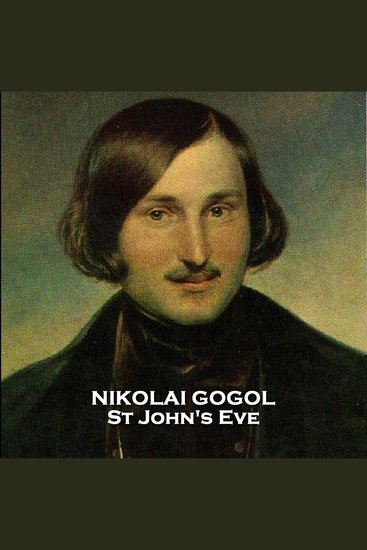
    Nikolai Vasilievich Gogol was born on 1st April 1809 to a father, descended from Ukrainian Cossacks and a mother with a military background in the Ukrainian town of Sorochyntsi, then part of the Russian Empire and rich in Cossack traditions and folklore.   
    His father wrote poetry and plays which the young Gogol helped stage at his uncle’s home theatre.  This helped ignite in him a love of literature and blossomed when he attended, what is now, the Nizhyn Gogol State University at the age of 12.  Here he participated in school theatre productions and refined his mastery of his native Ukrainian and also the Russian of his Imperial masters. 
    In 1828 he went to St Petersburg and unsuccessfully tried to begin a career as an actor after finding that with no money and no connections the civil service was barred to him. 
    Embezzling money from his mother he embarked on a trip to Germany. When the money ran out, he returned to St Petersburg but the experiences were used in a series of stories he contributed to periodicals.  These tales were steeped in his childhood memories of the Ukrainian landscape and peasantry enlivened with the supernatural of its folklore woven with realistic events of the day.  He wrote in Russian in a whimsical, colloquial style with a smattering of Ukrainian words and phrases that provided an authenticity.  Eight stories were published as ‘Evenings on a Farm near Dikanka’.  Seemingly all at once fame and fortune arrived. Gogol was hailed by his contemporaries, including Pushkin, as a pre-eminent writer of Russian literature.   
    His success continued with his brilliant plays ‘The Inspector General’ and the comedy ‘The Marriage for the Theatre’, both being highly acclaimed.   
    In 1834 he became Professor of Medieval History at the University of St. Petersburg but with little academic or teacher training, failed to adequately fulfil many of his duties and soon resigned this post.  With no obligations and using his earnings from his writing, which now included the impressionistic and immortal ‘Dead Souls’, Gogol travelled around Europe, spending the most time in Rome where he studied art, read Italian literature and developed a passion for opera.  
    In the 1840s Gogol became preoccupied with a need to purify his soul and embarked on a pilgrimage to Jerusalem. In tandem he fell under the influence of a strict and austere spiritual ascetic who persuaded him to observe strict fasts that, allied with his depression and deteriorating health, contributed to his death on 21st April 1852 at the age of only 43. 
    Gogol had a profound and enduring impact on literature which can be evidenced from his masterpiece, ‘The Cloak’, more popularly although wrongly translated as ‘The Overcoat’ published in 1841.  A hundred years later Vladamir Nabokov called it ‘The greatest Russian short story ever written.’
    Zum Buch