¡Acompáñanos a viajar por el mundo de los libros!
Añadir este libro a la estantería
Grey
Escribe un nuevo comentario Default profile 50px
Grey
Suscríbete para leer el libro completo o lee las primeras páginas gratis.
All characters reduced
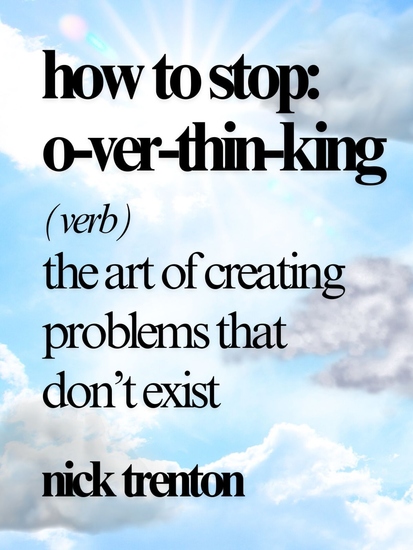
How to Stop Overthinking - The Art of Creating Problems that Don’t Exist - cover

How to Stop Overthinking - The Art of Creating Problems that Don’t Exist

Nick Trenton

Editorial: Publishdrive

  • 0
  • 0
  • 0

Sinopsis

You are the boss of your brain and emotions. Right...?In theory, yes. In practice, not always. Let's change that equation. It's time to transform your negative thoughts into a fulfilling, empowering, and positive narrative.Defeat your noisy brain and thank it for protecting you.HOW TO STOP OVERTHINKING understands the struggles you are going through. The author of this book understand that you can't sleep at night, you overreact, and you appear to be sensitive. That you are plagued with self-doubt, you often feel no self-value, and that things are just too hard for "someone like you."That's why this book is so darned effective. It truly takes you through the psychology of negative thinking and breaks it down for what it is: cognitive distortions brought on by damaging self-perceptions. He takes you through the entire process of how to pre-empt negative thoughts, cope with them, and finally hear yourself of them.Learn advanced psychology techniques to drastically alter your perspective.Nick Trenton grew up in rural Illinois and is quite literally a farm boy. His best friend growing up was his trusty companion Leonard the dachshund. RIP Leonard. Eventually, he made it off the farm and obtained a BS in Economics, followed by an MA in Behavioral Psychology.Learn to understand what your brain is telling you - and switch it for something better!--The power of labeling your emotions and mental state-How to poke holes in a thought/belief to test it-Mental anchoring in everyday life-The ABC model of thought replacement and analysis-The life-changing magic of simply having no opinion-Using metaphors to transform your overthinking-Socrates and the art of self-questioning for calm
Disponible desde: 04/10/2024.
Longitud de impresión: 191 páginas.
Otros libros que te pueden interesar

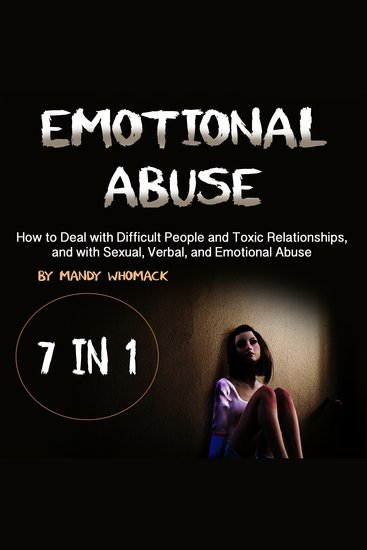
  • Emotional Abuse - How to Deal with Difficult People in Toxic Relationships and with Sexual Verbal and Emotional Abuse - cover

    Emotional Abuse - How to Deal...

    Mandy Womack

    • 0
    • 0
    • 0
    Book 1: In toxic relationships, it’s all about control. There are many people who find themselves in a toxic relationship, but they don’t realize that they are in one, or they don’t know how to get out of it. This book gives solutions for those who are eager, curious, or simply desperate. Help yourself or another who struggles with an unhealthy relationship or manipulative person in his or her life. 
    Book 2: You might know someone who is in a relationship with someone who is emotionally abusive, or you might be in a relationship with someone like that yourself. Or perhaps you don’t know how to recognize it and are curious how you can recognize the signs. Whichever the reason, you have come to the right address. 
    Book 3: Since it is all over the media and the horrific stories echo through our empathetic ears, it is almost mandatory for any caring civilian in society to understand at least some basics when it comes to sexual abuse. The facts are out there, and it is really happening to people in secret and sometimes without hiding anything. In this book, you will learn to grasp the reality of this sad phenomenon in society. 
    Book 4: Some of us may have been through it, and others have seen it in other people’s homes. Domestic violence is a serious problem. The stats don’t lie, but they aren’t completely accurate either. They reveal the victims who speak up, but not the ones who stay silent. If you are wondering what is involved in domestic violence, what to do, and how to recognize it, then you’ve come to the right place. 
    Book 5: In this elaborate study, the specific issues that relate to suicidal tendencies are addressed. Causes and consequences come to light, and comparisons are made between countries, individuals, and triggers that influence a person in a depressive state to contemplate the unthinkable. 
      
    And much more!
    Ver libro
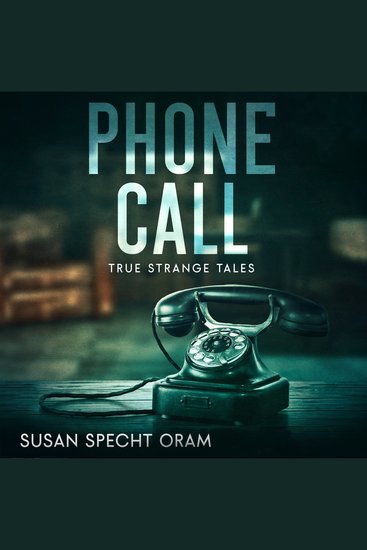
  • Phone Call - True strange tales - cover

    Phone Call - True strange tales

    Susan Specht Oram

    • 0
    • 0
    • 0
    Mystery-thriller author Susan Specht Oram shares strange but true tales in this sixth book in the Strangers on a Train series, including an unsettling phone call, a complicated story about aging parents, an ultimatum made during coming-of-age, a strange visit by firefighters, and a life-changing deathbed promise. 
     
    This short collection of weird real-life situations might make you laugh and cry. Join her and share the surprising happenings of her life, with her humiliations and triumphs. Pick up your copy today!
    Ver libro
  • Authors Edge The - cover

    Authors Edge The

    Marlene Mesot

    • 0
    • 0
    • 0
    This collection of 80 poems is meant to bring encouragement and inspiration to anyone who has ever thought, or dreamed, of writing, whether personally or professionally. Writing takes many forms, whether it’s a letter, diary, blog, article, story, play, poem or novel. I will confess my writing leans in favor of fiction. 
    These poems are also meant for readers because we cannot have one without the other. The goal of any author is to have universal appeal. Thank you for considering the work of this author. 
      
    “Poetry is music in words.” 
    Marlene Mesot 
    Forward by award-winning artist/author Lynda McKinney Lambert.
    Ver libro
  • Unicorns: Mythology & Legends - cover

    Unicorns: Mythology & Legends

    Niina Niskanen

    • 0
    • 0
    • 0
    Unicorns are made of dreams and enchantments. They are some of the most beloved mythical beings and very common motifs that we still come across today. In this book, we will go through the history of unicorns from ancient times to the medieval time period and renaissance. 
    A lot of people believed that a unicorn was an actual animal. It is possible that the legend of the unicorn was born from rhinos, deer, antelopes or roe deer and other animals with antlers. We will also be discussing the symbolism behind horns and antlers, and the different meanings and interpretations that unicorns horn has been given. You will learn about the domestic lives of the unicorns. Where they live, what they eat and who creates the unicorns. 
    Unicorns are often connected to spirituality and magic. In this book, you will also find out about the Christian symbolism behind unicorns and why we can still today find unicorn imagery in churches around Europe. There are many mentions of unicorns in the Bible as well. Step into a journey to learn about unicorns in ancient civilizations such as Greece and Persia. What unicorns are symbolised in Greek and Roman mythology? You will also learn about unicorns in Asian cultures and how they can take many kinds of shapes and forms. 
    In medieval times unicorns symbolized purity and in medieval bestiaries, the unicorn was a commonly depicted animal but more than that, during these times unicorns became the symbol of courtly love and this is why we find him woven into many medieval tapestries. 
    Ver libro
  • Battle of Kapetron The: The History and Legacy of the First Major Battle Between the Byzantine Empire and Seljuk Turks - cover

    Battle of Kapetron The: The...

    Editors Charles River

    • 0
    • 0
    • 0
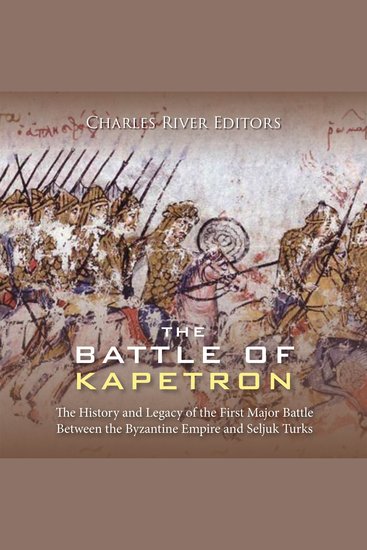
    The Byzantine Empire existed for over a thousand years, with a history spanning from the division of the Roman Empire in 395 until the Ottoman conquest of Constantinople in 1453. It was formed from the previous Eastern Roman Empire, and during its long existence, the Byzantine inhabitants were very proud to call themselves Romans.  
    	However, many things changed during the long lifespan of the Byzantine Empire, starting with a Hellenization in the 6th century. The use of the Latin language diminished and Greek took its place, while the typical Roman culture gave way to a more Hellenistic one. The Hellenization of Byzantium was detrimental to the relationship with the Holy Roman Empire, and the Christian world from that point would be split in two. The subsequent strengthening of the Orthodox Church caused many civil wars and conflicts to arise during the centuries, which shattered and reshaped the territory time after time. By the end of the Byzantine Empire’s existence, the old age had weakened both the state and church, making it an easy target for invading forces.  
    	The most notable invaders were the Turkish-speaking Seljuks, led through a series of battles by Kutalmishouglu Suleiman, who supported different usurpers against the Byzantine emperor. The expansion of the Seljuks was so successful that when Suleiman died, he had put all of Bithynia under his control as well as several important harbor towns along the shores on the Asian side of Bosphorus. With that accomplishment, he had managed to separate the Byzantines living in Anatolia from their emperor in Constantinople. This immediately weakened the unity of the Byzantine Empire.  
    	Of all the conflicts that brought this state of affairs into being, few were as instrumental as the Battle of Kapetron, the culmination of one of the first major Seljuk raids into Byzantine territory.
    Ver libro
  • Countdown - The Blinding Future of Nuclear Weapons - cover

    Countdown - The Blinding Future...

    Sarah Scoles

    • 0
    • 0
    • 0
    Nuclear weapons are, today, as important as they were during the Cold War, and some experts say we could be as close to a nuclear catastrophe now as we were at the height of that conflict. Despite that, conversations about these bombs generally often happen in past tense. 


    In Countdown, science journalist Sarah Scoles uncovers a different atomic reality: the nuclear age's present. Drawing from years of on-the-ground reporting at the nation's nuclear weapons labs, Scoles interrogates the idea that having nuclear weapons keeps us safe, deterring attacks and preventing radioactive warfare. She deftly assesses the existing nuclear apparatus in the United States, taking readers beyond the news headlines and policy-speak to reveal the state of nuclear-weapons technology, as well as how people currently working within the United States nuclear weapons complex have come to think about these bombs and the idea that someone, someday, might use them. 


    Through a sharp, surprising, and undoubtedly urgent narrative, Scoles brings us out of the Cold War and into the twenty-first century, opening listeners' eyes to the true nature of nuclear weapons and their caretakers while also giving us the context necessary to understand the consequences of their existence, for worse and for better, for now and for the future.
    Ver libro