Rejoignez-nous pour un voyage dans le monde des livres!
Ajouter ce livre à l'électronique
Grey
Ecrivez un nouveau commentaire Default profile 50px
Grey
Abonnez-vous pour lire le livre complet ou lisez les premières pages gratuitement!
All characters reduced
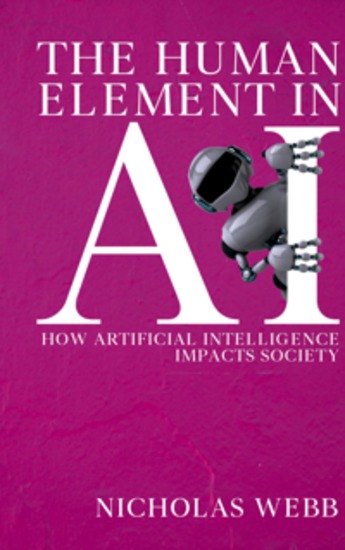
The Human Element in AI - How Artificial Intelligence Impacts Society - cover

The Human Element in AI - How Artificial Intelligence Impacts Society

Nicholas Webb

Maison d'édition: Lulu.com

  • 0
  • 0
  • 0

Synopsis

As artificial intelligence continues to integrate into our lives, its influence reaches far beyond technology and business—it is reshaping society itself. The Human Element in AI: How Artificial Intelligence Impacts Society explores the profound ways AI is transforming our world, from the way we work and communicate to how we understand privacy, ethics, and human connection.

This book examines both the opportunities and challenges AI brings to society, discussing its effects on employment, education, healthcare, and daily life. It also addresses the ethical questions surrounding AI, such as biases in algorithms, data privacy concerns, and the potential consequences of increasingly autonomous systems. The Human Element in AI offers a balanced perspective, blending insights from experts in technology, sociology, and philosophy to help readers understand the societal implications of AI.

Perfect for those interested in technology, social sciences, and the future of humanity, this book provides a thought-provoking look at the role AI plays in shaping our collective future. Discover the impact of artificial intelligence on society and explore the ways in which we can navigate this transformative era with wisdom and foresight.
Disponible depuis: 16/10/2024.

D'autres livres qui pourraient vous intéresser

  • Artificial Intelligence Class 5 - cover

    Artificial Intelligence Class 5

    Geeta Zunjani

    • 0
    • 0
    • 0
    Touchpad Artificial Intelligence series has some salient features such as AI Reboot, AI Deep Thinking, 
    AI in Life, AI Lab and AI Ready which ensures that NEP 2020 guidelines are followed. 
    
    KEY FEATURES 
    - National Education Policy 2020 
    - AI Game: It contains an interesting game or activity for the students to try on their own or with their classmates to learn how the game mechanics work while having fun. 
    - Brainy Fact: It presents an interesting fact relevant to the topic or the chapters. 
    - AI in Life: It presents questions that promotes the moral growth and experiential learning. 
    - AI Deep Thinking: It presents a question/scenario in which the students are required to think deeply and apply their knowledge. 
    - Digital Solutions 
    
    DESCRIPTION 
    Artificial Intelligence is the most talked about subject and we all understand that the future lies in knowing it well. The Touchpad AI series is written for classes I to VII keeping in mind about the future and scope that lies in AI. Classes VIII to XII are strictly based on CBSE curriculum. They have competency-based questions to ensure that students are capable of applying their learning to solve some real-life challenges. The knowledge is spread in a phased manner so that at no age the kid finds it difficult to understand the theory. 
    
    Each lesson begins with a short conversation between human characters and one humanoid which tries to explain in simple words about the topics related to Artificial Intelligence. The story is built up in such a way that the curiosity of the reader compels to read the entire lesson. The idea behind introducing humanoid is to touch the hearts of our kids with the existence of friendly robots in the form of humanoids. 
    
    Touchpad Artificial Intelligence series has some salient features such as AI Reboot, AI Deep Thinking, AI in Life, AI Lab and AI Ready which ensures that NEP 2020 guidelines are followed. 
    
    There are plenty of Video Sessions for students and teachers to go beyond the syllabus and enrich their knowledge. There are some brainstorming questions in the form of AI Task in between the topics to ensure that students give pause to their learning and use their skills to reach to some creative ideas in solving given problems. 
    
    I would like to humbly acknowledge the support provided by my family, friends and Orange Education Pvt Ltd team to accomplish this noble task. I am sure that this book will prove to be a tool in making the students future ready for Artificial Intelligence. Wishing learners great success in future endeavours. Enjoy the journey of happy learning!! All your feedbacks and suggestions will always be wholeheartedly welcomed to improve and grow. 
    
    WHAT WILL YOU LEARN 
    You will learn about: 
    - Human-Machine Interaction 
    - Introduction to AI 
    - AI in Apps 
    - Types of Robots 
    - Myths and Facts of AI 
    
    WHO THIS BOOK IS FOR 
    Grade 5 
    
    TABLE OF CONTENTS 
    
    1. Evolution of AI 
    a) Developments in A 
    
    2. AI-Terminologies 
    a) Artificial Intelligence 
    b) Aims of AI 
    c) AI-Terminologies 
    
    3. AI in Popular Apps 
    a) Siri 
    b) Cortana 
    c) Google Assistant 
    d) Alexa 
    e) Practo 
    f) Google Maps 
    g) Swiggy 
    h) YouTube 
    i) Netflix 
    Test Sheet 1 
    
    4. Sustainable Development Goals (SDGs) 
    a) What are Sustainable Development Goals (SDGs)? 
    b) Role of AI to Achieve SDGs 
    
    5. Parts of Robots 
    a) Difference Between Humans and Robots 
    b) Essential Parts of Robots 
    Test Sheet 2
    Voir livre
  • Tor and the Dark Art of Anonymity - cover

    Tor and the Dark Art of Anonymity

    Lance Henderson

    • 0
    • 0
    • 0
    The verdict is in: Tor & the Dark Art of Anonymity is 'unputdownable'. The evidence is in: It's 1984 and you want privacy now, not 6 months from now. It is high time the gloves came off. It's time to FIGHT BACK. Other books tell you to install Tor, the anonymous browser and encrypt your hard drive and leave it at that. This book goes much deeper, delving into the very heart of online invisibility, both offline and on: How to create a new darknet persona and leave no electronic trail when you disappear. In essence, how to be anonymous without looking like you're trying to be anonymous. Other subjects covered in Tor: Darknet Marketplaces & Opsec requirements. Why Silk Road Failed. Bitcoins, Guns & Drugs and The Hidden Wiki. What To Do If Caught. How to Run a Hidden Server on the Deep Web the Right Way. Linux, Darknet Edition, Encryption & Mobile Tor and last but not least... Darknet Personas. Makes an excellent companion piece to The Hacker Playbook by Peter Kim and The Art of Invisibility by Kevin Mitnick. Start today... because tomorrow may be too late!
    Voir livre
  • God Technology and the Christian Life - cover

    God Technology and the Christian...

    Tony Reinke

    • 0
    • 0
    • 0
    What Does God Think about Technology?
    From smartphones to self-driving cars to space travel, new technologies can inspire us. But the breakneck pace of change can also frighten us. So how do Christians walk by faith through the innovations of Silicon Valley? And how does God relate to our most powerful innovators?
    To build a biblical theology of technology, journalist and tech optimist Tony Reinke examines nine key texts from Scripture to show how the world's discoveries are divinely orchestrated. Ultimately, what we believe about God determines how we respond to human invention. With the help of several theologians and inventors throughout history, Reinke dispels twelve common myths in the church and offers fourteen ethical convictions to help Christians live by faith in the age of big tech.
    
    - Biblical, Informed Look at Technology: Written by the author of 12 Ways Your Phone Is Changing You and Competing Spectacles: Treasuring Christ in the Media Age
    - Gathers Ideas from Industry Experts and Theologians: Interacts with Christian and non-Christian sources on technology and theology including John Calvin, Herman Bavinck, Wendell Berry, and Elon Musk 
    - Educational: Discusses the history and philosophy behind major technological innovations
    Voir livre
  • How to Grow Psilocybin Mushrooms at Home for Beginners - 5 Comprehensive Magic Mushroom Growing Methods & All You Need to Know About Psilocybin - cover

    How to Grow Psilocybin Mushrooms...

    Bil Harret, Anastasia V. Sasha

    • 0
    • 0
    • 0
    Do you want to learn how to grow psilocybin mushrooms at home?  
    Is the knowledge that you have just enough to go wrong? 
    This book offers an introductory guide to psilocybin—magic—mushrooms and how to grow them at home. Whether you’re a beginner looking to get into mushroom cultivation or an enthusiast of the medicinal qualities of psilocybin, this is the book for you. 
    Why does mycology sound so complicated? What do all these fancy words and abbreviations mean? We created a comprehensive and up-to-date book where all the information is condensed into one place. No fuss—just all you need to start growing magic mushrooms using equipment and ingredients you might already have lying around the house. With information compiled from years of experience, ensure that you’re getting a realistic and authentic guide. 
    Uncover:all you need to start growing magic mushrooms from the comfort of your home, even if you’re an absolute beginner!5 easy-to-follow methods for growing psilocybin mushrooms at homeoutdoor cultivation and other advanced growing techniques how to collect spores, make a spore syringe, a spore vial, or liquid culturethe guidance needed to harvest and store your yield correctlya detailed troubleshooting guidewhy it’s all about understanding the fungi life cycle and their habitatother tips, trips, microdosing, and more! 
    Plus, you’ll receive a BONUS chapter that includes the neuroscience behind psilocybin, how to calculate the correct psilocybin doses, risk factors with precautionary tips, and why psilocybin is currently taking the medical world by storm.
    Voir livre
  • Pneumonia - Preventing Recognizing and Treating Pneumonia Disease - cover

    Pneumonia - Preventing...

    Lilly Richardsen

    • 0
    • 0
    • 0
    Pneumonia is a serious lung infection that affects millions of people worldwide, ranging from mild cases to life-threatening conditions. It occurs when the air sacs in one or both lungs become inflamed and fill with fluid or pus, making it difficult for oxygen to reach the bloodstream. This inflammation can result from various pathogens, including bacteria, viruses, and fungi. Pneumonia can occur as a complication of another illness or as a primary infection, and it affects people of all ages, though certain groups, such as the elderly, young children, and individuals with compromised immune systems, are at higher risk. 
    Understanding pneumonia starts with recognizing the different types of the disease. The most common types are bacterial, viral, and fungal pneumonia, each caused by different pathogens and each requiring distinct treatment approaches. Bacterial pneumonia is typically caused by Streptococcus pneumoniae, which is the most common bacterial pathogen responsible for hospitalizations. Other bacteria, such as Haemophilus influenzae and Staphylococcus aureus, can also lead to pneumonia. Viral pneumonia, often caused by influenza viruses, respiratory syncytial virus (RSV), and coronaviruses, is another common form, and its severity can vary based on the viral strain and the individual’s overall health. Fungal pneumonia is less common and typically occurs in individuals with weakened immune systems, with fungi like Histoplasma, Coccidioides, and Cryptococcus causing infections.
    Voir livre
  • The Paradox of a Smart Atomic Bomb - A Deep Dive Into Consequences of Merging AI And Nuclear Weapons - cover

    The Paradox of a Smart Atomic...

    Davis Truman

    • 0
    • 0
    • 0
    The risk of nuclear conflict today is at its highest point in decades. Geopolitical tensions are on the rise, and we are witnessing an unsettling increase in reckless nuclear threats and the use of nuclear blackmail. This has made the long-standing taboo against the use of nuclear weapons appear more fragile than ever before. In 2022, the famous Doomsday Clock was set to a chilling 90 seconds to midnight, marking the closest it has ever been since its inception in 1947. This unsettling moment in history underscores just how vulnerable the world has become to the catastrophic consequences of nuclear war. 
    In this fragile and precarious situation, it becomes even more crucial for the global community to fully grasp the profound humanitarian impact that any use of nuclear weapons would have. Whether in the case of a limited strike or a full-scale nuclear conflict, the consequences would be devastating not just for the immediate areas affected but for all of humanity and the environment. The environmental destruction, the loss of life, and the lasting psychological and societal trauma would ripple across borders, affecting every nation. 
    Greater awareness and a deeper understanding of these consequences are vital for mobilizing the global community to take decisive, collective action. Only through a heightened sense of urgency and responsibility can we work together to prevent the use of nuclear weapons. This awareness is also the key to advancing the cause of nuclear disarmament. Moving away from a security model based on the dangerous idea of mutually assured destruction and toward one focused on cooperation, diplomacy, and peace is not just desirable—it’s essential for ensuring the survival of humanity and the planet for future generations. 
     
    Voir livre