¡Acompáñanos a viajar por el mundo de los libros!
Añadir este libro a la estantería
Grey
Escribe un nuevo comentario Default profile 50px
Grey
Suscríbete para leer el libro completo o lee las primeras páginas gratis.
All characters reduced
The Prince (Hero Classics) - cover

The Prince (Hero Classics)

Niccolò Machiavelli

Editorial: Hero

  • 0
  • 0
  • 0

Sinopsis

Part of the Hero Classics series 
“Everyone sees what you appear to be, few experience what you really are.” 
The Prince is generally labelled as a cynical and overly pragmatic account of gaining and retaining political power. It is a significant deviation from the righteous meditations of Plato and Aristotle, which emphasise the goodness of human nature. Living in a harsh political climate, Machiavelli devised a more practical and true-to-life guide for leaders who cannot possibly be always good and just. For instance, he talks among other things about the importance to inflict pain all at once but distribute the rewards available gradually and in limited amounts. Besides, the idea that ‘the ends justify the means’ had never been featured in literature so prominently and openly before. Far-fetched at first glance, Machiavelli’s insights after some analysis starts making practical sense when every state and society need to maintain one thing – stability. 
Although not idealistic, the text is undeniably valid as we can easily track the Prince’s features in the best and the worst political leaders of the previous century who are united by the amount of power they were able to exerts – from political heroes such as Churchill and JFK to fascist and communist dictators. In the modern world, The Prince is a viable manual of conduct more than ever with the intense demand for competitiveness not only in the political but equally in business and other spheres. 
The text is also famous for being written in the vernacular rather than in classical Latin. What might surprise modern readers is that, actually, this peculiarity halted the text’s dissemination across Europe as most translations were still done from Latin. The text nevertheless has reached its audience and become one of the most recognizable and accessible reads on politics and leadership. 
The Hero Classics series:MeditationsThe ProphetA Room of One’s OwnIncidents in the Life of a Slave GirlThe Art of WarThe Life of Charlotte BronteThe RepublicThe PrinceNarrative of the Life of Frederick Douglass, an American SlaveUtopia
Disponible desde: 11/12/2022.
Otros libros que te pueden interesar

  • Janissaries and Sipahi The: The History of the Elite Infantry and Cavalry that Fueled the Ottoman Empire’s Expansion - cover

    Janissaries and Sipahi The: The...

    Editors Charles River

    • 0
    • 0
    • 0
    In terms of geopolitics, perhaps the most seminal event of the Middle Ages was the successful Ottoman siege of Constantinople in 1453. The city had been an imperial capital as far back as the 4th century, when Constantine the Great shifted the power center of the Roman Empire there, effectively establishing two almost equally powerful halves of antiquity’s greatest empire. Constantinople would continue to serve as the capital of the Byzantine Empire even after the Western half of the Roman Empire collapsed in the late 5th century. Naturally, the Ottoman Empire would also use Constantinople as the capital of its empire after their conquest effectively ended the Byzantine Empire, and thanks to its strategic location, it has been a trading center for years and remains one today under the Turkish name of Istanbul.  
    	In the wake of taking Constantinople, the Ottoman Empire would spend the next few centuries expanding its size, power, and influence, bumping up against Eastern Europe and becoming one of the world’s most important geopolitical players. It was a rise that would not truly start to wane until the 19th century. 
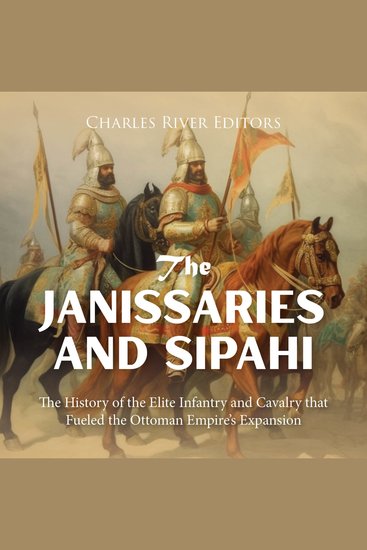
    Among those who were responsible for the projection of Ottoman power, few deserve as much credit as the Janissaries. Established by Murad I, the Janissaries became an elite infantry force that was loyal only to the sultan. Their mission was to protect only him and in battles they were always the closest to him, forming a human shield.  
    Civilizations across the steppes and the Middle East relied heavily on cavalry, and the Sipahi were elite cavalry units during medieval times for a couple of powers. That said, they were a massive contributor to the success of Ottoman warfare, and during good times for the empire, the Sipahi were rewarded, to the extent that they became their own social class, much like the Janissaries. 
    Ver libro
  • Three Dimensions of Learning - Where Resiliency and the Whole Child Rule - cover

    Three Dimensions of Learning -...

    Carolyn Nooks Teague

    • 0
    • 0
    • 0
    In "Three Dimensions of Learning," Nooks Teague offers a new enlightened approach to learning. It guides readers through the physical, mental, emotional and spiritual development of the child from life inside the womb to life in the school and provides tips that can help parents and educators recognize the symptoms that flag hidden disabilities. Hidden disabilities like vision dysfunction and sensory processing disorder can "make or break" a child's propensity to learn. Specific steps, illustrations, checklists, and exercises that parents and educators can use to empower the future of the child are included. Environmental and biological factors are identified with a clear explanation of how things like diet and even water affect the learning process. Strategies presented by Nooks Teague to help children self-regulate their emotions, as well as deal with issues concerning gender confusion, are included in this body of information.
    Ver libro
  • Children's Language Development - The Role of Parental Input Vocabulary Composition And Early Communicative Skills - cover

    Children's Language Development...

    Brian Gibson

    • 0
    • 0
    • 0
    This audiobook is narrated by an AI Voice.   
    Why do some children begin speaking in full sentences while others struggle with single words? 
    Language is the foundation of connection, learning, and lifelong success. Yet not all children develop language at the same pace, and the reasons why may surprise you. Children's Language Development reveals how the earliest interactions between caregiver and child play a vital role in shaping future communication, comprehension, and expression. 
    This book provides a research-driven roadmap to unlocking your child’s full linguistic potential. 
    From the quality and quantity of parental input to the structure of early vocabulary and the significance of nonverbal communication, this book brings together decades of developmental psychology, linguistics, and neuroscience to answer one critical question: How can we best support a child’s language journey from the very beginning? 
    Inside, you’ll learn: 
    The way you talk to your child directly influences vocabulary growth and language processing 
    The difference between expressive and receptive language—and why it matters 
    Why vocabulary composition (not just quantity) is a key predictor of later success 
    The crucial role of gestures, joint attention, and turn-taking in early communication 
    What current research says about screen time, multilingual environments, and the impact of socio-economic context 
    Give your child the strongest possible start in life through the power of intentional communication. 
    👉 Buy Children's Language Development now to build a richer, more responsive, and more effective foundation for your child’s future.
    Ver libro
  • German Invasions of France during the World Wars The: The History of Germany’s Campaigns in World War I and World War II - cover

    German Invasions of France...

    Editors Charles River

    • 0
    • 0
    • 0
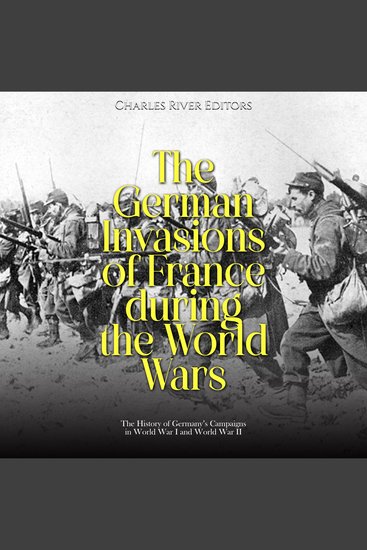
    If trench warfare was an inevitability during the war, it is only because the events leading up to the First Battle of the Marne were quite different. The armies at the beginning of the war moved quickly through the land, but the First Battle of the Marne devolved into a bloody pitched battle that led to the construction of trenches after the Germans retreated, blocked in their pursuit of Paris. When the aftermath disintegrated into a war between trenches, some Germans thought they had the upper hand since they were occupying French territory, but with fewer soldiers than the combined Allied nations and fewer resources and supplies, it was possibly only a matter of time before they were ultimately defeated. The commander of the German armies, General Helmuth von Moltke, allegedly said to Kaiser Wilhelm II immediately after the First Battle of the Marne, "Your Majesty, we have lost the war." 
    One of the most famous people in the world came to tour the city of Paris for the first time on June 28, 1940. Over the next three hours, he rode through the city’s streets, stopping to tour L’Opéra Paris. He rode down the Champs-Élysées toward the Trocadero and the Eiffel Tower, where he had his picture taken. After passing through the Arc de Triomphe, he toured the Pantheon and old medieval churches, though he did not manage to see the Louvre or the Palace of Justice. Heading back to the airport, he told his staff, “It was the dream of my life to be permitted to see Paris. I cannot say how happy I am to have that dream fulfilled today.” Four years after his tour, Adolf Hitler would order the city’s garrison commander, General Dietrich von Choltitz, to destroy Paris, warning his subordinate that the city "must not fall into the enemy's hand except lying in complete debris." 
    Ver libro
  • Props - A History Of Power In 7 Lessons - cover

    Props - A History Of Power In 7...

    Norm Coady

    • 0
    • 0
    • 0
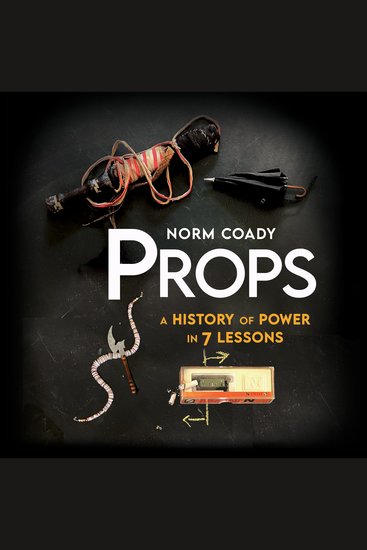
    Are you nostalgic for simpler times? Do you miss your favorite history teacher, the one that gave you perspective and kept you laughing? Come back to class. Buy Props and let Norm Coady take you on a trip from Caesar to Kennedy, from Wittenberg to St. Petersburg. Learn how seashells led to the first global conflict. Discover how a piece of chalk laid the groundwork for totalitarianism. Follow an umbrella’s strange journey from sunny Munich to rainy Dallas. Norm Coady takes well known historical events, turns them upside down, and shakes out new revelations. Equal parts illuminating and hilarious, Props is for, “people who take history so seriously, they read it for fun.”
    Ver libro
  • Blacksound - Making Race and Popular Music in the United States - cover

    Blacksound - Making Race and...

    Matthew D. Morrison

    • 0
    • 0
    • 0
    A new concept for understanding the history of the American popular music industry. 


    Blacksound explores the sonic history of blackface minstrelsy and the racial foundations of American musical culture from the early 1800s through the turn of the twentieth century. With this namesake book, Matthew D. Morrison develops the concept of "Blacksound" to uncover how the popular music industry and popular entertainment in general in the United States arose out of slavery and blackface. 


    Blacksound as an idea is not the music or sounds produced by Black Americans but instead the material and fleeting remnants of their sounds and performances that have been co-opted and amalgamated into popular music. Morrison unpacks the relationship between performance, racial identity, and intellectual property to reveal how blackface minstrelsy scripts became absorbed into commercial entertainment through an unequal system of intellectual property and copyright laws. By introducing this foundational new concept in musicology, Blacksound highlights what is politically at stake—for creators and audiences alike—in revisiting the long history of American popular music.
    Ver libro