¡Acompáñanos a viajar por el mundo de los libros!
Añadir este libro a la estantería
Grey
Escribe un nuevo comentario Default profile 50px
Grey
Suscríbete para leer el libro completo o lee las primeras páginas gratis.
All characters reduced
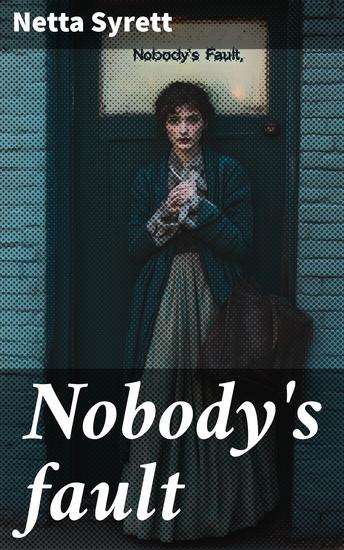
Nobody's fault - cover

Nobody's fault

Netta Syrett

Editorial: Good Press

  • 0
  • 0
  • 0

Sinopsis

In "Nobody's Fault," Netta Syrett explores the intricate complexities of human relationships against the backdrop of early 20th-century societal norms. Syrett's prose embodies a lyrical yet incisive style that deftly captures the emotional entanglements and moral dilemmas of her characters. Through a nuanced interplay of dialogue and introspective narration, she probes themes of guilt, responsibility, and the often-blurred lines of culpability, inviting readers to reflect on the broader implications of individual actions within a community. The book reflects the modernist literary context of its time, engaging with psychological depth while challenging traditional narrative forms. Netta Syrett, an influential figure in the feminist literary movement, brought to her work a rich tapestry of experiences as an educator and social reformer. Her commitment to exploring women's issues and the complexities of their experiences in a rapidly changing world informs the depth of her characters' struggles. Syrett's own life as a prominent member of the literary society in Edwardian Britain exposed her to diverse perspectives on morality and gender roles, which permeate her writing. "Nobody's Fault" is highly recommended for readers seeking to engage with a work that delves into the nuances of human frailty and accountability. Syrett's articulate prose and intricate characterizations will resonate with those who appreciate literature that challenges societal norms while encouraging critical reflection on the human condition.
Disponible desde: 02/03/2025.
Longitud de impresión: 150 páginas.

Otros libros que te pueden interesar

  • 3 Stories - Parents Losing a Child - A trio of classic tales perfect for a commute walk or quiet night in - cover

    3 Stories - Parents Losing a...

    Anton Chekhov, Guy De...

    • 0
    • 0
    • 0
    There is something about the number 3.    
     
    The Ancient Greeks believed 3 was the perfect number, and in China 3 has always been a lucky number, and they know a thing or two.   
     
    Most religions also have 3 this and 3 that and, of course, in these more modern times, three’s a crowd may be too many, except when it’s a ménage à trois.  It seems good things usually come in threes. 
     
    Whatever history and culture says WE think 3, a hat-trick of stories, is a great number to explore themes and literary avenues that classic authors were so adept at creating. 
     
    From their pens to your your ears. 
     
    01 - 3 Stories - Parents Losing A Child 
    02 - Silence by Leonid Nikolaevich Andreyev 
    03 - The Vendetta by Guy de Maupassant 
    04 - Misery by Anton Chekhov
    Ver libro
  • The Lees of Happiness - cover

    The Lees of Happiness

    F. Scott Fitzgerald

    • 0
    • 0
    • 0
    The Lees of Happiness - one of the stories, which entered in a collection of eleven short stories by F. Scott Fitzgerald "Tales of the Jazz Age" (1922). 
    A newlywed young woman named Roxanne and her short story-writing husband Jeffery begin married life in a home of their own, looking forward to many years of happiness and success. However, sudden tragedy strikes when Jeffery becomes blind and paralyzed due to a blood clot in his brain. Roxanne faithfully nurses him to no avail, supported by her Chicago friend Harry Cromwell. When Jeffery finally passes, Harry and Roxanne lean on each other for support as their lives take on new directions.
    Ver libro
  • A Chameleon - From their pens to your ears genius in every story - cover

    A Chameleon - From their pens to...

    Anton Chekhov

    • 0
    • 0
    • 0
    Anton Pavlovich Chekhov was born on 29th January 1860 in Taganrog, on the south coast of Russia.  
    His family life was difficult; his father was strict and over-bearing but his mother was a passionate story-teller, a subject Chekhov warmed to. As he later said; ‘our talents we got from our father, but our soul from our mother’.  
    At school Chekhov was distinctly average. At 16 his father mis-managed his finances and was declared bankrupt. His family fled to Moscow. Chekhov remained and eked out a living by various means, including writing and selling short sketches to newspapers, to finish his schooling. That completed and with a scholarship to Moscow University obtained he rejoined his family. 
    He was able to help support them by selling satirical sketches and vignettes of Russian lifestyles and gradually obtained further commissions. In 1884, he qualified as a physician and, although it earned him little, he often treated the poor for free, he was fond of saying ‘Medicine is my lawful wife, and literature is my mistress.’ 
    His own health was now an issue as he began to cough up blood, a symptom of tuberculosis.  Despite this his writing success enabled him to move the family into more comfortable accommodation.  
    Chekhov wrote over 500 short stories which included many, many classics including ‘The Kiss’ and ‘The Lady with a Dog’.  His collection ‘At Dusk’ won him the coveted Pushkin Prize when was only 26.  
    He was also a major playwright beginning with the huge success of ‘Ivanov’ in 1887.   
    In 1892 Chekhov bought a country estate north of Moscow. Here his medical skills and money helped the peasants tackle outbreaks of cholera and bouts of famine. He also built three schools, a fire station and a clinic.  It left him with less time for writing but the interactions with real people gained him detailed knowledge about the peasantry and their living conditions for his stories.  
    His most famous work, ‘The Seagull’ was received disastrously at its premiere in St Petersburg. It was later restaged in Moscow to highlight its psychological aspects and was a huge success. It led to ‘Uncle Vanya’, ‘The Three Sisters’ and ‘The Cherry Orchard’.  
    Chekhov suffered a major lung hemorrhage in 1897 while visiting Moscow. A formal diagnosis confirmed tuberculosis and the doctors ordered changes to his lifestyle.  
    Despite a dread of weddings the elusive literary bachelor quietly married the actress Olga Knipper, whom he had met at rehearsals for ‘The Seagull’, on 25th May 1901. 
    By May 1904 with his tuberculosis worsening and death imminent he set off for the German town of Badenweiler writing cheerful, witty letters to his family and assuring them his health was improving.  
    On 15th July 1904 Anton Chekhov died at Badenweiler.  He was 44.
    Ver libro
  • A Tale of Two Cities | A Story of the French Revolution - A riveting story of sacrifice revolution and the enduring power of love in a time of turmoil - cover

    A Tale of Two Cities | A Story...

    Charles Dickens

    • 0
    • 0
    • 0
    🌟 Are you ready to journey through one of the most turbulent periods in European history? 
    🔍 Do you crave a tale of love, sacrifice, and redemption set against a backdrop of revolution? 
    💔 Have you ever wondered how ordinary lives are transformed by extraordinary events? 
    If you answered YES to at least one of these questions, you MUST KEEP READING… 
    🗽 Experience the French Revolution Like Never Before! 
    Step into the world of 18th century London and Paris, where the winds of change are blowing fiercely. In this masterpiece by Charles Dickens, you'll be transported to a time when social upheaval and political turmoil were reshaping the very fabric of society. 
    At its heart, this audiobook is a powerful exploration of human nature. You'll witness the depths of sacrifice, the heights of loyalty, and the transformative power of love. 
    This timeless classic isn't just a window into the past; it's a mirror to our present. The themes of justice, oppression, and the struggle for a better world are as relevant today as they were when Dickens first put pen to paper. 
    Are you ready to be moved, challenged, and inspired? To experience a story that has captivated readers for generations? 
    Don't miss this opportunity to own a piece of literary history. Scroll up and click the BUY NOW button to begin your journey through "A Tale of Two Cities" today!
    Ver libro
  • The Importance of Being Earnest - cover

    The Importance of Being Earnest

    Oscar Wilde

    • 0
    • 0
    • 0
    Looking for a witty, entertaining and thought-provoking listen? Look no further than "The Importance of Being Earnest" by Oscar Wilde, brought to life in this audiobook. 
     
    Follow the hilarious exploits of two bachelors, Jack Worthing and Algernon Moncrieff, as they navigate love, deception and social etiquette in Victorian England. With razor-sharp dialogue, Wilde satirizes the upper-class society of the time, exposing its hypocrisy and ridiculousness with wit and charm. 
     
    But "The Importance of Being Earnest" is more than just a comedy of manners. Beneath the surface, it raises important questions about identity, morality and the true nature of love. Through the characters of Jack and Algernon, Wilde explores the concept of "Bunburying" – the idea of leading a double life – and challenges the rigid social conventions of the day. 
     
    Narrated with all the style and flair you'd expect from Wilde himself, this audiobook is a must-listen for anyone who loves a good laugh and a good think. So sit back, relax, and let yourself be transported to a world of wit, charm and intellectual intrigue. 
     
    Cast 
    John Worthing: Dublin Gothic 
    Algernon Moncrieff: John Fricker 
    Rev. Chasuble: Martin Geeson 
    Merriman: mb 
    Lane: Algy Pug 
    Lady Bracknell: Ruth Golding 
    Gwendolyn Fairfax: Elizabeth Klett 
    Cecily Cardew: Arielle Lipshaw 
    Miss Prism: Carol Box 
    Narrator: Tiffany Halla Colonna
    Ver libro
  • Unsuspected Masterpiece An (Unabridged) - cover

    Unsuspected Masterpiece An...

    H. G. Wells

    • 0
    • 0
    • 0
    Herbert George "H. G." Wells (1866 - 1946) was an English writer.
    He was prolific in many genres, including the novel, history, politics, social commentary, and textbooks and rules for war games. Wells is now best remembered for his science fiction novels and is called a "father of science fiction"
    AN UNSUSPECTED MASTERPIECE: "I felt as though I had disturbed the graves of the long departed," he said with a grimace, and then addressing the egg: "Forgive me the sacrilege: they sold you to me as new laid, a mere thing of yesterday.
    Ver libro