¡Acompáñanos a viajar por el mundo de los libros!
Añadir este libro a la estantería
Grey
Escribe un nuevo comentario Default profile 50px
Grey
Suscríbete para leer el libro completo o lee las primeras páginas gratis.
All characters reduced
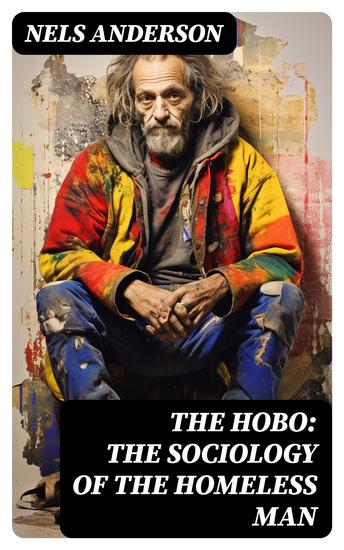
The Hobo: The Sociology of the Homeless Man - cover

The Hobo: The Sociology of the Homeless Man

Nels Anderson

Editorial: DigiCat

  • 0
  • 0
  • 0

Sinopsis

In "The Hobo: The Sociology of the Homeless Man," Nels Anderson delves into the complex socio-economic landscape of early 20th-century America through the lens of transient lifestyles. Combining meticulous ethnographic research with a sociological framework, Anderson captures the nuanced experiences of hobos—men who traveled the nation by train, often marginalized by society. His literary style is characterized by a robust narrative, rich in detail and steeped in observational authenticity, reflecting the cultural and historical context of the Great Depression. The book provides a critical analysis of the lives and subculture of hobos, addressing themes of community, identity, and survival in an unforgiving socio-economic climate. Nels Anderson, a prominent sociologist and a former hobo himself, effectively conveys his firsthand experiences and empathy towards a group often overlooked by mainstream society. His background in sociology and personal encounters with homelessness illuminate the underlying social structures that push individuals into transient lifestyles, making his insights both profound and reflective of broader societal issues. Anderson's unique perspective lends authenticity to his work, serving as a bridge between academic analysis and lived reality. Highly recommended for scholars, sociologists, and social activists alike, "The Hobo" challenges readers to reconsider prevailing narratives surrounding homelessness. Anderson's empathetic approach compels us to recognize the humanity in the marginalized and serves as an essential text for understanding the socio-cultural dynamics of mobility and poverty.
Disponible desde: 17/11/2023.
Longitud de impresión: 227 páginas.

Otros libros que te pueden interesar

  • Uncle Tom's Cabin - cover

    Uncle Tom's Cabin

    Harriet Beecher Stowe

    • 0
    • 0
    • 0
    Delve into the powerful and moving world of "Uncle Tom's Cabin" by Harriet Beecher Stowe. This audiobook takes you on an emotional journey through the lives of its compelling characters, depicting the harsh realities of slavery in 19th-century America. Through the eyes of Uncle Tom, Eliza, and other unforgettable figures, you will witness the indomitable human spirit, the enduring power of love, and the quest for freedom. Stowe's masterful storytelling weaves together themes of morality, social justice, and compassion, leaving a lasting impact on its readers. With its profound influence on American history and its timeless relevance, "Uncle Tom's Cabin" remains a gripping and important tale that calls for empathy and understanding.
    Ver libro
  • Anxious Attachment Recovery - Overcome Relationship Anxiety Get Unstuck and Shift to Secure Attachment - cover

    Anxious Attachment Recovery -...

    Susan Collins

    • 0
    • 0
    • 0
    Does the fear of abandonment haunt you, even in the happiest moments? Have you tried to change, but the grip of anxiety and insecurity holds you back? 
    Are you tired of feeling insecure, always needing reassurance, yet never quite believing it? 
    Do you find yourself constantly anxious about your relationships? 
    I know that pain, the silent battles waged within the walls of the mind, the echoes of doubt drowning out every whisper of assurance. I’ve been there. You are not alone, and I understand the silent storm that rages within you. 
    But first a warning: 
    This book is not a quick fix for those looking for instant solutions without effort. If you want a magical remedy that requires no work, this is not the book for you. Real, lasting change comes from being honest with yourself and committing to personal growth over time. If you’re ready to put in the effort, this book will guide you to a secure and confident self. 
    Here's a little sneak preview of what you’ll get: 
    - Five Crucial Questions Before Reconciling 
    - How Does An Anxious Attachment Style Develop? 
    - 10 Signs You May Have An Anxious Attachment Style 
    - Why The Anxious Attachment Style Fears Intimacy and How to Fix It 
    - The Five Key Qualities for Greater Resilience 
    - Understanding Triggers 
    - Strategies for Separating Past from Present 
    - Recognizing Body Signals 
    - The Blindspot That Keeps You Repeating The Same Relationship Mistakes 
    - Building a Solid Identity and Healthy Boundaries 
    - Communication Strategies for the Anxious Partner 
    - Strategies for Personal and Relational Growth 
    - The Four Phases That Transform Your Attachment 
    - From Anxious to Secure in 10 StepsTake the first step towards a confident and secure you. Don’t let anxiety and insecurity control your life any longer. 
    Ver libro
  • The Sciences of the Soul - The Early Modern Origins of Psychology - cover

    The Sciences of the Soul - The...

    Fernando Vidal

    • 0
    • 0
    • 0
    Fernando Vidal’s trailblazing text on the origins of psychology traces the development of the discipline from its appearance in the late sixteenth century to its redefinition at the end of the seventeenth and its emergence as an institutionalized field in the eighteenth. Originally published in 2011, The Sciences of the Soul continues to be of wide importance in the history and philosophy of psychology, the history of the human sciences more generally, and in the social and intellectual history of eighteenth-century Europe.
    Ver libro
  • John Stuart Mill - A Very Short Introduction - cover

    John Stuart Mill - A Very Short...

    Gregory Claeys

    • 0
    • 0
    • 0
    John Stuart Mill (1806-73) is widely regarded as the leading liberal philosopher, economist, and political theorist of nineteenth century Britain. In his lifetime he was best known for his System of Logic (1843) and the Principles of Political Economy (1848). Today Mill is chiefly identified with On Liberty (1859), perhaps the definitive text of modern liberal statement of its subject, and probably the single most important work of modern political thought. Mill was also the first major male feminist thinker of the period (author of The Subjection of Women, 1869), and the first, as an MP, to introduce a bill for female enfranchisement before Parliament. 


    This Very Short Introduction offers a brief survey of the life and key ideas of this most influential Victorian British writer. Moving chronologically, Gregory Claeys outlines the philosophical background out of which Mill developed, chiefly through the ideas of Jeremy Bentham and James Mill. He demonstrates how Mill's personal life, especially his 'mental crisis' of 1827, and his relationship with Harriet Taylor, were integral to his intellectual development. Throughout Claeys considers Mill's key works set within the context of his lesser writings and correspondence, and discusses the more controversial aspects of his thought concerning religion, secularism, and birth control.
    Ver libro
  • Lincoln But Trump - Narrative Metrics and Similarities Between Heroes and Villains - cover

    Lincoln But Trump - Narrative...

    PhD Randy Olson

    • 0
    • 0
    • 0
    THE NARRATIVE DIAGNOSIS: I have some bad news for you — your AF (AND Frequency) is a bloated 3.8%, your N.I. (Narrative Index, BUT/AND ratio) is an anemic 4. There’s a real risk of you boring an audience to death. 
    The ABT Narrative Template, already famous for its use in “Cat Herding" and “silo busting," now has two very powerful metrics — the AF and the NI. 
    In this ground-breaking and original book, Lincoln But Trump, Randy Olson introduces a whole new quantitative component to both narrative structure and, crucial for today’s world, messaging. 
    Here, for the first time ever, are two very simple but powerful “narrative metrics” that now make possible the “narrative diagnosis” of content. The metrics do for storytelling the same thing a doctor does to assess your health — i.e. they tell you if you have a problem. 
    Is it quackery for simpletons? A fair question, but just look at the simple patterns that emerge, starting with the metrics for the legendary 1858 Lincoln-Douglas Debates. The data are as clear as "night and day" (the same comparison a reporter used to describe the two candidates). The results have been sitting there waiting to be discovered for 160 years. 
    It’s a whole new way to look at messaging and narrative strength for both the political and historical worlds. 
    - Park Howell, Host, The Business of Story Podcast 
    Following the basic ABT (And, But, Therefore) form that Olson has been researching for 15 years, he outlines the need for a quantitative approach. He introduces the two metrics, then applies them to the novel idea of, “Narrative Forensics” in which hypotheses can be tested by calculating the two metrics for various materials. 
    Using the two narrative metrics Olson shows how you can diagnose your own narrative strength, then work to improve it. 
    Download the appendices at http://abtnarrative.com or https://abtagenda.substack.com
    Ver libro
  • The Rise and Fall of the Roman Empire - A Comprehensive History - cover

    The Rise and Fall of the Roman...

    Rogan Fish

    • 0
    • 0
    • 0
    The founding of Rome is one of the most famous legends in history, blending myth and reality to shape the origins of one of the greatest civilizations of the ancient world. According to Roman tradition, the city was established in 753 BCE by Romulus, the first king of Rome, after he and his twin brother, Remus, were rescued and raised by a she-wolf. This tale, passed down through generations, symbolized Rome’s strength, resilience, and divine favor. While the legend is deeply ingrained in Roman identity, historians believe the city’s origins were more complex, involving the gradual unification of Latin and Etruscan tribes. 
    The early formation of Rome was influenced by its strategic location along the Tiber River. The site provided access to trade routes, fresh water, and natural defenses, making it an ideal settlement for early inhabitants. Archaeological evidence suggests that small villages existed in the area long before Rome’s legendary founding, with early settlers engaging in agriculture, trade, and warfare. These early communities gradually coalesced, forming a unified society under a monarchical system. The first rulers of Rome were part of the Roman Kingdom, a period that saw the development of political institutions, religious practices, and military organization that would shape the city’s future. 
    Roman society during its early years was structured around family and clan-based systems, with the patricians, or aristocratic families, holding the majority of political power. The king was the central authority, responsible for religious duties, military leadership, and lawmaking. However, his rule was supported by a council of elders known as the Senate, which played an advisory role. Over time, tensions arose between the patricians and the common people, or plebeians, who sought greater political representation. These early power struggles foreshadowed the later conflicts that would lead to the transition from monarchy to a republic.
    Ver libro