¡Acompáñanos a viajar por el mundo de los libros!
Añadir este libro a la estantería
Grey
Escribe un nuevo comentario Default profile 50px
Grey
Suscríbete para leer el libro completo o lee las primeras páginas gratis.
All characters reduced
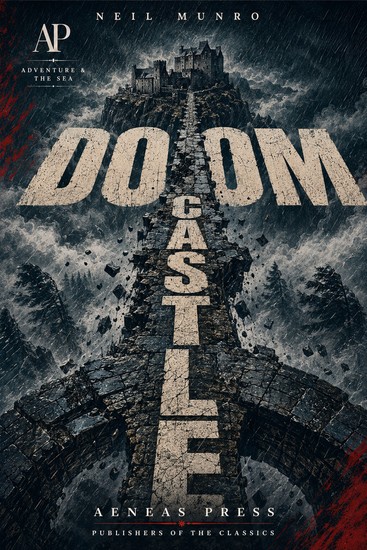
Doom Castle - cover

Doom Castle

Neil Munro

Editorial: Aeneas Press

  • 0
  • 0
  • 0

Sinopsis

Argyll after the Forty-five: a French-Scots gentleman comes to a ruinous castle on Loch Fyne carrying a purse of Jacobite gold and a fencing master's manners, into a country where every second man is an informer. Munro was born illegitimate to a kitchen maid at Inveraray and rose to edit a Glasgow paper; he wrote the Highlands as a native who could not be sentimental about them, and Doom Castle is his best plot.
Disponible desde: 19/08/2026.
Longitud de impresión: 255 páginas.

Otros libros que te pueden interesar

  • A Christmas Tree - cover

    A Christmas Tree

    Charles Dickens

    • 0
    • 0
    • 0
    A Christmas Tree by Charles Dickens is offered here in a clean English digital edition prepared for fluent ebook reading. The work stands within classics and gives modern readers direct access to a public-domain classic with navigable structure and a restrained typographic presentation. The opening pages establish the book's atmosphere with this first movement: I have been looking on, this evening, at a merry company of children assembled round that pretty German toy, a Christmas Tree. The tree was planted in the middle of a great round table, and towered high above their heads. It was brilliantly lighted by a multitude of little tapers; and everywhere spa This edition is suited to readers who want a reliable, uncluttered version of the text for study, rediscovery, and sustained reading.
    Ver libro
  • Narrative of A Gordon Pym - cover

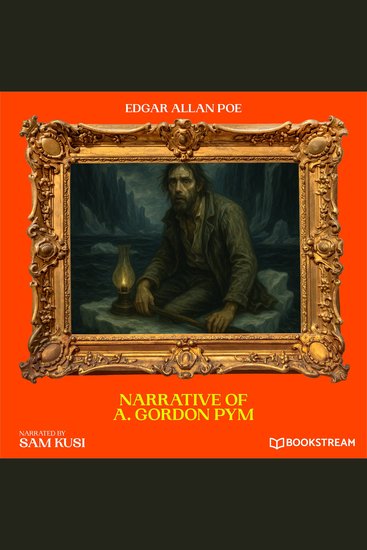
    Narrative of A Gordon Pym

    Edgar Allan Poe

    • 0
    • 0
    • 0
    The Narrative of Arthur Gordon Pym of Nantucket, written and published in 1838, is the only complete novel by the American writer Edgar Allan Poe. The novel is set between 1827 and 1828 and relates the tale of the young Arthur Gordon Pym, who stows away aboard a whaler called the Grampus. Various adventures and misadventures befall Pym, including shipwreck, mutiny, and cannibalism, before he is saved by the crew of the Jane Guy. Aboard this vessel, Pym and a sailor named Dirk Peters continue their adventures farther south. Docking on land, they encounter hostile, black-skinned natives before escaping back to the ocean. The novel ends abruptly as Pym and Peters continue toward the South Pole.
    The story starts out as a fairly conventional adventure at sea, but it becomes increasingly strange and hard to classify. Poe, who intended to present a realistic story, was inspired by several real-life accounts of sea voyages, and drew heavily from J. N. Reynolds and referenced the Hollow Earth theory. He also drew from his own experiences at sea. Analyses of the novel often focus on possible autobiographical elements as well as its portrayal of race and the symbolism in the final lines of the work.
    Ver libro
  • Robinson Crusoe - cover

    Robinson Crusoe

    Daniel Defoe

    • 0
    • 0
    • 0
    Shipwrecked. Alone. Forced to build a life from nothing.
    After a disastrous voyage, Robinson Crusoe finds himself stranded on a deserted island with only his ingenuity, faith, and determination to keep him alive. As years pass, he learns to master the land, confront fear and solitude, and discover what it truly means to survive. His journey becomes one of resilience, self-reliance, and spiritual awakening.
    
    Celebrated as "the first great English novel," this enduring classic blends thrilling adventure with deep reflection on human strength and perseverance. Crusoe's struggle against nature—and himself—has inspired readers for generations.
    
    If you love survival stories, epic journeys, and classics that celebrate the power of the human spirit, this novel is an essential read.
    
    Open the book—and experience the adventure that defined a genre.
    Ver libro
  • The Nightingale and the Rose - cover

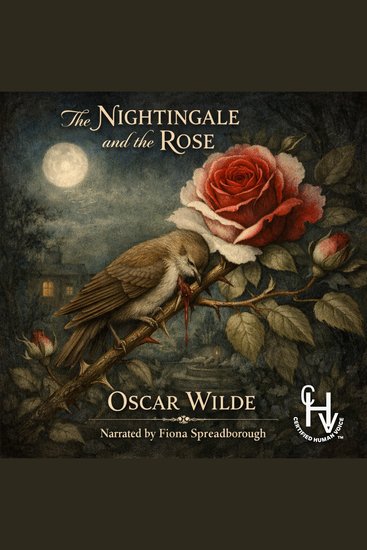
    The Nightingale and the Rose

    Oscar Wilde

    • 0
    • 0
    • 0
    In a quiet garden beneath the silver light of the moon, a young student longs for a single red rose—believing it will win him love. But no such rose exists… and what follows is a tale not of romance fulfilled, but of sacrifice unseen. 
    In The Nightingale and the Rose, Oscar Wilde delivers one of his most haunting and lyrical works—a story where beauty and devotion meet indifference, and where love is measured not in words, but in what one is willing to give. 
    As the nightingale listens to the student’s sorrow, she undertakes a profound and irreversible act—one that transforms the natural world itself. Yet, in the cold light of day, her sacrifice goes unnoticed, dismissed, and ultimately forgotten. 
    Narrated with elegance and emotional restraint by Fiona Spreadborough, this timeless story explores: 
    The true cost of love 
    The divide between feeling and reason 
    The quiet tragedy of sacrifice without recognition 
    A deeply moving literary classic, The Nightingale and the Rose lingers long after the final word—like a song carried into the dark.
    Ver libro
  • The Nine Billion Names of God - cover

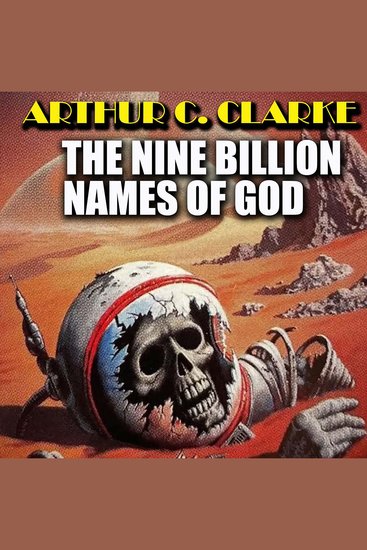
    The Nine Billion Names of God

    Arthur C. Clarke

    • 0
    • 0
    • 0
    "The Nine Billion Names of God" is a 1953 science fiction short story by British writer Arthur C. Clarke. The story was among the stories selected in 1970 by the Science Fiction Writers of America as one of the best science fiction short stories published before the creation of the Nebula Awards. It was reprinted in The Science Fiction Hall of Fame, Volume One, 1929–1964.In a Tibetan lamasery, the monks seek to list all of the names of God. They believe the Universe was created for this purpose, and that once this naming is completed, God will bring the Universe to an end. Three centuries ago, the monks created an alphabet in which they calculated they could encode all the possible names of God, numbering about 9,000,000,000 ("nine billion") and each having no more than nine characters. Writing the names out by hand, as they had been doing, even after eliminating various nonsense combinations, would take another 15,000 years; the monks wish to use modern technology to finish this task in 100 days.They rent a computer capable of printing all the possible permutations, and hire two Westerners to install and program the machine. The computer operators are skeptical but play along. After three months, as the job nears completion, they fear that the monks will blame the computer (and, by extension, its operators) when nothing happens. The Westerners leave slightly earlier than their scheduled departure without warning the monks, so that it will complete its final print run shortly after they leave. On their way to the airfield they pause on the mountain path. Under a clear night sky they estimate that it must be just about the time that the monks are pasting the final printed names into their holy books. Then they notice that "overhead, without any fuss, the stars were going out."
    Ver libro

  • How a Muzhik Fed Two Officials - cover

    How a Muzhik Fed Two Officials

    Mikhail Saltykov-Shchedrin

    • 0
    • 0
    • 0
    How a Muzhik Fed Two Officials is not just a fable—it is a mirror, polished to a biting shine, reflecting the grotesque logic of power and servitude. In this brief yet mercilessly precise tale, Mikhail Saltykov-Shchedrin strips hierarchy down to its raw absurdity: those who consume and those who are consumed.
    Two officials, stranded in a land without luxury, discover an ingenious solution to their predicament—one that requires neither effort nor skill on their part. Their savior? A humble muzhik, a man shaped by centuries of unquestioning toil. But necessity breeds invention, and soon, the line between duty and exploitation blurs beyond recognition. 
    With razor-sharp irony, Saltykov-Shchedrin lays bare a world where privilege thrives on passivity, and survival itself becomes a grotesque performance. The muzhik, nameless and tireless, embodies an entire class condemned to labor without recognition, while the officials, ludicrous in their entitlement, reveal the disturbing resilience of power, even in the face of absurdity.
    Darkly comic yet chillingly relevant, How a Muzhik Fed Two Officials remains an unflinching satire on authority, dependence, and the silent mechanisms that sustain inequality. A story as brief as it is unsettling—one that lingers long after the last word.
    Ver libro