Begleiten Sie uns auf eine literarische Weltreise!
Buch zum Bücherregal hinzufügen
Grey
Einen neuen Kommentar schreiben Default profile 50px
Grey
Jetzt das ganze Buch im Abo oder die ersten Seiten gratis lesen!
All characters reduced
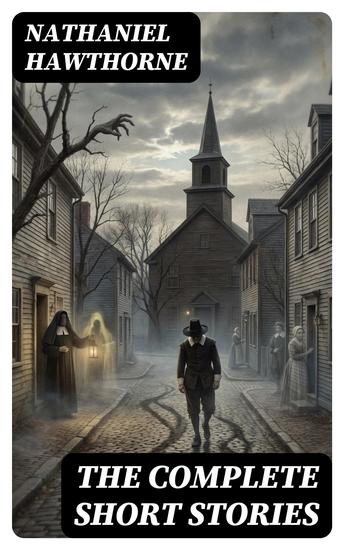
The Complete Short Stories - Enriched edition - cover

The Complete Short Stories - Enriched edition

Nathaniel Hawthorne

Verlag: DigiCat

  • 0
  • 0
  • 0

Beschreibung

In "The Complete Short Stories," Nathaniel Hawthorne presents a rich tapestry of human experience, exploring themes of moral complexity, guilt, and the supernatural through masterfully crafted narratives. Hawthorne's distinctive literary style, characterized by intricate symbolism and a strong psychological focus, immerses readers in the depths of the human psyche while situating his work within the transcendent traditions of Romanticism and Dark Romanticism. These stories, ranging from the haunting "Young Goodman Brown" to the poignant "The Minister's Black Veil," reflect the somber realities of the human condition, with each tale meticulously layered to provoke reflection on societal and personal morality. Nathaniel Hawthorne, a key figure in American literary history, was born in 1804 in Salem, Massachusetts, an environment steeped in Puritanical legacy. His own family background, including ancestors involved in the Salem witch trials, profoundly influenced his storytelling, allowing him to grapple with themes of sin and redemption. A contemporary of notable literary figures such as Edgar Allan Poe and Herman Melville, Hawthorne's exploration of identity and legacy is echoed throughout his works, leading to his esteemed status in American literature. "The Complete Short Stories" is highly recommended for readers seeking to explore the nuanced intricacies of morality and human nature. Each story offers a lens into the darker aspects of existence, inviting readers to confront their own beliefs and assumptions. In this comprehensive collection, Hawthorne's timeless insights transcend their historical context, making his tales relevant for contemporary audiences and essential reading for anyone interested in the evolution of American narrative.

In this enriched edition, we have carefully created added value for your reading experience:
- An Introduction draws the threads together, discussing why these diverse authors and texts belong in one collection.
- Historical Context explores the cultural and intellectual currents that shaped these works, offering insight into the shared (or contrasting) eras that influenced each writer.
- A combined Synopsis (Selection) briefly outlines the key plots or arguments of the included pieces, helping readers grasp the anthology's overall scope without giving away essential twists.
- A collective Analysis highlights common themes, stylistic variations, and significant crossovers in tone and technique, tying together writers from different backgrounds.
- Reflection questions encourage readers to compare the different voices and perspectives within the collection, fostering a richer understanding of the overarching conversation.
Verfügbar seit: 17.05.2022.
Drucklänge: 615 Seiten.

Weitere Bücher, die Sie mögen werden

  • Enchanted April (version 2) - cover

    Enchanted April (version 2)

    Elizabeth von Arnim

    • 0
    • 0
    • 0
    Four very different women, with very different reasons for wanting to escape a cold and dreary London, come together to share a month's holiday in a medieval castle. They are brought there by the promise of the advertised 'wisteria and sunshine', but they find so much more than they bargained for, as the place transforms them and changes their lives in ways they could never have expected. The novel is dominated by four wonderfully drawn characters: timid Lotty Wilkins, terrified of her domineering husband; sober and religious Rose Arbuthnot; rigid and judgemental Mrs Fisher; and the breathtakingly beautiful but disillusioned and unhappy Lady Caroline Dester. Von Arnim's story of their transformation under the Italian sun is warm, witty, intelligent, and as enchanting as the title suggests. - Summary by Helen Taylor
    Zum Buch
  • Forgotten Authors The - Volume 3 - Louis Couperus to Ricardo Fernandez Garcia - cover

    Forgotten Authors The - Volume 3...

    Louis Couperus, Hugo...

    • 0
    • 0
    • 0
    Throughout the long centuries of human history is the want, and the need, to share information, to exchange ideas and for that knowledge and experience, for curiosity and learning, to be the basis of a civil society. 
    In literature the ambition is much narrower.  In order to be known, to be popular, you had to be published.  And for that people had to know you existed and your ideas worth reading.  Obviously for most of humanity’s time people couldn’t read and texts couldn’t be published in any great number. 
    In the 15th Century Gutenberg’s printing press began the revolution to address the second and by the 19th century had gathered pace with startling speed and mass distribution.  Education for the many was brought in to help people understand more of their world and, with new skills, how to have a better place within it.  Now, if the powers that owned the presses and means of distribution agreed an audience would now be able to avail themselves of your ideas, your printed words.  
    Sadly, in the thirst for the new, the recent and the past fell from sight, relegated to dark corners and dusty shelves.   
    But the printed word is rarely without someone, somewhere busying themselves through piles of papers and books rediscovering what a good story is, whatever its age. 
    Sadly, in the thirst for the new, the recent and the past fell from sight, relegated to dark corners and dusty shelves.    
    But the printed word is rarely without someone, somewhere busying themselves through piles of papers and books rediscovering what a good story is, whatever its age. 
    In this volume we offer up a small selection of those talents whose time has now come again.
    Zum Buch
  • Volodya - From their pens to your ears genius in every story - cover

    Volodya - From their pens to...

    Anton Chekhov

    • 0
    • 0
    • 0
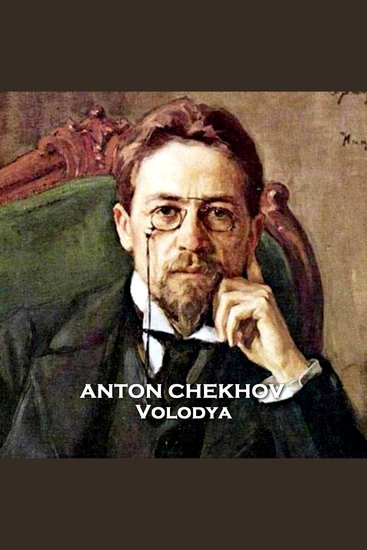
    Anton Pavlovich Chekhov was born on 29th January 1860 in Taganrog, on the south coast of Russia.  
    His family life was difficult; his father was strict and over-bearing but his mother was a passionate story-teller, a subject Chekhov warmed to. As he later said; ‘our talents we got from our father, but our soul from our mother’.  
    At school Chekhov was distinctly average. At 16 his father mis-managed his finances and was declared bankrupt. His family fled to Moscow. Chekhov remained and eked out a living by various means, including writing and selling short sketches to newspapers, to finish his schooling. That completed and with a scholarship to Moscow University obtained he rejoined his family. 
    He was able to help support them by selling satirical sketches and vignettes of Russian lifestyles and gradually obtained further commissions. In 1884, he qualified as a physician and, although it earned him little, he often treated the poor for free, he was fond of saying ‘Medicine is my lawful wife, and literature is my mistress.’ 
    His own health was now an issue as he began to cough up blood, a symptom of tuberculosis.  Despite this his writing success enabled him to move the family into more comfortable accommodation.  
    Chekhov wrote over 500 short stories which included many, many classics including ‘The Kiss’ and ‘The Lady with a Dog’.  His collection ‘At Dusk’ won him the coveted Pushkin Prize when was only 26.  
    He was also a major playwright beginning with the huge success of ‘Ivanov’ in 1887.   
    In 1892 Chekhov bought a country estate north of Moscow. Here his medical skills and money helped the peasants tackle outbreaks of cholera and bouts of famine. He also built three schools, a fire station and a clinic.  It left him with less time for writing but the interactions with real people gained him detailed knowledge about the peasantry and their living conditions for his stories.  
    His most famous work, ‘The Seagull’ was received disastrously at its premiere in St Petersburg. It was later restaged in Moscow to highlight its psychological aspects and was a huge success. It led to ‘Uncle Vanya’, ‘The Three Sisters’ and ‘The Cherry Orchard’.  
    Chekhov suffered a major lung hemorrhage in 1897 while visiting Moscow. A formal diagnosis confirmed tuberculosis and the doctors ordered changes to his lifestyle.  
    Despite a dread of weddings the elusive literary bachelor quietly married the actress Olga Knipper, whom he had met at rehearsals for ‘The Seagull’, on 25th May 1901. 
    By May 1904 with his tuberculosis worsening and death imminent he set off for the German town of Badenweiler writing cheerful, witty letters to his family and assuring them his health was improving.  
    On 15th July 1904 Anton Chekhov died at Badenweiler.  He was 44.
    Zum Buch
  • More of This World or Maybe Another - Stories - cover

    More of This World or Maybe...

    Barb Johnson

    • 0
    • 1
    • 0
    The lives of four unlikely friends intersect on the backstreets of New Orleans. Living amid poverty and violence, these fragile heroes of the American underclass redefine our notions of family, redemption, and love.
    Zum Buch
  • Morphine - This story is perhaps the greatest depiction and description in literature of the human psyche going through addiction - cover

    Morphine - This story is perhaps...

    Mikhail Bulgakov

    • 0
    • 0
    • 0
    Mikhail Bulgakov was born on 15th May 1891 in Kiev, in the Kiev Governorate of the Russian Empire, into a Russian family.  He was one of seven children. 
     
    In 1901, Bulgakov attended the First Kiev Gymnasium, and developed a keen interest in Russian and European literature, theatre and opera.  After the death of his father in 1907, his mother assumed responsibility for his education.  After graduating Bulgakov entered the Medical Faculty of Kiev University and then took up a post as physician at the Kiev Military Hospital. 
     
    At the outbreak of the First World War, he volunteered as a doctor and was sent directly to the front, where he was badly injured at least twice.  To suppress chronic pain, especially in the abdomen, he injected morphine.  It took years to wean himself off. 
     
    He now took up medical posts in various towns and in 1919, he was mobilised by the Ukrainian People's Army and assigned to the Northern Caucasus.  There, he became seriously ill with typhus and barely survived.  
     
    After this illness, Bulgakov abandoned his medicine to pursue writing.  He moved to Vladikavkaz and had two plays staged there with great success.  He wrote too for various newspapers and other outlets, but his critics were many.  And growing. 
     
    When a Moscow's theatre director severely criticised Bulgakov, Stalin personally protected him, saying that a writer of Bulgakov's quality was above ‘party words’ like ‘left’ and ‘right’.   Indeed, it is said that Stalin watched ‘The Days of the Turbins’ at least 15 times. 
     
    It was not to last and by March 1929, Bulgakov's career was ruined when Government censorship stopped publication of any of his work and plays. 
     
    In despair, Bulgakov wrote a personal letter to Stalin.  He requested permission to emigrate.  He received a phone call from the Soviet leader, who asked the writer whether he really desired to leave. He replied that a Russian writer cannot live outside of his homeland.  Stalin thus gave him permission to continue working. In May 1930, he re-joined the theater, as stage director's assistant.  
     
    During the last stressful decade of his life, and in poor health, Bulgakov continued to work on ‘The Master and Margarita’, wrote plays, critical works, stories, and continued translations and dramatisations of novels.  Many of them were not published, others were derided by critics.  
     
    On 10th March 1940, Mikhail Afanasyevich Bulgakov died from nephrosclerosis.  He was 48. 
     
    ‘The Master and Margarita’ was not published in any form until the mid-1960’s 
     
    In this story Bulgakov relates the terrifying and hellish descent into addiction that seems so avoidable and yet so chillingly not.
    Zum Buch
  • Timeless Classic Short Stories - cover

    Timeless Classic Short Stories

    Various

    • 0
    • 0
    • 0
    Lose yourself in the magic of storytelling with Timeless Classic Short Stories: Classics through The Ages, a must-have anthology for every serious audiobook listener that brings together unforgettable short fiction by some of the greatest writers in literary history, including Anton Chekhov, Charles Dickens, Rabindranath Tagore and Oscar Wilde.  
    From haunting gothic mysteries and sharply observed social dramas to poignant character studies and deliciously witty comedies, each story showcases the power of classic literature in its most concentrated, impactful form. 
    Expertly crafted for audio by narrator Stefan Kaye, every tale is brought to life with expressive, immersive narration that highlights the rhythm, emotion, and nuance of the original prose, making these masterpieces feel fresh, accessible, and irresistibly engaging for modern ears. 
    If you love rich storytelling and the art of the short story, this is the essential audio edition you'll return to again and again.
    Zum Buch