¡Acompáñanos a viajar por el mundo de los libros!
Añadir este libro a la estantería
Grey
Escribe un nuevo comentario Default profile 50px
Grey
Suscríbete para leer el libro completo o lee las primeras páginas gratis.
All characters reduced
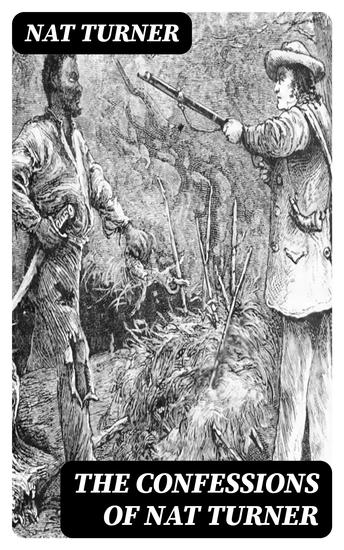
The Confessions of Nat Turner - Enriched edition - cover

The Confessions of Nat Turner - Enriched edition

Nat Turner

Editorial: DigiCat

  • 0
  • 0
  • 0

Sinopsis

In "The Confessions of Nat Turner," the infamous leader of the 1831 slave rebellion presents a chilling and profound account of his life and motivations. This narrative intricately weaves together personal reflections, spiritual devotion, and fervent political ideology, offering insights into the psychological turmoil and existential crises faced by enslaved individuals. The book employs a poignant and evocative literary style, capturing both the visceral agony of bondage and the simmering desire for freedom through powerful imagery and rhythmic prose, reflective of the oral traditions of African American culture. Turner's confessions are set against the backdrop of America's antebellum society, amplifying its themes of racial conflict and moral reckoning within a historical moment of deep socio-political strife. Nat Turner was born into slavery in Virginia in 1800, and his religious fervor and experiences of oppression fueled his revolutionary spirit. Educated and deeply influenced by the Biblical narratives of liberation, Turner believed he was divinely chosen to lead his people out of slavery. His ultimate uprising, although met with brutal suppression, has become a symbol of resistance and a critical turning point in the national consciousness regarding slavery and human rights. This essential text is not only an autobiographical confession but also a compelling historical document that invites readers to grapple with the complexities of moral choice and the quest for justice. Recommended for scholars, historians, and anyone seeking to understand the enduring legacies of oppression and rebellion, Turner's confessions resonate powerfully in discussions about freedom, faith, and the fundamental struggle for human rights.

In this enriched edition, we have carefully created added value for your reading experience:
- A succinct Introduction situates the work's timeless appeal and themes.
- The Synopsis outlines the central plot, highlighting key developments without spoiling critical twists.
- A detailed Historical Context immerses you in the era's events and influences that shaped the writing.
- An Author Biography reveals milestones in the author's life, illuminating the personal insights behind the text.
- A thorough Analysis dissects symbols, motifs, and character arcs to unearth underlying meanings.
- Reflection questions prompt you to engage personally with the work's messages, connecting them to modern life.
- Hand‐picked Memorable Quotes shine a spotlight on moments of literary brilliance.
- Interactive footnotes clarify unusual references, historical allusions, and archaic phrases for an effortless, more informed read.
Disponible desde: 15/08/2022.
Longitud de impresión: 22 páginas.
Otros libros que te pueden interesar

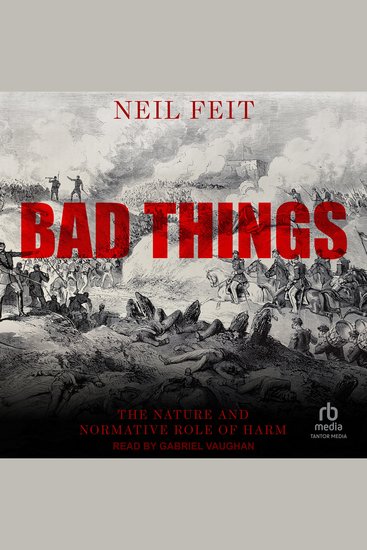
  • Bad Things - The Nature and Normative Role of Harm - cover

    Bad Things - The Nature and...

    Neil Feit

    • 0
    • 0
    • 0
    Bad Things addresses various philosophical questions about the nature and moral relevance of harm. The most basic question is this: under what conditions does an event harm a given individual? Neil Feit focuses primarily on the metaphysics of harm, and he both defends and extends the counterfactual comparative account of harm. On this account, in its most basic form, an act or event harms an individual provided that she would have been better off if it had not occurred. The counterfactual comparative account is widely accepted but also widely criticized. Feit provides detailed and thorough responses to the most challenging objections. He argues that an adequate theory of harm should entail the counterfactual comparative account but also make room for a certain kind plural harm, where two or more events together harm an individual although neither one by itself is harmful. These harmful events are bad things, collectively, even if no single event is itself a bad thing. Feit sets out and defends a detailed account of plural harm, addressing issues about the magnitude and the time of the harm suffered by the victim. The primary focus of the book is on the metaphysics of harm, but issues concerning its normative or moral relevance are addressed.
    Ver libro
  • A Rare Recording of Evelyn Waugh - cover

    A Rare Recording of Evelyn Waugh

    Evelyn Waugh

    • 0
    • 0
    • 0
    Arthur Evelyn St. John Waugh (October 28, 1903 - April 10, 1966) was an English writer of novels, biographies, and travel books; he was also a prolific journalist and book reviewer. His most famous works include Decline and Fall (1928) and A Handful of Dust (1934), the novel, Brideshead Revisited (1945). He is recognized as one of the great prose stylists of the English language in the 20th century. In this recording, Waugh discusses God, religion, writing, and his conversion to Catholicism.
    Ver libro
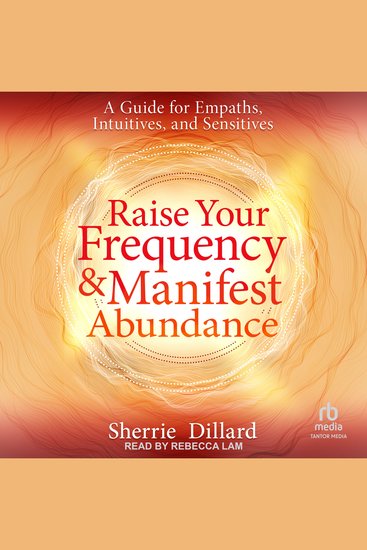
  • Raise Your Frequency and Manifest Abundance - A Guide for Empaths Intuitives and Sensitives - cover

    Raise Your Frequency and...

    Sherrie Dillard

    • 0
    • 0
    • 0
    Discover Your Secret, Extrasensory Gift for Bountiful Living 


    Learn how your intuitive, empathic, and sensitive nature can be a valuable ally in manifesting your highest good. This book teaches you how to allow abundance to effortlessly flow into all areas of your life. 


    Sharing dozens of exercises and meditations, professional psychic and spiritual teacher Sherrie Dillard helps you to go beyond the conventional approach to extrasensory awareness. As you unlock your soul's full potential, ease replaces stress and your desires, wants, and needs appear. 


    Empaths, intuitives, and the sensitive walk a sacred path. The pure light of your destiny is calling. With Sherrie's guidance, you can ascend to a higher state of consciousness and access divine creative forces. Along the way, you'll heal old wounds, release repressed emotions, and control what energy you absorb and feel. This practical, uplifting book shows you, step-by-step, how to live fearlessly and free.
    Ver libro
  • History of Machu Picchu - The Greatest Symbol of the Inca Empire - cover

    History of Machu Picchu - The...

    Kelly Mass

    • 0
    • 0
    • 0
    Machu Picchu, one of the most iconic symbols of Inca civilization, is a 15th-century fortress perched high on a mountain crest in southern Peru's Eastern Cordillera. Sitting at an altitude of 2,430 meters (7,970 feet), it is located 80 kilometers (50 miles) northwest of Cusco, within the Machupicchu District of Urubamba Province. The fortress overlooks the Sacred Valley, and the Urubamba River winds through the valley below, cutting through the Cordillera and forming a tropical mountain canyon. This stunning geographical setting has made Machu Picchu one of the most visited and revered archaeological sites in the world. 
    Unlike the Mayans, the Incas had no written language, and thus, no records of the site existed during its operation. The first Europeans to visit Machu Picchu did so only in the 19th century, and as a result, much of its history remained shrouded in mystery. Modern archaeologists, relying on tangible evidence such as graves and structural remains, have attributed names and proposed functions for the buildings, but much of the site’s exact purpose remains speculative. 
    Most contemporary archaeologists believe that Machu Picchu was built as a royal estate for the Inca emperor Pachacuti, who ruled from 1438 to 1472. Constructed in 1450, the site functioned as a private residence for the emperor and his court. Over time, Machu Picchu became the most well-known image of Inca civilization and is often referred to as the "Lost City of the Incas." However, the estate was abandoned in the early 16th century, following the Spanish conquest of the Inca Empire. Recent radiocarbon dating indicates that the site was occupied from around 1420 to 1532.
    Ver libro
  • Symbols of Freedom - Slavery and Resistance Before the Civil War - cover

    Symbols of Freedom - Slavery and...

    Matthew J. Clavin

    • 0
    • 0
    • 0
    In the early United States, anthems, flags, holidays, monuments, and memorials were powerful symbols of an American identity that helped unify a divided people. A language of freedom played a similar role in shaping the new nation. Resonating across the country, they encouraged the creation of a republic where the right to "life, liberty, and the pursuit of happiness" was universal. 


    For enslaved people and their allies, the language and symbols that served as national touchstones made a mockery of freedom. Yet, as author Matthew J. Clavin reveals, it was these powerful expressions of American nationalism that inspired forceful and even violent resistance to slavery. 


    Symbols of Freedom is the surprising story of how enslaved people and their allies drew inspiration from the language and symbols of American freedom. Mindful and proud that theirs was a nation born in blood, these disparate patriots fought to fulfill the republic's promise by waging war against slavery. 


    In a time when the US flag, the Fourth of July, and historical sites have never been more contested, this book reminds us that symbols are living artifacts whose power is derived from the meaning with which we imbue them.
    Ver libro
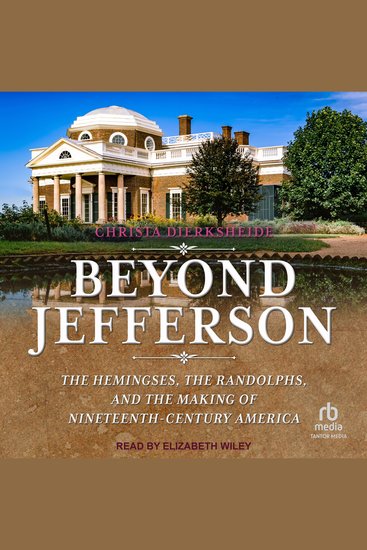
  • Beyond Jefferson - The Hemingses the Randolphs and the Making of Nineteenth-Century America - cover

    Beyond Jefferson - The Hemingses...

    Christa Dierksheide

    • 0
    • 0
    • 0
    A global history of how Thomas Jefferson's descendants navigated the legacy of the Declaration of Independence on both sides of the color line 


    The Declaration of Independence identified two core principles—independence and equality—that defined the American Revolution and the nation forged in 1776. Jefferson believed that each new generation of Americans would have to look to the "experience of the present" rather than the "wisdom" of the past to interpret and apply these principles in new and progressive ways. 


    Historian Christa Dierksheide examines the lives and experiences of a rising generation of Jefferson's descendants, Black and white, illuminating how they redefined equality and independence in a world that was half a century removed from the American Revolution. The Hemingses and Randolphs moved beyond Jefferson and his eighteenth-century world, leveraging their own ideas and experiences in nineteenth-century Britain, China, Cuba, Mexico, and the American West to claim independence and equal rights in an imperial and slaveholding republic.
    Ver libro