¡Acompáñanos a viajar por el mundo de los libros!
Añadir este libro a la estantería
Grey
Escribe un nuevo comentario Default profile 50px
Grey
Suscríbete para leer el libro completo o lee las primeras páginas gratis.
All characters reduced
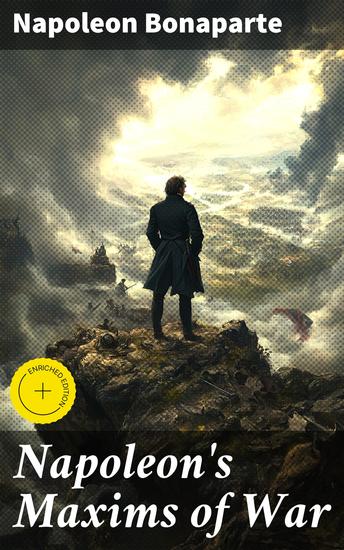
Napoleon's Maxims of War - Enriched edition The Officer's Manual - cover

Napoleon's Maxims of War - Enriched edition The Officer's Manual

Napoleon Bonaparte

Traductor George Charles D'Aguilar

Editorial: Good Press

  • 0
  • 0
  • 0

Sinopsis

In "Napoleon's Maxims of War," the storied military leader distills his vast experiences into a compelling collection of aphoristic principles and strategies that underscore both the art and the science of warfare. Employing a concise, direct literary style, Bonaparte's maxims reflect his pragmatic approach to military command, emphasizing the importance of speed, flexibility, and decisive action in the face of uncertainty. The context of this work lies in the Napoleonic Wars, a period marked by profound transformation in military tactics and the strategic use of mass conscription, making these maxims not just philosophies but practical tools applicable to the rapidly evolving landscape of warfare in his era and beyond. Napoleon Bonaparte, one of history's most formidable leaders, was deeply influenced by his tumultuous upbringing and illustrious military career. His insights are informed by the myriad battles he commanded, alongside a vast study of classical texts on warfare. This intellectual rigor transformed Napoleon into not only a tactical innovator but also a thinker whose reflections on war resonate in the annals of military education. His unique perspective as both a participant and theorist gives this collection significant weight. For students, historians, and military enthusiasts alike, "Napoleon's Maxims of War" is an essential read that provides not only a glimpse into the mind of a military genius but also timeless lessons on leadership and strategy. Bonaparte's keen insights are as relevant today as they were in his time, making this work a valuable addition to any library dedicated to military history and theory.

In this enriched edition, we have carefully created added value for your reading experience:
- A succinct Introduction situates the work's timeless appeal and themes.
- The Synopsis outlines the central plot, highlighting key developments without spoiling critical twists.
- A detailed Historical Context immerses you in the era's events and influences that shaped the writing.
- An Author Biography reveals milestones in the author's life, illuminating the personal insights behind the text.
- A thorough Analysis dissects symbols, motifs, and character arcs to unearth underlying meanings.
- Reflection questions prompt you to engage personally with the work's messages, connecting them to modern life.
- Hand‐picked Memorable Quotes shine a spotlight on moments of literary brilliance.
- Interactive footnotes clarify unusual references, historical allusions, and archaic phrases for an effortless, more informed read.
Disponible desde: 22/12/2023.
Longitud de impresión: 138 páginas.
Otros libros que te pueden interesar

  • Human All Too Human - Reflections on Humanity Morality and Progress - cover

    Human All Too Human -...

    Friedrich Nietzsche, Tim Zengerink

    • 0
    • 0
    • 0
    What drives humanity toward progress? How do morality and tradition shape our understanding of life? Can we truly free ourselves from inherited beliefs and live authentically? 
    Human, All Too Human is Friedrich Nietzsche’s bold exploration of the human condition and the forces that define our moral, intellectual, and social existence. Through sharp aphorisms and thought-provoking reflections, Nietzsche challenges readers to question their deeply held assumptions and embrace the freedom of independent thought. 
    This modern translation simplifies Nietzsche’s profound ideas while preserving their depth, offering practical wisdom for navigating the complexities of today’s world. 
    What You’ll Discover: 
    - The Origins of Morality – Explore the cultural, historical, and psychological roots of moral values. 
    - The Nature of Progress and Freedom – Understand the tension between tradition and innovation, and discover how to cultivate personal independence. 
    - Reflections on Society and Culture – Examine how societal norms and expectations shape human behavior and decision-making. 
    - Philosophy for Self-Discovery – Learn how to think critically, challenge conventional wisdom, and embrace personal growth. 
    This adaptation retains the brilliance and nuance of Nietzsche’s original work while making it approachable for modern readers. Human, All Too Human is a guide to understanding the complexity of human nature and unlocking the potential for growth and transformation in everyday life. 
    Imagine gaining clarity on the forces that shape your thoughts and actions, discovering the courage to think independently, and embracing the journey of becoming your truest self. For over a century, Human, All Too Human has inspired those seeking deeper understanding and personal freedom. 
    Begin your exploration of morality, progress, and self-discovery today. Get your copy now and transform the way you think about life, society, and yourself.
    Ver libro
  • Pablo Picasso: A short biography - 5 Minutes: Short on time - long on info! - cover

    Pablo Picasso: A short biography...

    5 Minutes, 5 Minute Biographies,...

    • 0
    • 0
    • 0
    Pablo Picasso, Spanish painter and universal genius: Life and work in a short biography! Everything you need to know, brief and concise. Infotainment, education and entertainment at its best!
    Ver libro
  • Carceral Citizens - Labor and Confinement in Puerto Rico - cover

    Carceral Citizens - Labor and...

    Caroline M. Parker

    • 0
    • 0
    • 0
    A nuanced take on how carceral expansions are changing labor and social life. In Carceral Citizens, anthropologist Caroline M. Parker offers an ethnographic portrait of therapeutic communities in Puerto Rico, the oldest colony in the Americas. As nonprofits nested within the carceral state, therapeutic communities serve as reeducation and recovery centers for the mostly male drug offenders who serve out their sentences engaged in manual labor and prayer. The most surprising aspect of these centers, however, is that their “graduates” often remain long after the completion of their term, working as self-appointed peer counselors in a mixture of volunteer and low-wage positions. Parker seeks to explain this dynamic by showing how, in these therapeutic communities, criminalized men find new and meaningful ways of living in the shadow of the prison. Through their participation in the day-to-day functioning of the centers, they discover and cultivate alternative forms of belonging, livelihood, and citizenship, despite living within the restrictions of the carceral state. Situating her study against the backdrop of Puerto Rico’s colonial history, and with findings that extend across Latin America, Parker challenges common assumptions about confinement, labor, and rehabilitation. By delving into lives shaped by the convergence of imperialism, the carceral state, and self-help, she offers a fresh understanding of the transformations of labor and social life brought about by mass incarceration.
    Ver libro
  • William Powell and Myrna Loy: The Lives and Careers of One of Classical Hollywood’s Most Iconic Duos - cover

    William Powell and Myrna Loy:...

    Editors Charles River

    • 0
    • 0
    • 0
    It is something of a cliché to say that an actor’s life was like a movie he or she might have starred in, but in the case of Myrna Loy, the cliché is true. It is easy to picture her as a little girl, riding the range with her rancher father, sitting around the table and participating charmingly in family discussions of current events. It is not hard to imagine the camera panning to her first and then second visits to Hollywood, her backlot tour, and starry-eyed decision to become an actress. There would have to be some drama, which the story of her father’s untimely death would provide, along with some sort of deathbed promise made to him to care for the rest of the family. Her mother would be brave but resolute as she moved her young family to California. The lighting on set would brighten and the tempo of the background would pick up as she walked down the Los Angeles streets. Then, her big break would come. The camera would show her first comical meeting with William Powell and then a spinning scene of ticket after ticket being sold to their new picture, The Thin Man.  
    While older silent film stars like Charlie Chaplin and Buster Keaton reached the peak of Hollywood, some actors born near the beginning of the 20th century were ready to capitalize. Though actors like Humphrey Bogart and Cary Grant remain household names, and actresses like Greta Garbo are still widely remembered, few had careers that enjoyed the success of William Powell. In a career spanning several decades, Powell would receive three Oscar nominations for Best Actor for critically acclaimed movies, so it is somewhat ironic that he is mostly remembered today for his association with the more famous Myrna Loy. One thing that helped Powell’s career along in the old days when Hollywood would only cast white actors in major roles, no matter what the nationality of the character was supposed to be, were his dark good looks.
    Ver libro
  • Hidden Symbolism of Alchemy and the Occult Arts - cover

    Hidden Symbolism of Alchemy and...

    Herbert Silberer

    • 0
    • 0
    • 0
     Herbert Silberer’s Hidden Symbolism of Alchemy and the Occult Arts (1917) explores the deeper meanings behind alchemical texts, Rosicrucian allegories, and mystical traditions, arguing that these works are not simply about chemical experiments but are symbolic accounts of inner transformation. Using both Freudian psychoanalysis and spiritual interpretation, Silberer demonstrates how myths, dreams, and esoteric emblems express unconscious drives as well as higher religious aspirations. He presents an old alchemical parable as a case study, then analyzes it through multiple layers—psychological, mystical, and natural-philosophical—before synthesizing these perspectives into a vision of regeneration, introversion, and the ultimate goal of union with the divine.  
    Ver libro
  • Kill Caesar! - Assassination in the Early Roman Empire - cover

    Kill Caesar! - Assassination in...

    Rose Mary Sheldon

    • 0
    • 0
    • 0
    “Why were Rome’s first emperors—the good, the bad, and the ugly—so vulnerable to conspiracies and assassination? . . . an expert analysis . . . compelling.” —Adrienne Mayor, author of The Poison King: The Life and Legend of Mithradates and Rome’s Deadliest Enemy Exploring the history of internal security under the first Roman dynasty, this groundbreaking book answers the enduring question: If there were 9,000 men guarding the emperor, how were three-quarters of Rome’s leaders assassinated? Rose Mary Sheldon traces the evolution of internal security mechanisms under the Julio-Claudians, evaluating the system that Augustus first developed to protect the imperial family and the stability of his dynasty. Yet in spite of the intensive precautions taken, there were multiple attempts on his life.    Like all emperors, Augustus had a number of competing constituencies—the senate, the army, his extended family, the provincials, and the populace of Rome—but were they all equally threatening? Indeed, the biggest threat would come from those closest to the emperor—his family and the aristocracy. Even Roman imperial women were deeply involved in instigating regime change. By the fourth emperor, Caligula, the Praetorian Guards were already participating in assassinations, and the army too was becoming more politicized.    Sheldon weighs the accuracy of ancient sources: Does the image of the emperor presented to us represent reality or what the people who killed him wanted us to think? Were Caligula and Nero really crazy, or did senatorial historians portray them that way to justify their murder? Was Claudius really the fool found drooling behind a curtain and made emperor, or was he in on the plot from the beginning? These and other fascinating questions are answered as Sheldon concludes that the repeated problem of “killing Caesar” reflected the empire’s larger dynamics and turmoil.
    Ver libro