¡Acompáñanos a viajar por el mundo de los libros!
Añadir este libro a la estantería
Grey
Escribe un nuevo comentario Default profile 50px
Grey
Suscríbete para leer el libro completo o lee las primeras páginas gratis.
All characters reduced
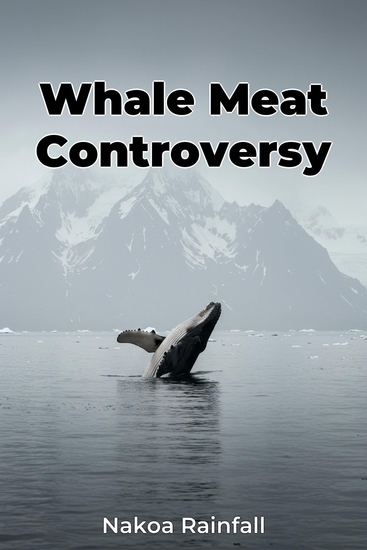
Whale Meat Controversy - cover

Whale Meat Controversy

Nakoa Rainfall

Traductor A AI

Editorial: Publifye

  • 0
  • 0
  • 0

Sinopsis

Whale Meat Controversy explores the contentious issue of whaling by examining the historical, environmental, and ethical dimensions of this practice. The book delves into why whaling persists despite conservation concerns, highlighting the inherent tensions between cultural preservation and species protection. Did you know that whaling has been a critical economic activity for communities in Norway, Iceland, and Japan? Also, the depletion of whale populations can have cascading effects on the health of our marine ecosystems.

 
The book unfolds by first introducing whaling's historical and cultural significance, then examining scientific evidence regarding whale populations and the impact of hunting. Finally, it explores the ethical and legal dimensions, proposing pathways toward sustainable coexistence.

 
Unlike many works that focus solely on conservation, Whale Meat Controversy uniquely combines historical, scientific, and ethical perspectives to offer a balanced analysis of the whaling debate, advocating for solutions that respect both cultural heritage and environmental sustainability.
Disponible desde: 11/03/2025.
Longitud de impresión: 67 páginas.
Otros libros que te pueden interesar

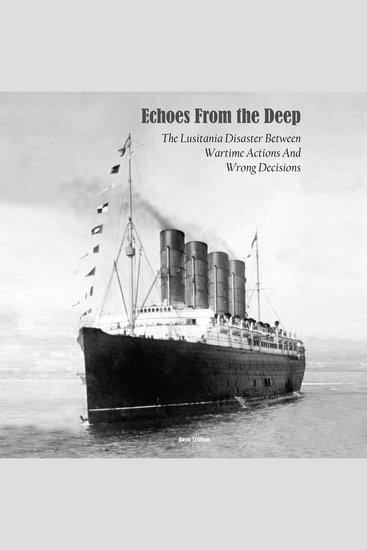
  • Echoes From the Deep - The Lusitania Disaster Between Wartime Actions And Wrong Decisions - cover

    Echoes From the Deep - The...

    Davis Truman

    • 0
    • 0
    • 0
    On May 1, 1915, the majestic RMS Lusitania departed from New York, bound for Liverpool, navigating through the escalating tensions of a war-torn Europe. Just six days later, the Cunard liner met a tragic fate, sinking into the depths of the Atlantic after being struck by a German torpedo. The catastrophe claimed the lives of over a thousand passengers, sending shockwaves across the world and profoundly influencing the American stance on World War I. 
    At the heart of this investigation lies a provocative thesis: the tragic loss of life on the Lusitania was not merely a consequence of wartime hostilities but was exacerbated by decisions and actions that could have been averted. Through detailed analysis, the book questions the accountability of the captain and crew, challenging readers to reconsider the extent to which their actions — or inactions — contributed to the disaster. 
    But this story is not confined to the ill-fated ship alone. "Echoes From the Deep" also examines the broader ramifications of the Lusitania's sinking on American public opinion. The tragedy stirred a powerful emotional response, turning the tide of sentiment and drawing the United States closer to joining the global conflict.  
    Blending historical rigor with compelling storytelling, "Echoes From the Deep" explores tragedy, responsibility, and the complex interplay between individual actions and larger historical forces. This book is essential for history enthusiasts, maritime scholars, and anyone intrigued by the profound impact of the Lusitania disaster on the American war effort.
    Ver libro
  • Against the Grain - How Farmers around the Globe Are Transforming Agriculture to Nourish the World and Heal the Planet - cover

    Against the Grain - How Farmers...

    Roger Thurow

    • 0
    • 0
    • 0
    Farmers in some of the world's oldest agricultural areas were toiling year after year, only to find that modern industrial agriculture was turning on itself. Industrial agriculture's effects on our climate and environment were multiplying and worsening, until the very families growing the world's food were starving. 


    They terraced the land to catch more rainwater and prevent soil runoff; they planted a diverse range of vegetables that would balance the nutrients in the soil; they replaced commercial fertilizers with organic matter from their own farms; they planted more trees and drought-resistant grains; and, perhaps most importantly, they taught their communities by example that these regenerative farming methods paid off—both in nourishing their families and in bringing their land back to life. 


    Award-winning author and journalist Roger Thurow has traveled to Ethiopia, Uganda, Kenya, India, Guatemala, Peru, and the United States to share their stories, highlighting the conflicts inherent in our most important human endeavor: feeding the world using the methods of industrial agriculture is stripping the land of its ability to feed future generations. But these farmers are starting a new kind of revolution, nourishing both humans and the land, and following their lead could help us solve one of the great crises of our time.
    Ver libro
  • HowExpert Guide to Show Pigs - 101+ Tips to Learn How to Breed Raise and Prepare Show Hogs for Pig Shows - cover

    HowExpert Guide to Show Pigs -...

    HowExpert, Keiren Cook

    • 0
    • 0
    • 0
    If you want to learn how to breed, raise, and prepare show hogs for pig shows, then check out HowExpert Guide to Show Pigs. This guide is an information-dense piece of text that is a step-by-step guide for raising show pigs from farrow to table. 
    In the first section of the book, you will discover everything there is to know about picking a sow and boar to produce a litter of pigs that will be able to stand the test of showing. Whether it’s for meat or a high-quality, well-mannered show hog, this book will help you make informed decisions. Additionally, you will receive information and tips on breeding your sow and then maintaining her well-being throughout the sow’s life. Even while she is laboring, you will have everything there is to know about birthing a litter of pigs and setting them up for success with castrations, vaccinations, and feed diets. 
    In the second section of the book, the content will primarily focus on how to prepare the show hog for the ring. Complete with training tips, tools, supplements, and product suggestions, as well as information about maintaining a clean area. This book will guide you through the show pig process from birth, all the way up till they are in the show ring and off to the auction. 
    Additionally, for hogs raised for the freezer, you will be informed about how to monitor their progress and determine when they are ready and what you will be able to harvest from a complete meat-rearing hog. For anyone looking to dive into the world of pig agriculture and diversify their skill-set, this is the beginner’s guide to getting a hog business started. 
    Check out HowExpert Guide to Show Pigs if you want to learn how to breed, raise, and prepare show hogs for pig shows! 
    About the Author 
    Keiren Cook is a young and avid writer passionate about raising quality hogs for the youth interested in agriculture. 
    HowExpert publishes how to guides by everyday experts.
    Ver libro
  • Teamwork for Project Managers - cover

    Teamwork for Project Managers

    Tom Henricksen

    • 0
    • 0
    • 0
    Project Management can create exceptional teams. Collaborating with their team members with qualities of great team players. They can influence their peers and bring unity. Help your team achieve as a teamwork all-star!Learn the qualities of great team playersBuild empathy and credibilityCreate team normsAdd accountability to your teamEstablish team structure 
    We ask two leaders in the industry to share their expertise. You won't be disappointed.
    Ver libro
  • Empiricism - Knowledge Through Experience - cover

    Empiricism - Knowledge Through...

    Hector Davidson

    • 0
    • 0
    • 0
    Empiricism, as a philosophical doctrine, asserts that knowledge is primarily derived from sensory experience. This perspective contrasts sharply with rationalism, which emphasizes reason and innate knowledge. Empiricism has shaped our understanding of the world and influenced numerous fields, from the natural sciences to ethics and epistemology. The essence of empiricism lies in the conviction that the mind begins as a "blank slate" (tabula rasa) and that experience, rather than pre-existing ideas or concepts, forms the foundation of all knowledge. 
    At the heart of empiricist thought is the belief that all human knowledge starts with perception. We acquire information about the world through our senses—sight, hearing, touch, taste, and smell—which provide the raw data from which we form concepts and beliefs. For empiricists, knowledge is not something we discover internally, but something we gather from external reality. This view stands in contrast to the rationalist emphasis on a priori knowledge, which is independent of experience and accessible only through reason. 
    Empiricism's roots can be traced back to ancient philosophy, with early proponents like Aristotle, who argued that all knowledge comes from sensory observation. However, the modern development of empiricism is largely credited to three major figures: John Locke, George Berkeley, and David Hume. Locke introduced the idea of the mind as a tabula rasa, arguing that individuals are born without innate ideas and that all knowledge comes from experience. Berkeley took this further by suggesting that even the existence of the external world depends on perception, encapsulating the notion that "to be is to be perceived." Hume, the most radical empiricist of the three, questioned the very basis of causality and inductive reasoning, asserting that our beliefs in cause-and-effect relationships were not rationally justified but arose from habitual experience.
    Ver libro
  • Drift Into Failure - From Hunting Broken Components to Understanding Complex Systems - cover

    Drift Into Failure - From...

    Sidney Dekker

    • 0
    • 0
    • 0
    What does the collapse of sub-prime lending have in common with a broken jackscrew in an airliner’s tailplane? Or the oil spill disaster in the Gulf of Mexico with the burn-up of Space Shuttle Columbia? These were systems that drifted into failure. While pursuing success in a dynamic, complex environment with limited resources and multiple goal conflicts, a succession of small, everyday decisions eventually produced breakdowns on a massive scale. We have trouble grasping the complexity and normality that gives rise to such large events. We hunt for broken parts, fixable properties, people we can hold accountable. Our analyses of complex system breakdowns remain depressingly linear, depressingly componential - imprisoned in the space of ideas once defined by Newton and Descartes. The growth of complexity in society has outpaced our understanding of how complex systems work and fail. Our technologies have gotten ahead of our theories. We are able to build things - deep-sea oil rigs, jackscrews, collateralized debt obligations - whose properties we understand in isolation. But in competitive, regulated societies, their connections proliferate, their interactions and interdependencies multiply, their complexities mushroom. This book explores complexity theory and systems thinking to understand better how complex systems drift into failure. It studies sensitive dependence on initial conditions, unruly technology, tipping points, diversity - and finds that failure emerges opportunistically, non-randomly, from the very webs of relationships that breed success and that are supposed to protect organizations from disaster. It develops a vocabulary that allows us to harness complexity and find new ways of managing drift.
    Ver libro