Junte-se a nós em uma viagem ao mundo dos livros!
Adicionar este livro à prateleira
Grey
Deixe um novo comentário Default profile 50px
Grey
Assine para ler o livro completo ou leia as primeiras páginas de graça!
All characters reduced
Traditional Snow Gear - cover
LER

Traditional Snow Gear

Nakoa Rainfall

Tradutor A AI

Editora: Publifye

  • 0
  • 0
  • 0

Sinopse

Traditional Snow Gear unveils the remarkable ingenuity of indigenous cultures in mastering some of Earth's most challenging winter environments. It explores the sophisticated technologies developed by these groups, focusing on clothing, sleds, and survival equipment, offering a deep dive into how these tools were essential for survival and shaped unique cultural identities. The book highlights the intricate designs and profound ecological knowledge embedded in these artifacts, showing how indigenous innovation allowed communities to thrive where others could not.

 
The book progresses by first introducing cold-weather survival principles and diverse environments. It then examines clothing, detailing materials and construction; sled designs, discussing construction and propulsion; and a range of survival equipment. By delving into the material culture of Arctic and mountainous regions, the book emphasizes the cultural significance and sustainable design principles behind these technologies, challenging Eurocentric views and highlighting the importance of preserving indigenous knowledge for contemporary environmental challenges.
Disponível desde: 29/03/2025.
Comprimento de impressão: 68 páginas.
Outros livros que poderiam interessá-lo

  • Recurrent Neural Networks - Harnessing the Power of Sequential Data for Dynamic Web Applications - cover

    Recurrent Neural Networks -...

    Saimon Carrie

    • 0
    • 0
    • 0
    In an era where user experience is paramount, the ability to deliver dynamic, responsive, and personalized web applications is a game-changer. "Recurrent Neural Networks: Harnessing the Power of Sequential Data for Dynamic Web Applications" is your comprehensive guide to mastering the technology that drives these innovations. 
    Recurrent Neural Networks (RNNs) are at the forefront of artificial intelligence, enabling developers to process and learn from sequential data, making them ideal for web applications that require real-time updates, user interaction, and personalized content. This book delves deep into the world of RNNs, providing you with the tools and knowledge to transform your web applications. 
    "Recurrent Neural Networks: Harnessing the Power of Sequential Data for Dynamic Web Applications" equips you with the knowledge and skills to elevate your web development projects to new heights. Embrace the future of web applications with RNNs and create experiences that are fast, reliable, and engaging. 
     
    Ver livro
  • Sleep - The Mysteries the Problems and the Solutions - cover

    Sleep - The Mysteries the...

    M.D. Carlos H. Schenck

    • 0
    • 0
    • 0
    In “Sleep”, Carlos H. Schenck, M.D., a leading sleep expert with over 40 years experience, presents a probing exploration of sleep, an activity that occupies over 200,000 hours of our lives. This timeless book delves into the intricate processes of sleep and the peculiar dysfunctions that can emerge, ranging from common issues like insomnia and sleep apnea to the more mysterious and extreme disorders known as “parasomnias”. These include dream enactment, sleep related eating disorder, sexsomnia, night terrors, and sleep violence, which surprisingly affect millions. 
    What distinguishes Dr. Schenck's work is his focus on the forefront of sleep science, particularly in identifying and treating parasomnias. He reveals their connection to more typical sleep problems and the implications for their treatment. The book is enriched with startling real-life examples from Dr. Schenck's extensive clinical practice, such as a woman who discovers chocolate wrappers in her bed upon waking or a man who, in his sleep, mistakenly perceives his wife as a threat. These narratives, drawn directly from patient experiences, illustrate the often terrifying and dangerous aspects of these disorders, offering hope and solutions to those affected and their families. 
    Significantly, each chapter of the book encompasses a wide range of sleep disorders, enriched with personal stories reported by Dr. Schenck's patients. These accounts provide an intimate first-person perspective on living with these conditions, making the book a uniquely relevant and comprehensive guide for anyone suffering from sleep disorders. By combining engaging patient narratives with the latest in medical research, "Sleep" serves as an essential resource for understanding and navigating the complex world of sleep disorders, shedding light on one of our most enigmatic medical puzzles.
    Ver livro
  • Artificial Intelligence in Education - cover

    Artificial Intelligence in...

    Introbooks Team

    • 0
    • 0
    • 0
     Sci-fi authors, Movie-makers and futurists have been dreaming Artificial Intelligence taking over for decades now. They have been defining the new horizon of robotic technology, artificial brain and artificial intelligence for a long time. However, what was their dreams, the researchers and scientists of the twenty-first century have turned it almost into a mere reality. Artificial Intelligence nowadays has surrounded us. Almost all the technical and some of the non-technical fields are improving pretty fast, holding the hands of Artificial Intelligence. From the auto parking facility in your car to the sometimes frustrating voice assistance application in your Smartphone. From defining diseases and their medication in the healthcare sector to our education system nowadays, you name it. Almost everything that contains the word *smart* before its name is been operated with Artificial Intelligence. 
     True is the fact that we are not going to make robots that are self-aware like they were in the Star Wars movies in the next decade (with these capable scientists of this century, it is safe to talk only about the next decade and not more than that). However, we are already using Artificial Intelligence not only in the technological sectors but also in different sectors of society like medicine and healthcare. Even in Education. This might isn’t as mind-blowing as it seems in your Smartphone and you don’t expect the humanoid robots teaching you in your class. At least not in the next decade like we said. However, there are some cases where AI has been involved with our education system.  
     There are a lot of Projects where the Artificial Brains have been helping both the teachers and the students to get the maximum out in return from our education system.
    Ver livro
  • Here Comes the Sun - A Last Chance for the Climate and a Fresh Chance for Civilization - cover

    Here Comes the Sun - A Last...

    Bill McKibben

    • 0
    • 0
    • 0
    From the acclaimed environmentalist, a call to harness solar power and rewrite our scientific, economic, and political future. 


    Every eighteen hours, the world puts up a nuclear power plant's–worth of solar panels. At the same time, combustion continues to melt our poles, poison our bodies, and drive our global inequality. And it is no longer necessary: For the first time in 700,000 years, we know how to catch the sun’s rays and convert them into energy. 


    In Here Comes the Sun, world-renowned author Bill McKibben tells the story of our sudden spike in power from the sun and wind. McKibben traces the arrival of plentiful, inexpensive solar energy, which, if it accelerates, gives us a chance not just to limit climate change’s damage, but to reorder the world on saner and more humane grounds. Getting there means overcoming obstacles like Big Oil, but McKibben sees a chance for a new civilization: one that looks up to the sun, every day, as the star that fuels our world.
    Ver livro
  • Human-Centered AI - cover

    Human-Centered AI

    Ben Shneiderman

    • 0
    • 0
    • 0
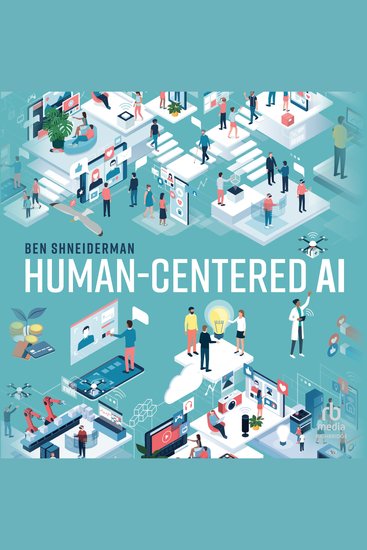
    Researchers, developers, business leaders, policy makers, and others are expanding the technology-centered scope of artificial intelligence (AI) to include human-centered AI (HCAI) ways of thinking. This expansion from an algorithm-focused view to embrace a human-centered perspective can shape the future of technology to better serve human needs.The remarkable progress in algorithms for machine and deep learning have opened the doors to new opportunities, and some dark possibilities. However, as many technology companies and thought leaders have said, the goal is not to replace people, but to empower them by making design choices that give humans control over technology.In Human-Centered AI, Professor Ben Shneiderman aims to produce an optimistic, realistic, guide to how artificial intelligence can be used to augment and enhance humans' lives. This project bridges the gap between ethical considerations and practical realities to make successful, reliable systems. Digital cameras, communications services, and navigation apps are just the beginning. Shneiderman shows how future applications will support health and wellness, improve education, accelerate business, and connect people in reliable, safe, and trustworthy ways that respect human values, rights, justice, and dignity.
    Ver livro
  • Resetting the Alarm - PTSD The Nervous System and The Role of Stellate Ganglion Block - cover

    Resetting the Alarm - PTSD The...

    Dr Murli Krishna

    • 0
    • 0
    • 0
    Post-traumatic stress disorder (PTSD) is not a sign of weakness. It is a real condition rooted in how the nervous system responds to threat, trauma, and prolonged stress. 
    This audiobook offers a clear, compassionate, and evidence-informed explanation of PTSD through the lens of nervous system physiology. Designed for individuals with PTSD, their loved ones, clinicians, veterans, first responders, and anyone seeking understanding, it explains why symptoms such as hyperarousal, intrusive memories, emotional numbing, sleep disturbance, and physical tension can persist long after the original trauma has passed. 
    Drawing on clinical experience and current scientific understanding, the audiobook explores how trauma can lead to persistent activation of the body’s stress response system. These symptoms are described as real, involuntary, and biologically driven — protective in origin, not signs of personal failure or psychological weakness. 
    Current management approaches are discussed, including trauma-focused psychological therapies, medication, lifestyle strategies, and emerging biological interventions aimed at calming the nervous system. One such intervention explored is the stellate ganglion block (SGB), a targeted procedure acting on the sympathetic nervous system that has shown promising results in some individuals with PTSD, particularly in reducing hyperarousal, sleep disruption, and anxiety symptoms. 
    SGB is presented cautiously and responsibly — as a potential adjunct, not a cure. Responses vary between individuals, long-term data are still evolving, and recovery from PTSD is often gradual, non-linear, and multi-faceted. The aim of this audiobook is to reduce shame, provide clarity, set realistic expectations, and support informed conversations with healthcare providers. 
    This audiobook is for educational purposes only and does not replace personalised medical or psychological assessment or treatment.
    Ver livro