¡Acompáñanos a viajar por el mundo de los libros!
Añadir este libro a la estantería
Grey
Escribe un nuevo comentario Default profile 50px
Grey
Suscríbete para leer el libro completo o lee las primeras páginas gratis.
All characters reduced
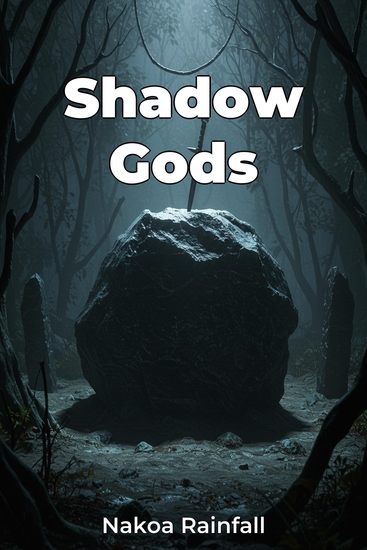
Shadow Gods - cover

Shadow Gods

Nakoa Rainfall

Traductor A AI

Editorial: Publifye

  • 0
  • 0
  • 0

Sinopsis

"Shadow Gods" explores the intriguing world of dark deities and their significant influence on ancient religious traditions. It argues that understanding gods of death, chaos, and transgression is crucial for a complete picture of ancient belief systems. These figures, often representing humanity's deepest fears, reveal how ancient societies grappled with universal anxieties like death and the unknown. For example, deities like Hades and Anubis played key roles in funerary rites and conceptions of the afterlife, highlighting the psychological impact of mortality. The book examines various shadow gods across mythologies, drawing from ancient texts, archaeological findings, and scholarly research. It begins by introducing comparative mythology and historical contexts, then progresses through themes of death, chaos, and transgression. Deities such as Set and Loki are analyzed to uncover their roles in embodying societal fears and challenging social norms. This approach provides a more nuanced understanding of how ancient religions used these figures to address the darker aspects of human existence, offering a unique perspective for those interested in religion and history.
Disponible desde: 26/02/2025.
Longitud de impresión: 57 páginas.

Otros libros que te pueden interesar

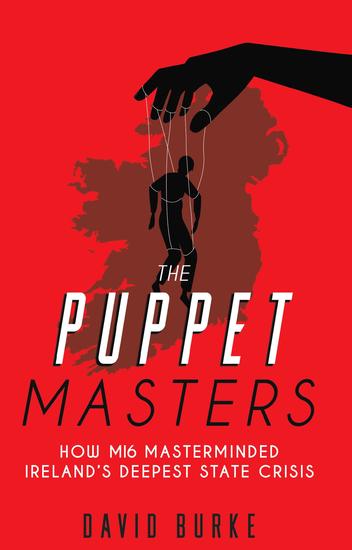
  • The Puppet Masters - How MI6 Masterminded Ireland's Deepest State Crisis - cover

    The Puppet Masters - How MI6...

    David Burke

    • 0
    • 0
    • 0
    David Burke uncovers the clandestine activities of Patrick Crinnion, a Garda intelligence officer who secretly served MI6 during the early years of the Troubles. As the Garda Síochána launched a manhunt for the Chief-of-Staff of the IRA, Crinnion found himself playing a crucial role in the effort to track him down.
     Before his disappearance, Crinnion's actions exposed a web of secrets including those of another British spy in the Irish police, damaging intelligence leaks, gunrunning by Irish politicians, and a cover-up related to the murder of a Garda.
     Burke reveals MI6's shady dealings, from attempts to smear Irish politicians to plans for using criminals as assassins and the secret surveillance of a key IRA member.
     Crinnion fled into exile. The Puppet Masters not only reveals what became of him but also provides an insightful look into a turbulent period marked by covert operations, betrayal, and the power struggle that shaped modern Irish history.
    Ver libro
  • The Myth of Left and Right - How the Political Spectrum Misleads and Harms America - cover

    The Myth of Left and Right - How...

    Verlan Lewis, Hyrum Lewis

    • 0
    • 1
    • 0
    A groundbreaking argument that the political spectrum today is inadequate to twenty-first-century America and a major source of the confusion and hostility that characterize contemporary political discourse. 


    As American politics descends into a battle of anger and hostility between two groups called "left" and "right," people increasingly ask: What is the essential difference between these two ideological groups? In The Myth of Left and Right, Hyrum Lewis and Verlan Lewis provide the surprising answer: nothing. As the authors argue, there is no enduring philosophy, disposition, or essence uniting the various positions associated with the liberal and conservative ideologies of today. Far from being an eternal dividing line of American politics, the political spectrum came to the United States in the 1920s and, since then, left and right have evolved in so many unpredictable and even contradictory ways that there is currently nothing other than tribal loyalty holding together the many disparate positions that fly under the banners of "liberal" and "conservative." Cutting against the grain of most scholarship on polarization in America, this book shows why the idea that the political spectrum measures deeply held worldviews is the central political myth of our time and a major cause of the confusion and vitriol that characterize public discourse.
    Ver libro
  • Ancient and Medieval Warfare in the West: The History of Western Europe’s Changing Military Tactics in Antiquity and the Middle Ages - cover

    Ancient and Medieval Warfare in...

    Editors Charles River

    • 0
    • 0
    • 0
    For the Greeks, a hoplite was only as strong as the hoplite next to him; without hoplites on the sides, both flanks were exposed, and heavy infantry units are not mobile. Thus, they implemented the phalanx formation, one of history’s most important military innovations. The phalanx was a line of infantry as wide across as the battlefield dictated, anything from five to 30 men deep, with each rank of men officered by a veteran. The formation also included an additional, expert file-closer at the back of each file, to keep the formation cohesive. The phalanx advanced slowly to maintain its tight formation and unit cohesion, speeding up in unison just before reaching combat.   
    	While the Roman army is rightly famed as an institution, the image of the individual legionary is also an iconic one. The uniformed, disciplined soldier of the late Republic and early Empire is one of the first things many people imagine when they think of Rome. They are the ultimate image of the ancient soldier, their arms and armor instantly recognizable. Their abilities, not only as warriors but also as engineers and administrators, have made them role models for other soldiers through the centuries. In the same vein, their commanders are still celebrated and studied, and generals the world over have tried to emulate the likes of Julius Caesar. 
    If anything, the one aspect of the Middle Ages that has been romanticized is medieval warfare. Indeed, the Middle Ages have long sparked people’s imaginations thanks to imagery of armored knights battling on horseback and armies of men trying to breach the walls of formidable castles. What is generally forgotten is that medieval warfare was constantly adapting to the times as leaders adopted new techniques and technology, and common infantry became increasingly important throughout the period. By the end of the period, warfare was radically changing thanks to the rise of gunpowder weapons and artillery. 
    Ver libro
  • Tremendous Trifles - "Perhaps the best introduction to Chesterton" - cover

    Tremendous Trifles - "Perhaps...

    G K Chesterton

    • 0
    • 0
    • 0
    A wonderful and whimsical collection of short essays on everything from sketching on brown paper and building toy theatres to the nature of Englishness and faith."Tremendous Trifles contains simply some of the best essays Chesterton ever wrote. They originally appeared in the Daily News, which Chesterton contributed to from 1901 to 1913, and which explains why people bought that paper. Which is an idea so large it spills over into another essay, “A Piece of Chalk.” Here Chesterton describes how he has set out to do some drawing with his chalks, but is distressed to find that he has forgotten his white chalk. White is essential. White is a color. It is not merely the absence of color. It is “a shining and affirmative thing…it draws stars.” As white is to art, so is virtue to religion. Virtue is a positive thing; not merely “the absence of dangers or the avoidance of moral dangers…Chastity does not mean abstention from sexual wrong; it means something flaming, like Joan of Arc.”In this book, Chesterton looks at the ordinary, common things and asks us to see how extraordinary and uncommon they are. The things in his pockets, the objects in a railway station, the people in the street. With these simple, random things he can defend Christianity, Western Civilization and Democracy. “Whatever is it that we are all looking for?” he asks at the beginning of an essay entitled “A Glimpse of My Country.” He suggests that what we are looking for lies very close; we just don’t manage to see it. It is a theme throughout the book, and throughout Chesterton’s writings that what appears to be a trifle is actually tremendous. In the title essay Chesterton crystallizes this truth in a perfect sentence that would go on to be inscribed on buildings and quoted by popes: “The world will never starve for want of wonders; but only for want of wonder.”-- Dale Ahlquist, lecture for Chesterton University
    Ver libro
  • Ladies-in-Waiting - Women Who Served Anne Boleyn - cover

    Ladies-in-Waiting - Women Who...

    Sylvia Barbara Soberton

    • 0
    • 0
    • 0
    The aspects of Anne Boleyn's life and death are fiercely debated by historians, yet her ladies-in-waiting remain an understudied topic. Much emphasis is usually put on Anne's relationships with the men in her life: her suitors, her royal husband, her father and brother, and her putative lovers who were executed on May 17, 1536. By concentrating on a previously neglected area of Anne Boleyn's female household, this book seeks to identify the women who served Anne and investigate what roles ladies-in-waiting played in this Queen's household.
    Ver libro
  • The Genealogy of Morals - cover

    The Genealogy of Morals

    Friedrich Nietzsche

    • 0
    • 0
    • 0
    Friedrich Nietzsche's genealogical analysis in The Genealogy of Morals is an exploration of the historical development of certain moral values, specifically those associated with notions of justice, honour, and good. Taking a critical stance against the Enlightenment-era reception of Kantian morality, Nietzsche argues that these values were formed through a process of power dynamics rather than abstract principles. Read in English, unabridged.
    Ver libro