Junte-se a nós em uma viagem ao mundo dos livros!
Adicionar este livro à prateleira
Grey
Deixe um novo comentário Default profile 50px
Grey
Assine para ler o livro completo ou leia as primeiras páginas de graça!
All characters reduced
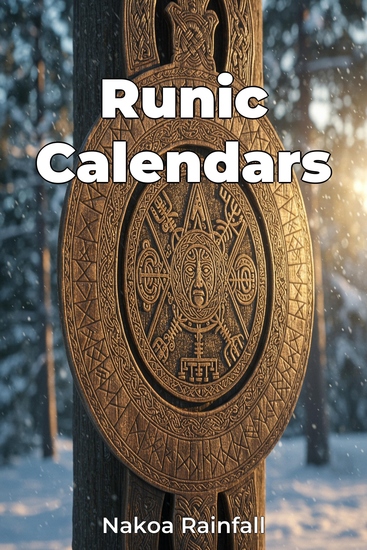
Runic Calendars - cover
LER

Runic Calendars

Nakoa Rainfall

Tradutor A AI

Editora: Publifye

  • 0
  • 0
  • 0

Sinopse

Runic Calendars explores the fascinating timekeeping methods of Norse and Viking societies, revealing sophisticated systems far beyond simple record-keeping. These calendars were integral to their social, economic, and religious lives, demonstrating advanced astronomical observation, mathematical understanding, and symbolic representation. One intriguing aspect is how these societies tracked the movements of the sun and moon to identify solstices and equinoxes, crucial for predicting weather and planning agricultural activities. Furthermore, the calendars' connection to Norse mythology highlights how specific days were associated with particular gods and stories, deeply weaving timekeeping into their cultural fabric.

 
The book begins by establishing the historical and social context of Norse and Viking societies, then proceeds across three major sections. First it will explore the different types of runic calendars, then it will dissect the astronomical knowledge embedded within, and finally it will investigate the cultural significance. By examining archaeological finds, medieval Norse literature, and linguistic data, Runic Calendars offers a nuanced understanding of these ancient timekeeping devices. This targeted approach provides an in-depth analysis valuable to anyone interested in history, archaeology, or the history of science.
Disponível desde: 05/03/2025.
Comprimento de impressão: 62 páginas.

Outros livros que poderiam interessá-lo

  • The Exam - Life Is Only A Test Living Is The Real Deal - cover

    The Exam - Life Is Only A Test...

    Dr. A. L. Williams

    • 0
    • 0
    • 0
    A. Lyons Williams was born and raised in North Philadelphia, a neighborhood that produced many famous Jazz and RnB singers, actors, dancers and ministers. 
    At the age of 7, he felt the call to ministry. However, it wasn't until age 17 that he began studying various denominations. Those studies led to him receiving ministerial credentials and ordinations from various ministerial organizations and serving in various capacities as associate minister, assistant pastor, and pastor. In later years, he co-founded the MCM Ministries, and co-hosted its local radio broadcast. 
    As a veteran of both Army and the Navy, he was honorably discharged from both. He has a doctorate in theology from Destiny Christian University. 
    He also holds a degree in fashion design and tailoring (which caused him to co-found the "MiRube Fashion Co." along with designer, Mia MiRube) He ultimately chose to totally embrace his first loves: ministry and creative writing. He is the pastor/teacher of G.R.O.W.T.H. Ministries Int.
    Ver livro
  • Men of 18 in 1918 - Memories of the Western Front in World War One - cover

    Men of 18 in 1918 - Memories of...

    Frederick James Hodges

    • 0
    • 0
    • 0
    An astounding account of one young infantryman's personal experience of the Western Front in the last year of World War One. 


    Perfect for fans of Peter Hart, Max Hastings, and Barbara W. Tuchman. 


    In the spring of 1918 German forces broke through Allied lines in a last-ditch attempt to overcome their enemies. To hold back this tide young, inexperienced men from France, Britain, the United States, Australia, and Canada were sent into war against battle-hardened and desperate German soldiers. 


    What was it like to be an eighteen-year-old and sent to the frontlines in the First World War? 


    Frederick James Hodges was one of these young men and his book, Men of 18 in 1918, provides insight into the ordeals of an ordinary soldier who left Britain as a teenager but returned as a man having witnessed the full horrors of war. 


    Hodges charts his progress through the conflict from his short period of training to being thrown into defending Allied lines against the onslaught before being ordered, as part of Britain's prime assault troops, into a ninety-five-day non-stop attack which only ended with the armistice of November 1918.
    Ver livro
  • Coming of Age in Samoa - A Psychological Study of Primitive Youth for Western Civilisation - cover

    Coming of Age in Samoa - A...

    Margaret Mead

    • 0
    • 0
    • 0
    "Coming of Age in Samoa: A Psychological Study of Primitive Youth for Western Civilization" by Margaret Mead is a pioneering work in cultural anthropology that examines the adolescence and cultural practices of Samoan youth. Originally published in 1928, Mead's study challenges Western assumptions about the universality of adolescent experiences and sheds light on the influence of cultural factors on human behavior.
     In this groundbreaking work, Mead explores Samoan society's impact on the emotional and psychological development of its youth, focusing on the transition from adolescence to adulthood. Mead's findings suggest that cultural factors, such as societal norms and expectations, significantly shape individuals' behaviors and attitudes during this crucial life stage.
     The book sparked significant debate and discussion, as Mead's conclusions contradicted prevailing notions of the time regarding the fixed and biologically determined nature of human development. Her work influenced the field of anthropology and contributed to a broader understanding of cultural relativism.
     "Coming of Age in Samoa" remains a seminal work that invites readers to reconsider their perspectives on cultural diversity and the ways in which societal expectations shape human experiences, particularly during the formative years of adolescence.
    Ver livro
  • All-American Dogs - A History of Presidential Pets from Every Era - cover

    All-American Dogs - A History of...

    Andrew Hager

    • 0
    • 0
    • 0
    From historian-in-residence at the Presidential Pet Museum, Andrew Hager, comes a fond, fascinating, and often surprising look at the dogs who were the best friends of the presidents, featuring unforgettable photographs. 
     
    President Biden’s German shepherds, Major and the late Champ, are the latest in a long line of presidential dogs. Dating all the way back to George Washington, dogs have been constant companions to nearly all of America’s presidents. Of the past 46 presidents, 31 have had at least one dog at 1600 Pennsylvania Ave. 
    Organized by historical eras, All-American Dogs will take readers through the captivating history of the White House’s four-legged friends, the impact they had on their owner-in-chiefs, and, ultimately, American history. From the assassination of President’s Lincoln’s dog after Lincoln’s own death to President’s Hoover’s Belgian shepherd, King Tut, who helped President Hoover win the election after appearing in a campaign photo, these furry members of the first family often had a lasting impact on the administrations that kept them. 
    As historian-in-residence at the Presidential Pet Museum, Andrew Hager will include original research and rare photographs from the National Archives to trace the history of America’s first dogs. From post-Revolutionary dogs, to Civil War era dogs, to Cold War dogs, Hager will show the differences and similarities of how our nation viewed man’s best friend. 
    Readers will learn not only past presidents’ dogs in each historical era, but also the cultural history of dogs as pets, and the ways in which Americans’ relationships with dogs has evolved over the past two centuries. 
    Supplemental enhancement PDF accompanies the audiobook.
    Ver livro
  • Rome’s Best Emperors: The History and Legacy of the Roman Empire’s Most Able Leaders - cover

    Rome’s Best Emperors: The...

    Editors Charles River

    • 0
    • 0
    • 0
    The importance of Gaius Julius Caesar Augustus (or as he was known from birth, Gaius Octavius “Octavian” Thurinus) to the course of Western history is hard to overstate. His life, his rise to power, his political, and his social and military achievements all laid the foundations for the creation of an empire which would endure for almost five centuries, and whose traditions, laws, architecture and art continue to influence much of Europe and the world today. Octavian was the first true Roman Emperor, and the first man since the Etruscan Tarquins five centuries earlier to establish a successful hereditary ruling dynasty in what had been a proud Republic for over half a millennium. He was a canny strategist, an excellent orator, a fine writer, a generous patron of the arts and enthusiastic promoter of public works, but above all he was a master politician. Octavian’s great-uncle (and adoptive father) Julius Caesar was a great general, and his rival Mark Antony was a great soldier, but as a politician Octavian outmatched them all. He still stands in bronze on Rome’s Via dei Fori Imperiali to this day, along with the likes of Caesar, Hadrian, Trajan and Marcus Aurelius, and he is forever immortalized in all Western calendars as the patron of the month of August, which was dedicated to him when he was deified, following his death, as Divus Augustus.  
    	“The Five Good Emperors,” a reference to the five emperors who ruled the Roman Empire between 96 and 180 CE (Nerva, Trajan, Hadrian, Antoninus Pius, and Marcus Aurelius), was a term first coined by Machiavelli and later adopted and popularized by historian Edward Gibbon, who said that under these men, the Roman Empire “was governed by absolute power under the guidance of wisdom and virtue.” This period of 84 years is generally regarded as the high point of the Roman Empire, at least after Augustus.
    Ver livro
  • The Ward - The Life and Loss of Toronto’s First Immigrant Neighbourhood - cover

    The Ward - The Life and Loss of...

    John Lorinc, Michael McClelland,...

    • 0
    • 0
    • 0
    The story of the growth and destruction of Toronto's first 'priority neighbourhood.'
       
    From the 1840s until the Second World War, waves of newcomers who migrated to Toronto – Irish, Jewish, Italian, African American and Chinese, among others – landed in 'The Ward.' Crammed with rundown housing and immigrant-owned businesses, this area, bordered by College and Queen, University and Yonge streets, was home to bootleggers, Chinese bachelors, workers from the nearby Eaton';s garment factories and hard-working peddlers. But the City considered it a slum, and bulldozed the area in the late 1950s to make way for a new civic square.
       
    The Ward finally tells the diverse stories of this extraordinary and resilient neighbourhood through archival photos and contributions from a wide array of voices, including historians, politicians, architects, story-tellers, journalists and descendants of Ward residents. Their perspectives on playgrounds, tuberculosis, sex workers, newsies and even bathing bring The Ward to life and, in the process, raise important questions about how contemporary cities handle immigration, poverty and the geography of difference.
       
    ‘The Ward shines a light on one of Toronto's most historically significant and most forgotten neighbourhoods. Instead of a straight history, the book's editors opted to present the Ward through multiple short essays, each with its own unique point of view. The result is a fascinating and varied look at an area that once concurrently defined the city and acted as its biggest shame. As a result of the Ward's eventual razing, there are few artifacts left to teach newer generations about this important part of Toronto's history. This book helps correct that.’
       
    – 2016 Toronto Book Awards Jury Citation
       
    '[The Ward] should be of interest to Canadians anywhere, reminding us that we all came from some place else.'
       
    – Michael Enright, CBC Sunday Edition
       
    Contents & Contributors
       
    Introduction – John Lorinc
       
    Searching for the Old Ward – Shawn Micallef
       
    No Place Like Home – Howard Akler
       
    Beforethe Ward: Macauleytown – Stephen A. Otto
       
    My Grandmother the Bootlegger – Howard Moscoe
       
    Against All Odds: The Chinese Laundry – Arlene Chan
       
    VJ Day – Arlene Chan
       
    Merle Foster's Studio: 'A Spot Of Enchantment' – Terry Murray
       
    Missionary Work: The Fight for Jewish Souls – Ellen Scheinberg
       
    King of the Ward – Myer Siemiatycki
       
    Where the Rich Went for Vice – Michael Redhill
       
    A Fresh Start: Black Toronto in the 19th Century – Karolyn Smardz Frost
       
    Policing the Lord’s Day – Mariana Valverde
       
    'The Maniac Chinaman' – Edward Keenan
       
    Elsie's Story – Patte Roseban
       
    Lawren Harris's Ward Period – Jim Burant
       
    'Fool's Paradise': Hastings' Anti-Slum Crusade – John Lorinc
       
    Strange Brew: The Underground Economy of Blind Pigs – Ellen Scheinberg
       
    The Consulate, the Padroni and the Labourers – Andrea Addario
       
    Excerpt: The Italians in Toronto – Emily P. Weaver
       
    Arthur Goss: Documenting Hardship– Stephen Bulger
       
    Fresh Air: The Fight Against TB – Cathy Crowe
       
    The Stone Yard – Gaetan Heroux
       
    William James: Toronto's First Photojournalist – Vincenzo Pietropaolo
       
    The Avenue Not Taken – Michael McClelland
       
    Timothy Eaton’s Stern Fortifications – Michael Valpy
       
    Settling In: Central Neighbourhood House – Ratna Omidvar & Ranjit Bhaskar
       
    Toronto’s Girl with the Curls – Ellen Scheinberg
       
    Chinese Cafés: Survival and Danger – Ellen Scheinberg & Paul Yee
       
    Defiance and Divisions: The Great Eaton's Strike – Ruth A. Frager
       
    Elizabeth Street: What the City Directories Reveal – Denise Balkissoon
       
    Growing Up on Walton Street – Cynthia MacDougall
       
    Revitalizing George Street: The Ward's Lessons – Alina Chatterjee & Derek Ballantyne
       
    Taking Care of Business in the Ward &ndash Ellen Scheinberg
       
    'A Magnificent Dome': The Great University Avenue Synagogue – Jack Lipinsky
       
    Reading the Ward: The Inevitability of Loss – Kim Storey & James Brown
       
    Toronto’s First Little Italy – John Lorinc
       
    The Elizabeth Street Playground, Revisited – Bruce Kidd
       
    Divided Loyalties – Sandra Shaul
       
    Crowded by Any Measure – John Lorinc
       
    A Peddler and His Cart: TheWard’s Rag Trade – Deena Nathanson
       
    Toronto's Original Tenement: Wineberg Apartments – Richard Dennis
       
    Excerpt: Tom Thomson's Diary – Tom Thomson
       
    An Untimely Death – Brian Banks
       
    Paper Pushers – Ellen Scheinberg 
       
    The BMR's Wake-Up Call – Laurie Monsebraaten
       
    Excerpt: Report of the Medical Health Officer … – Charles J. Hastings
       
    Dr. Clarke's Clinic – Thelma Wheatley
       
    Slum-Free: The Suburban Ideal – Richard Harris
       
    The Glionna Clan and Toronto's First Little Italy – John E. Zucchi
       
    'The Hipp' – Michael Posner
       
    Before Yorkville– John Lorinc
       
    Sex Work and the Ward’s Bachelor Society – Elise Chenier
       
    Public Baths: Schvitzing on Centre Avenue – Ellen Scheinberg
       
    The Health Advocates: McKeown on Hastings – John Lorinc
       
    Remembering Toronto's First Chinatown – Kristyn Wong-Tam
       
    Tabula Rasa – Mark Kingwell
       
    Unrealized Renewal  – J. David Hulchanski
       
    A Short History of the 'Civic Square' Expropriation – John Lorinc
       
    Storytelling is Part of the Story – Tatum Taylor
       
    How We Think About What (Little) Survives – Patrick Cummins
       
    Institutional Memory – Scott James & Victor Russell
       
    Alternative Histories – MichaelMcClelland
    Ver livro