¡Acompáñanos a viajar por el mundo de los libros!
Añadir este libro a la estantería
Grey
Escribe un nuevo comentario Default profile 50px
Grey
Suscríbete para leer el libro completo o lee las primeras páginas gratis.
All characters reduced
Roman Sanitation - cover

Roman Sanitation

Nakoa Rainfall

Traductor A AI

Editorial: Publifye

  • 0
  • 0
  • 0

Sinopsis

Roman Sanitation delves into the sophisticated public health initiatives of the Roman Empire, showcasing how aqueducts, sewers, and public baths revolutionized urban living. These systems were critical for supporting population growth, diminishing disease, and fostering economic prosperity.

 
 The book argues that the Romans implemented groundbreaking engineering solutions for water management and waste disposal, establishing public health standards that were unparalleled for their time.

 
 The book explores the design and impact of aqueducts on water availability, illustrating how consistent access to clean water transformed Roman cities. It also examines Roman sewer systems and their effectiveness in reducing waterborne diseases, alongside the social and hygienic importance of public baths as centers for cleanliness and socialization.

 
 By drawing on archaeological findings and primary source texts, Roman Sanitation offers visual aids like maps and diagrams to enhance the understanding of these complex systems.

 
 The book further investigates the social implications of sanitation, highlighting disparities in access across different social classes.

 
 Ultimately, it connects the decline of these systems to the fall of the Western Roman Empire, emphasizing the vital link between public health infrastructure and societal stability.

 
 This historical analysis provides valuable lessons applicable to modern urban planning and public health challenges, particularly in rapidly urbanizing regions.
Disponible desde: 29/03/2025.
Longitud de impresión: 70 páginas.

Otros libros que te pueden interesar

  • CompTIA A+ Certification Study Guide for 220-1102 Exam - Beginners guide to Operating Systems & Software Troubleshooting - cover

    CompTIA A+ Certification Study...

    Richie Miller

    • 0
    • 0
    • 0
    If you want to become an A+ Technician, this book is for you!  
      
    BUY THIS BOOK NOW AND GET STARTED TODAY! 
      
    In this book you will discover: 
    Introduction to A+ Certification Exams 
    Operating System Fundamentals 
    Vendor-specific Limitations 
    Microsoft Windows Editions and Versions 
    Windows Editions 
    OS Installation Considerations and Upgrade Methods 
    Upgrade Considerations 
    Boot Methods & Partitioning 
    File System Formatting & Post-installation Tasks 
    How to Use Microsoft Command-line 
    Interface Personalization 
    System Personalization 
    Networking Features 
    Hardware Settings Applets 
    Application Installation and Configuration 
    Distribution Methods 
    Permissions and Security 
    Workgroup vs. Domain Networking 
    Firewall and Discovery Settings 
    IP Address & NIC Settings 
    How to Map Shares and Printers 
    How to Establish Remote Connections 
    macOS GUI Features & Tools 
    Linux Features and Tools 
    How to Solve Microsoft Windows OS Issues 
    How to Create a Windows Bare Metal Image 
    How to Solve Performance Issues 
    How to Solve OS and Application Crashes 
    How to Solve Mobile Device Software Issues 
    How to Mitigate Malware 
    How to Optimise Web Browser Security 
    How to Remove Malware 
      
    BUY THIS BOOK NOW AND GET STARTED TODAY!
    Ver libro
  • Augment It - How Architecture Engineering and Construction Leaders Leverage Data and Artificial Intelligence to Build a Sustainable Future - cover

    Augment It - How Architecture...

    Mehdi Nourbakhsh PhD.

    • 0
    • 0
    • 0
    Do you want to increase efficiency and productivity to meet demand, but find you’re struggling with low budget and resources? 
    As a manager or executive working in the architecture, engineering, and construction industry, you’re under pressure to do more with less, reduce waste, produce faster, AND still turn a profit. 
    The solution? 
    In the past, technology has helped AEC companies to gain efficiency and become more productive. Artificial intelligence is one of the most under-utilized emerging technologies in the AEC industry, but when understood and used correctly, it improves efficiency, empowers creativity, and improves bottom-line results. 
    There is lots of misleading and confusing information out there about AI, and none specific to the AEC industry – until now. Unlike other, more technical or generic books, Augment It is written for you, the AEC professional. 
    You will learn:what AI is and what it can and cannot dowhat data is and how it can help your organizationhow to find a good AI problem with a high return on investmenthow to plan and execute your first AI projecthow to build and scale AI projects in your companyhow to define your AI strategy 
    Augment It also provides case studies of how AI is being used in businesses today. By implementing the techniques explained in this book, you – and your organization – will become an industry innovator with a sustainable and profitable future.
    Ver libro
  • Nature's Balancing Act - How Small Quirks of Physics Makes Life Possible - cover

    Nature's Balancing Act - How...

    Ken Hicks

    • 0
    • 0
    • 0
    Are the physical laws of our universe finely tuned, such that life can exist? What does this imply about how our universe formed? Questions like these are examined in Nature's Balancing Act, presented for a wide audience. From the Big Bang to present-day research, ranging from gravitational waves to experiments on antimatter, our physical laws are shown to be slightly off balance, allowing life to exist.In its opening chapters, the following is asked: What would happen if the strong nuclear force, which binds protons and neutrons together, were slightly stronger or weaker? We know today that pushing the nuclear force off balance by just a few percent would create a different universe, unlike our own. Also, for life to exist, there must be a slight imbalance in the way matter and antimatter were created in the Big Bang. These are just two examples of the fine tuning of physical laws that must happen for the cosmological conditions to be right for life to exist. If the universe wasn't “just so,” you wouldn't be here to hear about it!Even with a favorable universe, how did life on Earth begin? Can human life continue to exist for millions of years, or will we cause our own extinction? These topics are considered in the book and provide a fascinating look at our existence on Earth and the possibility of life elsewhere.
    Ver libro
  • Paleozoic Era The: The History of the Geologic and Evolutionary Changes that Began Over 500 Million Years Ago - cover

    Paleozoic Era The: The History...

    Editors Charles River

    • 0
    • 0
    • 0
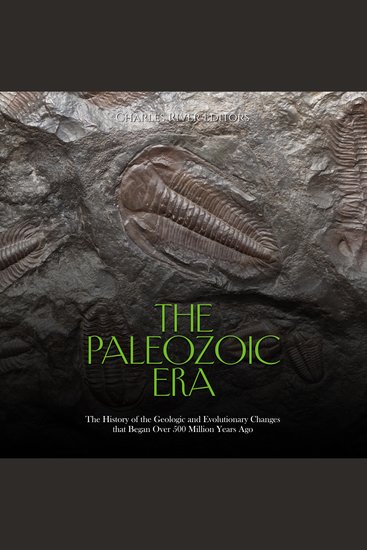
    The current view of science is that Earth is around 4.6 billion years old, and the first 4 billion years of its development are known as the Precambrian period. For the first billion years or so, there was no life in Earth. Then the first single-celled life-forms, early bacteria and algae, began to emerge. It’s unclear where they came from or even if they originated on this planet at all, but this gradual development continued until around four billion years ago when suddenly (in geological terms) more complex forms of life began to emerge.  
    	Scientists call this time of an explosion of new forms of life the Paleozoic Era, and it stretched from around 541 to 250 million years ago. In the oceans and then on land, new creatures and plants began to appear in bewildering variety, and by the end of this period, life on Earth had diversified into a myriad of complex forms that filled virtually every habitat and niche available in the seas and on the planet’s only continent, Pangea. 
    	The Precambrian Period is divided into three eons: the Hadean, the Archaean, and the Proterozoic. One layer of carbon in rocks that date to the Archaean Eon, found on islands west of Greenland, seems to have fossilized tracks that may have been left by some form of organic life, but scientists simply are not certain. The oldest confirmed remains of life date from the same eon and were found in rocks in Western Australia, which were found to contain fossilized bacteria estimated to be 3.46 billion years old. It seems likely that there were thousands, perhaps even millions of forms of life in these early periods, and most seem to have been microscopic in size and very simple in developmental terms.
    Ver libro
  • Get Paid to Take Digital Photos - cover

    Get Paid to Take Digital Photos

    Brenda Stephens

    • 0
    • 0
    • 0
    You're reading this because you have two passions in life. First, you love taking photos. You probably carry your camera everywhere with you, just waiting for a chance to snap a candid shot that tells a little story. That's the art of photography and, if you're reading this, you have a passion for that art. 
    But then there's your passion for money. Don't worry, you're not being judged. It's good to be motivated by money. It's what makes the world go 'round, right? Or is that love? Point is, money may not bring happiness, but it sure makes life a whole lot easier to get through. 
    And anyone knows that the best way to make money is to take what you love and turn it into a business. Well, congratulations. You have taken the first step towards making money doing what you love: Taking digital photos. 
    Not many people know that you can make a good living just by selling photos over the Internet. But once you become aware of just how many photos we're exposed to on a daily basis, the realization that you can make money taking great photos should be a no-brainer.
    Ver libro
  • Human-Computer Interaction for Beginners - cover

    Human-Computer Interaction for...

    James Henry

    • 0
    • 0
    • 0
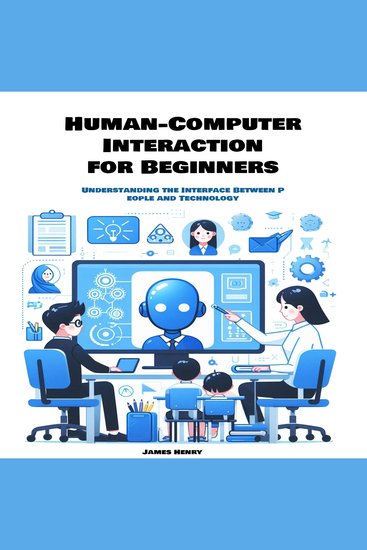
    In an era where technology permeates every aspect of our lives, the need for effective and user-friendly interfaces has never been more critical. "Human-Computer Interaction for Beginners" serves as an essential introduction to the principles, practices, and significance of Human-Computer Interaction (HCI). This accessible guide is designed for aspiring designers, students, and anyone interested in understanding how to create intuitive, engaging, and inclusive user experiences. 
    This book takes readers on a journey through the evolution of HCI, highlighting the pivotal shifts from command-line interfaces to modern graphical user interfaces. With a focus on user-centered design, readers will learn how to conduct user research, create personas, and design effective interfaces that prioritize usability and accessibility. The book covers the fundamental principles of interface design, the importance of usability testing, and emerging trends such as natural user interfaces and voice interactions. 
    Each chapter features practical examples, engaging illustrations, and hands-on exercises to reinforce learning and encourage the application of concepts to real-world scenarios. Readers will explore case studies showcasing successful HCI implementations and the lessons learned from design failures, providing a well-rounded understanding of the field. 
    "Human-Computer Interaction for Beginners" equips you with the foundational knowledge and tools needed to make a meaningful impact in the realm of user experience design. Embrace the future of technology with confidence and creativity as you learn to bridge the gap between people and the systems they use. 
     
    Ver libro