¡Acompáñanos a viajar por el mundo de los libros!
Añadir este libro a la estantería
Grey
Escribe un nuevo comentario Default profile 50px
Grey
Suscríbete para leer el libro completo o lee las primeras páginas gratis.
All characters reduced
Ice Rivers Fish - cover

Ice Rivers Fish

Nakoa Rainfall

Traductor A AI

Editorial: Publifye

  • 0
  • 0
  • 0

Sinopsis

Ice Rivers Fish explores how modern technology transformed ancient traditions among the Yupik people of Alaska, focusing on the intricate relationship between technological adaptation, fishing, and cultural identity. The book delves into how the introduction of modern fishing gear, like nylon nets and outboard motors, altered traditional practices and impacted trade networks in the Arctic. It also considers the environmental impact of these changes, examining how resource extraction shifted and affected traditional ecological knowledge. 

 
The book uniquely emphasizes the Yupik's active role in selectively adopting and adapting modern tools to fit their existing cultural values and economic needs, rather than portraying them as passive recipients of external influences. It highlights how, historically, subsistence hunting and fishing were central to the Yupik economy, with complex resource management systems, and how modern gear disrupted these systems, leading to shifts in labor, wealth, and social structures. 

 
The book progresses from establishing the cultural background and pre-modern techniques to analyzing the impact of specific technologies on fishing yields and socioeconomic implications.
Disponible desde: 27/02/2025.
Longitud de impresión: 60 páginas.
Otros libros que te pueden interesar

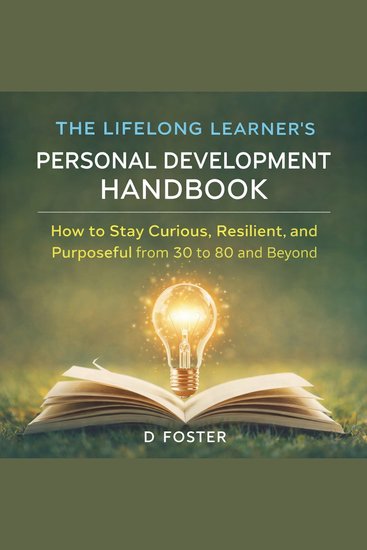
  • LIFELONG LEARNER'S PERSONAL DEVELOPMENT HANDBOOK THE - How to Stay Curious Resilient and Purposeful from 30 to 80 and Beyond - cover

    LIFELONG LEARNER'S PERSONAL...

    D Foster

    • 0
    • 0
    • 0
    What if the quiet voice whispering "you're too old to start now" is the only thing truly holding you back?
     
    The Lifelong Learner's Personal Development Handbook is a transformative guide for adults at any age who refuse to let their curiosity gather dust. Drawing on cutting-edge neuroscience, developmental psychology, and the wisdom of a dozen real people—from a 38-year-old physician learning to code alongside her daughter to a 79-year-old engineer who picked up the harmonica after a terminal diagnosis—this book dismantles the myth that our capacity for growth has an expiration date.
     
    Inside, you will discover how to rewire your brain for deeper learning and sharper focus, even in an age of constant digital distraction. You will learn to navigate the "midlife unraveling" with clarity, turning restlessness and setbacks into a foundation for renewed purpose. You will explore the quiet power of generativity—the art of mentoring without meddling and building a legacy that extends beyond your own years. And you will be invited to embrace a fluid, deeply personal spirituality that finds the sacred in the ordinary moments of daily life.
     
    Whether you are 30 and sensing the limits of the first mountain, 50 and standing in the valley between who you were and who you are becoming, or 70 and wondering what comes next, this handbook offers a practical, humane, and scientifically grounded roadmap. It is not a promise of eternal youth, but an invitation to a richer, wiser, and more curious way of living. The syllabus of your life is unfinished. That is not a problem to solve; it is the very shape of a life well lived.
    Ver libro
  • Better Never to Have Been - The Harm of Coming into Existence - cover

    Better Never to Have Been - The...

    David Benatar

    • 0
    • 0
    • 0
    Most people believe that they were either benefited or at least not harmed by being brought into existence. Thus, if they ever do reflect on whether they should bring others into existence—rather than having children without even thinking about whether they should—they presume that they do them no harm. Better Never to Have Been challenges these assumptions. David Benatar argues that coming into existence is always a serious harm. Those who never exist cannot be deprived. However, by coming into existence one does suffer quite serious harms that could not have befallen one had one not come into existence. Drawing on the relevant psychological literature, the author shows that there are a number of well-documented features of human psychology that explain why people systematically overestimate the quality of their lives and why they are thus resistant to the suggestion that they were seriously harmed by being brought into existence. The author then argues for the "anti-natal" view—that it is always wrong to have children—and he shows that combining the anti-natal view with common pro-choice views about fetal moral status yield a "pro-death" view about abortion. Although counter-intuitive for many, that implication is defended, not least by showing that it solves many conundrums of moral theory about population.
    Ver libro
  • The Right Side of History - How Reason and Moral Purpose Made the West Great - cover

    The Right Side of History - How...

    Ben Shapiro

    • 0
    • 0
    • 0
    The Right Side of History has descriptive copy which is not yet available from the Publisher.
    Ver libro
  • These Divided Isles - Britain and Ireland Past and Future - cover

    These Divided Isles - Britain...

    Philip Stephens

    • 0
    • 0
    • 0
    Ireland is Britain's closest neighbor—the sea crossing from Scotland measures only twelve miles. Ireland was also its first conquered territory in what became Britain's empire. The two nation's stories have been intertwined since Anglo-Norman invaders crossed the Irish Sea during the twelfth century. 


    These Troubled Isles tells the extraordinary history of the past century in this tumultuous relationship, from the Anglo-Irish treaty of 1922 to the present day. This is a tale of deep division between Catholic nationalism and Protestant unionism, of wars and terrorist violence, and of occasional moments of great courage on the part of British and Irish leaders. 


    Today, the post-Brexit weakening of the United Kingdom's constitutional ties has coincided with the march of demography in Northern Ireland as the Protestant unionist majority continues to shrink. Sinn Féin's historic string of electoral victories in Northern Ireland since 2022 has once more resurfaced the unfinished business of partition. Here, Philip Stephens explores how Ireland might escape its troubled past by deploying history to inform the future rather than hold it in place.
    Ver libro
  • My Disability Is Divine - A Joyful Witness That Defies Ableist Nonsense - cover

    My Disability Is Divine - A...

    Amy Kenny

    • 0
    • 0
    • 0
    What if disability isn't a deficit to be prayed away? What if disability is divine? 
    In My Disability Is Divine, award-winning author and disabled scholar Amy Kenny offers a dynamic theological meditation on the beauty and brilliance of disabled lives. Drawing from Scripture, history, and disability culture, she exploresways that disability reveals divine creativity and presence;how Scripture celebrates disabled bodyminds; andwhy access, interdependence, and joy are central to the community of creation. 
    Packed with forgotten histories, witty clapbacks, and shrewd observations, this book is a call to radically reexamine our assumptions about disability—and ourselves. 
    Both fierce and funny, My Disability Is Divine is a necessary guide for anyone ready to unlearn ableism, celebrate the sacredness of the disability community, and catch a clearer glimpse of how we can create communities of co-flourishing.
    Ver libro
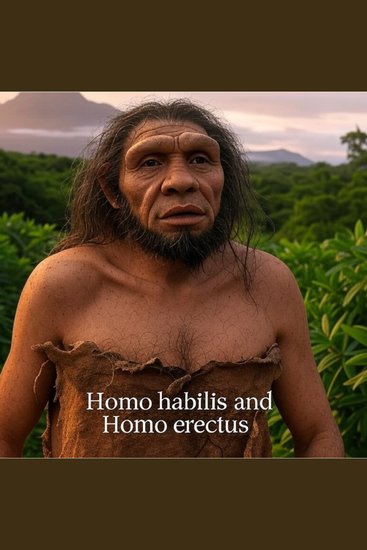
  • Homo habilis and Homo erectus: The History and Legacy of Modern Humans’ Direct Ancestors - cover

    Homo habilis and Homo erectus:...

    Editors Charles River

    • 0
    • 0
    • 0
    The evolutionary path from the original primates to modern man is a long one and has taken many twists and turns, but naturally, as the fossil record grows, scientists gain a more complete understanding of our own mental and physical history in terms of genetics and anatomy. However, the correct order and relationships of the various specimen types are difficult to pin down. Many representative samples have been found in such minute amounts as to not preclude anomalies. They have been discovered in various stages of wear. Modern features did not occur simultaneously or uniformly, taking millions of years to become manifest in later types. Up to the present day’s Homo sapiens, examples of the main types have been hybrids of older and more modern features. 
    	One of the earliest species of the genus Homo to be discovered is Homo habilis, which basically means “handy man.” The name comes from the belief at the time of its discovery that this species was the first to start using stone tools. The first fossils to be uncovered in Olduvai Gorge were from the same stratigraphic layer as simple stone tools. Fossils of the crania and postcranial skeleton for this species have been found in both eastern and southern Africa and date to around 2.5–1.6 million years ago.  
    	Given the gradual changes that take place in evolution, Homo habilis shares a number of characteristics that are similar to the genus Australopithecus, such as in the postcranial elements. That said, the size and shape of the Homo habilis skull are markedly different. The size of the brain is much larger relative to the size of the body, being around 680 cc. In order to house a larger brain, the skull features a more vertical frontal bone, creating a more vertical forehead. The brow ridges that sit on the lower portion of the frontal bone are also reduced in size.
    Ver libro