Rejoignez-nous pour un voyage dans le monde des livres!
Ajouter ce livre à l'électronique
Grey
Ecrivez un nouveau commentaire Default profile 50px
Grey
Abonnez-vous pour lire le livre complet ou lisez les premières pages gratuitement!
All characters reduced
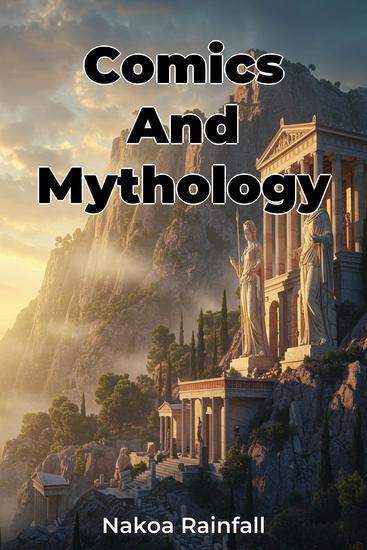
Comics And Mythology - cover

Comics And Mythology

Nakoa Rainfall

Traducteur A AI

Maison d'édition: Publifye

  • 0
  • 0
  • 0

Synopsis

Comics And Mythology explores the surprising link between ancient myths and modern comic books, revealing how age-old stories continue to influence superhero narratives and fantasy worlds. It argues that comic books aren't just a modern invention, but are rooted in mythological storytelling. For example, Superman's origins echo stories of Moses and Icarus, while Wonder Woman draws inspiration from Amazon myths, demonstrating the enduring power of archetypes.

 
The book begins by introducing key mythological concepts from Greek, Roman, Norse, and Egyptian traditions, then examines their influence on comic book characters, settings, and conflicts. It covers how Asgard and Themyscira are reimagined versions of mythological locations.

 
Ultimately, the book reveals how comic books act as a modern form of mythology, reflecting and shaping our values. By analyzing ancient texts, comic book panels, and character designs, Comics And Mythology provides a comprehensive look at the connections between these two seemingly different worlds. This approach offers readers a framework for understanding the enduring appeal of myth and its continued relevance in contemporary storytelling.
Disponible depuis: 10/03/2025.
Longueur d'impression: 56 pages.

D'autres livres qui pourraient vous intéresser

  • The Who's The Who Sell Out - cover

    The Who's The Who Sell Out

    John Dougan

    • 0
    • 0
    • 0
    Released in the U.S. in January 1968, The Who Sell Out was, according to critic Dave Marsh, a complete backfire--the album sold well, but not spectacularly [and was] ultimately a nostalgic in-joke: Who but a pop intellectual could appreciate such a thing? Further rarifying its in-joke status was its unapologetic Englishness; 13 tracks stitched together in a mock pirate radio broadcast, without a DJ, with cool, anglocentric commercials to boot. In the 36 years since its release, Sell Out, though still not the best selling release in The Who’s catalog, has been embraced by a growing number of fans who regard it as the band’s best work, one of the few recordings of the late 1960s that best represents the ambitious aesthetic possibilities of the concept album without becoming mired in a bog of smug, self-aggrandizing, high art aspirations. Sell Out, powerfully and ecstatically, articulates the nexus of pop music and pop culture.As much as it is an expression of the band’s expanding sonic palette, Sell Out also functions as a critique of the rock and roll lifestyle. Not the clichéd mantra of sex, drugs, and rock and roll but in the ways that commercial advertising fabricates a youth-oriented cultural reality by hawking pimple cream, deodorant, food, musical equipment, etc., and linking it with rock and roll. In this sense Sell Out is a reflective work, one that struggles with rock and roll as a cultural expression that aspires to aesthetic permanence while marketed as ephemera. From this conflict emerges a pop art masterpiece.
    Voir livre
  • Wisdom of the East The: The Instruction of Ptah-hotep and The Instruction Of Ke'gemni - cover

    Wisdom of the East The: The...

    Battiscombe G. Gunn

    • 0
    • 0
    • 0
    "The Instruction of Ptahhotep and The Instruction of Ke'gemni" stand as remarkable testimonies to the enduring wisdom and ethical insights of ancient Egyptian civilization. These texts, attributed to viziers Ptahhotep and Ke'gemni respectively, provide invaluable guidance on navigating the complexities of life with integrity, wisdom, and virtue. Dating back to the Fifth Dynasty of Egypt, around 2400 BCE, these works are among the oldest surviving examples of wisdom literature in human history. Through a series of moral teachings, aphorisms, and advice passed down from generation to generation, readers are offered profound insights into the social, ethical, and spiritual values of ancient Egyptian society. The teachings encompass a wide range of topics, including the importance of humility, the pursuit of knowledge, the value of integrity in leadership, and the significance of familial and societal bonds. Each instruction serves as a timeless reminder of the universal principles that underpin a flourishing and harmonious life."The Instruction of Ptahhotep" is particularly renowned for its emphasis on wisdom acquired through experience and humility, as Ptahhotep imparts his knowledge to his son in a spirit of paternal care and guidance. Meanwhile, "The Instruction of Ke'gemni" similarly offers invaluable lessons on ethical conduct and leadership, drawing from the experiences and wisdom of another esteemed vizier of ancient Egypt. Together, these texts provide a comprehensive ethical framework for individuals seeking to lead a virtuous and meaningful life, offering practical guidance that remains relevant and inspiring across cultures and millennia.As readers delve into these ancient teachings, they are transported back in time to a civilization that valued wisdom, integrity, and moral excellence above all else. Despite the vast temporal and cultural distance that separates modern readers from ancient Egypt, the wisdom contained within these texts transcends boundaries of time and space, resonating with universal truths about human nature and the human condition. Whether pondering the intricacies of personal relationships, reflecting on the responsibilities of leadership, or contemplating the pursuit of spiritual enlightenment, readers will find in these ancient teachings a source of timeless wisdom and guidance that continues to illuminate the path toward a life of virtue and fulfillment.
    Voir livre
  • The Hidden Tools of Comedy - The Serious Business of Being Funny - cover

    The Hidden Tools of Comedy - The...

    Steve Kaplan

    • 0
    • 0
    • 0
    While other books give you tips on how to “write funny,” this book offers a paradigm shift in understanding the mechanics and art of comedy and the proven, practical tools that help writers translate that understanding into successful, commercial scripts. The Hidden Tools of Comedy unlocks the unique secrets and techniques of writing comedy. Kaplan deconstructs sequences in popular films and TV that work and don’t work and explains what tools were used (or should have been used).
    Voir livre
  • Ugh! As If! - Clueless - cover

    Ugh! As If! - Clueless

    Veronica Litt

    • 0
    • 0
    • 0
    A sweet and sly exploration of the Jane Austen–inspired teen movie and its evergreen imperative to be kind, do better, and find the activist within
    		 
    We are totally butt-crazy in love with Clueless. Since the movie’s premiere in 1995, pop culture has mined Amy Heckerling’s high school comedy for inspiration, from Iggy Azalea and Charli XCX’s “Fancy” music video to Cher’s iconic yellow plaid suit appearing at every Halloween party.
    		 
    In Ugh As If!, Veronica Litt argues that this seemingly fluffy teen romp is the quintessential thinking woman’s movie, one in which the audience is asked to seriously consider the beauty and power of naïveté. Cher Horowitz’s gradual pivot from oblivious it girl to burgeoning activist is a powerful reminder that even the most unlikely people can change for the better and contribute to their communities. In this bright, shiny film, pursuing a more just society isn’t just possible — it’s enjoyable. This fun, feminine, feel-good movie is a counter-narrative to nihilism, a refusal to give into cynicism, hopelessness, and passivity. Almost without viewers noticing, Clueless teaches Cher, and us, how to become better. Like the film it examines, Ugh As If! nudges even the most jaded viewer into feeling hopeful about the future.
    		 
    About the Pop Classics Series
    		 
    Short books that pack a big punch, Pop Classics offer intelligent, fun, and accessible arguments about why a particular pop phenomenon matters.
    Voir livre
  • Aligned - Stakeholder Management for Product Leaders - cover

    Aligned - Stakeholder Management...

    Melissa Appel, Bruce McCarthy

    • 0
    • 0
    • 0
    Product management naturally incorporates empathy, psychology, and thinking outside the box in pursuit of the best design for products. But how often do you apply those same skills to your relationships with people in your company? 


    By breaking the art of stakeholder management into simple lessons and frameworks, this practical book shows product managers how to manage the crucial relationships that will help you make an impact and advance your career. You'll learn how to build trusting relationships with stakeholders, optimize your communication for different audiences, get buy-in for your ideas and roadmaps, and have stakeholders appreciate it when you say no. 


    You'll learn how to: build and maintain trust with your stakeholders; map your organization and identify the real power players; establish roles and build an extended team that works well together; communicate in a way that speaks to the needs and goals of different stakeholders; get buy-in on your ideas and roadmap; make stakeholders appreciate and support you when you say "no"; sustain buy-in over time; and manage difficult stakeholders and personalities.
    Voir livre
  • Edgar Degas - Ballet Movement and Introspection - cover

    Edgar Degas - Ballet Movement...

    Nathalia Brodskaya, Edgar Degas

    • 0
    • 0
    • 0
    Degas was closest to Renoir in the impressionist's circle, for both favoured the animated Parisian life of their day as a motif in their paintings. Degas did not attend Gleyre's studio; most likely he first met the future impressionists at the Café Guerbois. He started his apprenticeship in 1853 at the studio of Louis-Ernest Barrias and, beginning in 1854, studied under Louis Lamothe, who revered Ingres above all others, and transmitted his adoration for this master to Edgar Degas. Starting in 1854 Degas travelled frequently to Italy: first to Naples, where he made the acquaintance of his numerous cousins, and then to Rome and Florence, where he copied tirelessly from the Old Masters. His drawings and sketches already revealed very clear preferences: Raphael, Leonardo da Vinci, Michelangelo, and Mantegna, but also Benozzo Gozzoli, Ghirlandaio, Titian, Fra Angelico, Uccello, and Botticelli. During the 1860s and 1870s he became a painter of racecourses, horses and jockeys. His fabulous painter's memory retained the particularities of movement of horses wherever he saw them. After his first rather complex compositions depicting racecourses, Degas learned the art of translating the nobility and elegance of horses, their nervous movements, and the formal beauty of their musculature. Around the middle of the 1860s Degas made yet another discovery. In 1866 he painted his first composition with ballet as a subject, Mademoiselle Fiocre dans le ballet de la Source (Mademoiselle Fiocre in the Ballet 'The Spring') (New York, Brooklyn Museum). Degas had always been a devotee of the theatre, but from now on it would become more and more the focus of his art. Degas' first painting devoted solely to the ballet was Le Foyer de la danse à l'Opéra de la rue Le Peletier (The Dancing Anteroom at the Opera on Rue Le Peletier) (Paris, Musée d'Orsay). In a carefully constructed composition, with groups of figures balancing one another to the left and the right, each ballet dancer is involved in her own activity, each one is moving in a separate manner from the others. Extended observation and an immense number of sketches were essential to executing such a task. This is why Degas moved from the theatre on to the rehearsal halls, where the dancers practised and took their lessons. This was how Degas arrived at the second sphere of that immediate, everyday life that was to interest him. The ballet would remain his passion until the end of his days.
    Voir livre