Junte-se a nós em uma viagem ao mundo dos livros!
Adicionar este livro à prateleira
Grey
Deixe um novo comentário Default profile 50px
Grey
Assine para ler o livro completo ou leia as primeiras páginas de graça!
All characters reduced
Auto Industry Slumps - cover
LER

Auto Industry Slumps

Nakoa Rainfall

Tradutor A AI

Editora: Publifye

  • 0
  • 0
  • 0

Sinopse

Auto Industry Slumps examines the drastic decline of the U.S. auto industry from 1929 to 1932, mirroring the broader economic crisis of the Great Depression. The book argues that the auto industry’s 75% production drop wasn't isolated but a symptom of deeper economic weaknesses. It explores the interplay of factors like reduced consumer demand, constrained credit availability, and significant manufacturing overcapacity, all while considering the limited impact of government policies at the time. Intriguingly, the Roaring Twenties, with its easy credit and booming auto sales, masked underlying vulnerabilities like market saturation and wealth inequality, setting the stage for the slump.

 
The book progresses by first establishing the pre-Depression context and then dissecting the causes of the decline, dedicating a chapter to the social consequences in automotive hubs like Detroit. A unique aspect is its analysis of previously unexamined records from smaller automakers. By focusing on a specific industry, the book provides valuable insights into broader economic forces and the potential for cascading failures during economic downturns. The analysis connects economic trends with social history and political science, offering a nuanced understanding of this pivotal moment.
Disponível desde: 27/02/2025.
Comprimento de impressão: 48 páginas.

Outros livros que poderiam interessá-lo

  • Stop the Spin - The Neuroscience of Racing Thoughts - cover

    Stop the Spin - The Neuroscience...

    Theo Whessler

    • 0
    • 0
    • 0
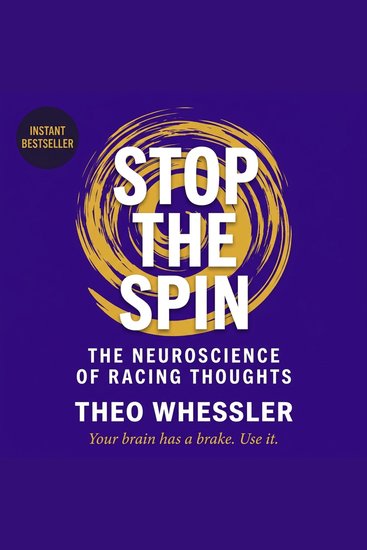
    Your mind races at 2 a.m. You replay the awkward email. You rehearse tomorrow's disaster. You know it's not helping — and yet you can't stop. You are not broken. You are running factory-installed software that evolution never optimized for modern life. In Stop the Spin, neuroscientist Theo Whessler translates fifteen years of laboratory research into a clear, practical guide to one of the most universal human struggles: the overactive, overthinking mind. Drawing on neuroimaging data, stress physiology, cognitive science, and behavioral economics, Whessler explains exactly why the brain spins — and what you can do to interrupt it. At the center of the book is the brain's default mode network: the system that activates whenever you are not focused on an external task, filling the silence with self-referential worry, social rehearsal, and catastrophic projection. Chronic activation of this system, Whessler shows, does not just feel bad — it measurably weakens emotional regulation, depletes working memory, amplifies threat detection, and can reshape the brain over time. But because the brain is plastic, that process also runs in reverse. Stop the Spin moves through eighteen tightly structured chapters that cover the full arc of the problem and its solution. You will learn how chronic stress alters the amygdala, hippocampus, and prefrontal cortex — and why that makes anxiety self-reinforcing. You will learn to map your personal triggers using LeDoux's fear-conditioning research and Lieberman's affect-labeling findings. You will understand why the body speaks before the mind does, and how to use that signal rather than be ambushed by it. The tools are specific and evidence-based: resonance frequency breathing and the physiological sigh, the 4 A's framework for matching coping strategy to stressor type, expressive writing and the Pennebaker protocol, cognitive reappraisal and Kross's distanced self-talk, the scheduled worry period based on Borkovec's research, grounding practices rooted in mindfulness neuroscience, and deliberate life design that reduces triggers before they occur. Whessler also examines the overlooked foundations of a regulated brain — sleep, nutrition, and movement — and confronts the modern amplifiers of overthinking: digital noise, decision fatigue, choice overload, and the guilt that makes rest feel forbidden. Historical case studies of Viktor Frankl, Abraham Lincoln, and Michael Phelps show what managing a difficult mind looks like in practice, across radically different contexts and centuries. The book's final argument is structural: internal skills matter, but so does the environment that shapes them. Designing defaults, routines, and spaces that make calm more likely is not avoidance — it is applied neuroscience. Stop the Spin does not promise a quiet mind. It promises something more realistic and more useful: a changed relationship to your thoughts, a wider gap between stimulus and response, and a reliable set of tools for when the spiral begins. For readers of Rolf Dobelli, Adam Grant, and Daniel Kahneman — and for anyone who has ever wished their brain came with an off switch.
    Ver livro

  • The Transitional Years and I - Atlanta and the Deep South 1965-1975 - cover

    The Transitional Years and I -...

    Frank Briggs

    • 0
    • 0
    • 0
    This fourth book of the series, The 20th Century and I is the love story of a recently graduated, immature, young man and his pursuit of both his true love and a successful career. Notably, his story is set in the backdrop of one of the most tumultuous decades in American history. In 1861, tensions that had existed since the founding of the United States between the north and south erupted in violent civil war. Four bloody years later the south capitulated in the military conflict. Faced with the choice of whether to bring the Confederate States of the south back into the Union as family, or to treat them as a conquered country. In many ways the United States chose the latter. While the shooting war had stopped, the underlying mistrust and tensions between the two regions continued. One full century later the conflict resumed with the passage of the Civil Rights Act of 1964, and the Voting Rights Act of 1965. By God’ss grace, this time there were no serious calls for secession, or armies dispatched to the field. However, as the book notes, emotions were almost as high, and there were numerous episodes of violence. This time, though, the end result was successful. De facto slavery was finally ended, and African Americans had entered the mainstream.
    Ver livro
  • Money skills for teens decoded - easy steps to master how to budget save and invest to build wealth and avoid debt (what they don’t teach you in school) - cover

    Money skills for teens decoded -...

    Ryan Zein

    • 0
    • 0
    • 0
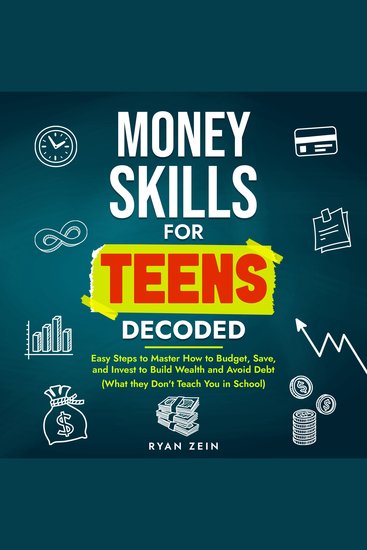
    Build Wealth and Avoid Debt Before You Graduate—Even If You Don’t Have Income Yet! 
    Feel like your money disappears the second you get it? Wonder why school teaches algebra but not how to open a bank account? You’re not alone—and that’s exactly why Money Skills for Teens Decoded exists. 
    This is your go-to guide for taking control of your finances, even if you don’t earn money yet. Whether you're saving for a car, figuring out how credit works, or just trying to keep more of your allowance, this book helps you build smart habits early. 
    No income? No problem. 
    The skills inside—budgeting, saving, investing, spending wisely—will set you up for long-term success. It’s like a cheat code for life after graduation. 
    Here’s what you’ll learn (without the boring stuff): 
    • Budget like a pro—even on a $0 income 
    • Save for big goals—college, car, tech, you name it 
    • Grow your money—simple investing strategies 
    • Dodge debt—learn credit before it learns you 
    • Turn hobbies into side hustles—get creative, earn cash 
    • Spend smart—resist impulse buys and peer pressure 
    • Use tech to your advantage—apps that make money easy 
    • Prepare for the unexpected—build an emergency fund 
    What Makes This Book Different? 
    Forget dull lectures. This is practical, fun, and packed with relatable advice and real teen success stories. You'll learn exactly what to do, why it works, and how to start today—no confusing jargon, no financial background required. 
    Think you don’t have enough money to manage? 
    That’s the biggest myth of all. It’s not about how much you have—it’s about what you do with it.
    Ver livro
  • A Journey into Buddhism - cover

    A Journey into Buddhism

    Elizabeth J. A. Harris

    • 0
    • 0
    • 0
    This is an audiobook of Bodhi Leaves No. 134 by Elizabeth J. A. Harris, A Journey into Buddhism narrated by Ethan Christy. 
     
    Excerpt: 
    "The themes of the talks are rooted in my journey, as a Christian, into Buddhism. In the mid-1980s I felt the need to ’let go’ of my own religious conditioning to enter the world of another faith. It grew from a conviction that people with an interest in religion should not remain imprisoned within one framework but should explore others. The choice of Buddhism and Sri Lanka was a natural one for me. Buddhism’s emphasis on meditation and non-violence touched my own interests as a Christian, and a visit to Sri Lanka in 1984 had left me with the feeling that my link with the island was not finished. 
    I originally intended to be in Sri Lanka for one year. One year, however, became seven and a half, from 1986 until 1993. My aim throughout was not only to study Buddhism but to practise it. I did not consider myself involved in ’interfaith dialogue’ although I’m sure some perceived my actions in this way. I wanted to enter Buddhism on its own terms, as a human being rather than as a Christian." 
     
    The print edition can be found in the Pariyatti Edition of Collected Bodhi Leaves Vol. V. The eBook of Bodhi Leaves No. 134 can be downloaded from the BPS website.
    Ver livro
  • Aurora - Part 3: Teasing The Straight Gay - cover

    Aurora - Part 3: Teasing The...

    Kathrin Pissinger

    • 0
    • 0
    • 0
    A female domination story with a queer twist. 
    In a glorious finale, I'm setting the bathroom stripper and her peeping toyfriend up for a meeting at a gay bar, where I'm finally going to see who is willing to become gay in order to get a threesome with me.
    Ver livro
  • How to Analyze People: Learn How to Master Dark Psychology and Forbidden Manipulation - cover

    How to Analyze People: Learn How...

    Christopher Rothchester

    • 0
    • 0
    • 0
    Do you want to control people? Do you want to analyze people and figure out all that you want to know? 
    Human behavior is a simple and extensive concept. There are plenty of loopholes in the human psyche that can be used for the purpose of influencing others. Want to learn more about such loopholes? There is nothing to worry about, as you are at the right place. 
    Controlling the audience or making people agree with what you say is not a new concept. It is called manipulation. Most people who have had the most impact on world history managed to sway others to do their bidding. You might think that such people have been born with the talent of persuasion at high levels that it feels like mind control. But it is not. Human behavior might seem to be quite unpredictable, but there are certain foundations that can be mastered. 
    As you master the core foundations, you can get all that you want from others without creating the impression of being controlling or manipulative. 
    If you want to learn more about human psychology and behavior, you can with the help of How to Analyze People with Dark Psychology: Learn How to Master Dark Psychology and Forbidden Manipulation. 
    Using the techniques used by advertisers, politicians, and other masters of their universe, you can easily analyze anyone who is present around you. It can be done to have a profound influence on how others think. In case you are done with the world pushing you around and want to start pushing back, you have come to the right place. The aim of this guidebook is to provide you with all the basics of human psychology so that you can use the same for your best interest.
    Ver livro